How to Turn Chores into Learning Games
21 October 2026
Let's be honest about something most parenting advice glosses over: chores are boring. For you, for me, and especially for a seven-year-old who would rather lick a wall than match socks. So when experts chirp "make chores fun!" with zero follow-through, it's fair to roll your eyes. The trick isn't sprinkling glitter on a toilet brush. It's understanding that kids don't resist work. They resist pointless work. The moment a task contains a puzzle, a challenge, a bit of competition, or a tangible payoff, the same kid who "forgot" to take out the trash will fight you for the privilege.
That's the entire game. You are not actually gamifying laundry. You are redesigning the mental framing around it so your child's brain stops filing the task under "punishment" and starts filing it under "something I can win, solve, or master." Below is how to do that with real strategies, honest trade-offs, and the mistakes that quietly sabotage the whole thing.
Why Chores and Games Are Not Actually Opposites
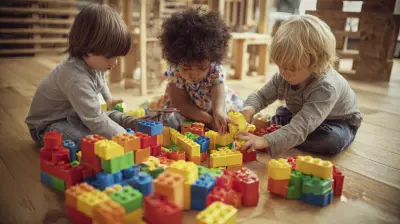
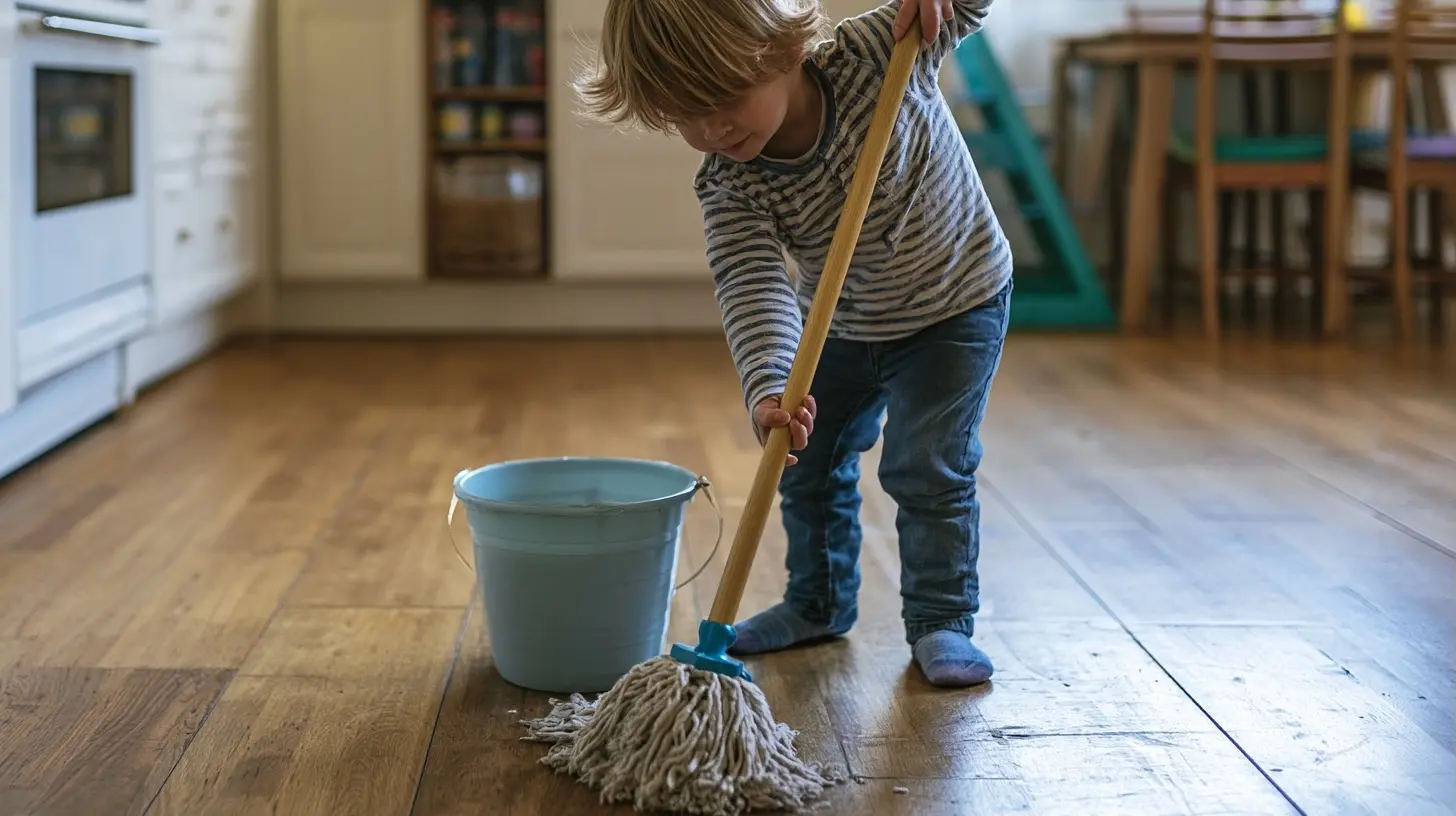
A game, at its core, has four ingredients: a clear goal, a set of rules, immediate feedback, and a reason to care about the outcome. A chore has all of these except the last one, and often the third. That's the gap you're closing.When a child sorts silverware into the drawer, they are already doing pattern recognition. When they carry groceries, they are doing load distribution and spatial planning. When they scrub a sink, they are doing fine motor work. The learning is baked in. What's missing is the structure that makes the brain pay attention: a target, a timer, a score, a role, or a story.
This matters because of how attention works. A task with no feedback loop feels endless. A task with a visible finish line, even an arbitrary one, feels achievable. That's why "clean your room" produces paralysis while "find every red object on the floor and put it in this basket in sixty seconds" produces motion. Specificity plus constraint equals action.
One caveat before we go further. Games work brilliantly for kids roughly four to eleven. They work less well for teenagers, who tend to see through manufactured fun and often find it insulting. For teens, shift from games to genuine responsibility and negotiated stakes. We'll cover that later.

The Core Design Principles Behind Chores That Actually Get Done
Before you build a single game, internalize these principles. Skip them and you'll build elaborate systems your kid abandons in a week.Clear win conditions beat vague instructions
"Tidy up" is not a win condition. "Everything on the floor is in a bin, and the bins are against the wall" is. Kids need to know what done looks like. This is the same reason video games show you a progress bar. Ambiguity creates anxiety, and anxious kids stall.Immediate feedback beats delayed reward
A sticker chart that pays out on Friday is weaker than a timer that dings right now. Young brains discount future rewards heavily. If the feedback is instant, the task stays engaging. This is why a kitchen timer is the single most underrated parenting tool on the planet.Choice preserves autonomy
Kids comply more when they feel a sense of control. Offering two acceptable options ("Do you want to be the sorter or the sprayer?") satisfies the autonomy drive without handing over the whole decision. This is not manipulation. It's respecting a genuine developmental need.The game must serve the chore, not replace it
This is the big one. If the game becomes the point, the work stops getting done. The moment your kid is optimizing their score instead of actually cleaning, you've lost the plot. Design games where the scoring mechanism is tied directly to the quality of the work.Novelty is a finite resource
Any game gets stale. Plan for rotation from the start. The parents who succeed at this treat games as a rotating toolkit, not a permanent system. Expect a lifespan of a few weeks per game and have a backup ready.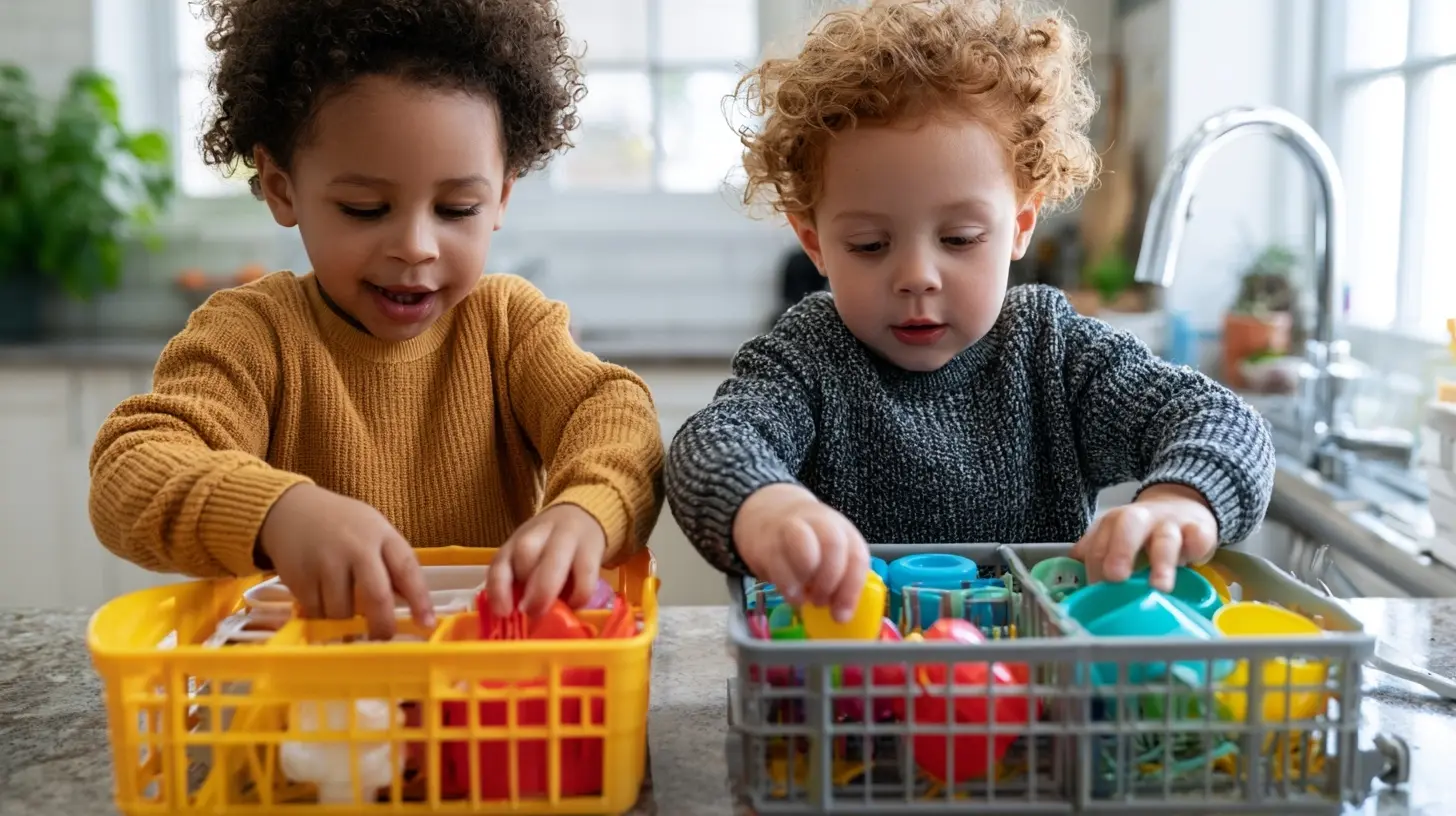
Practical Games You Can Run Tonight
Here's where the rubber meets the road. Each of these is described with the learning angle, because that's what makes it worth your energy.The Sorting Olympics
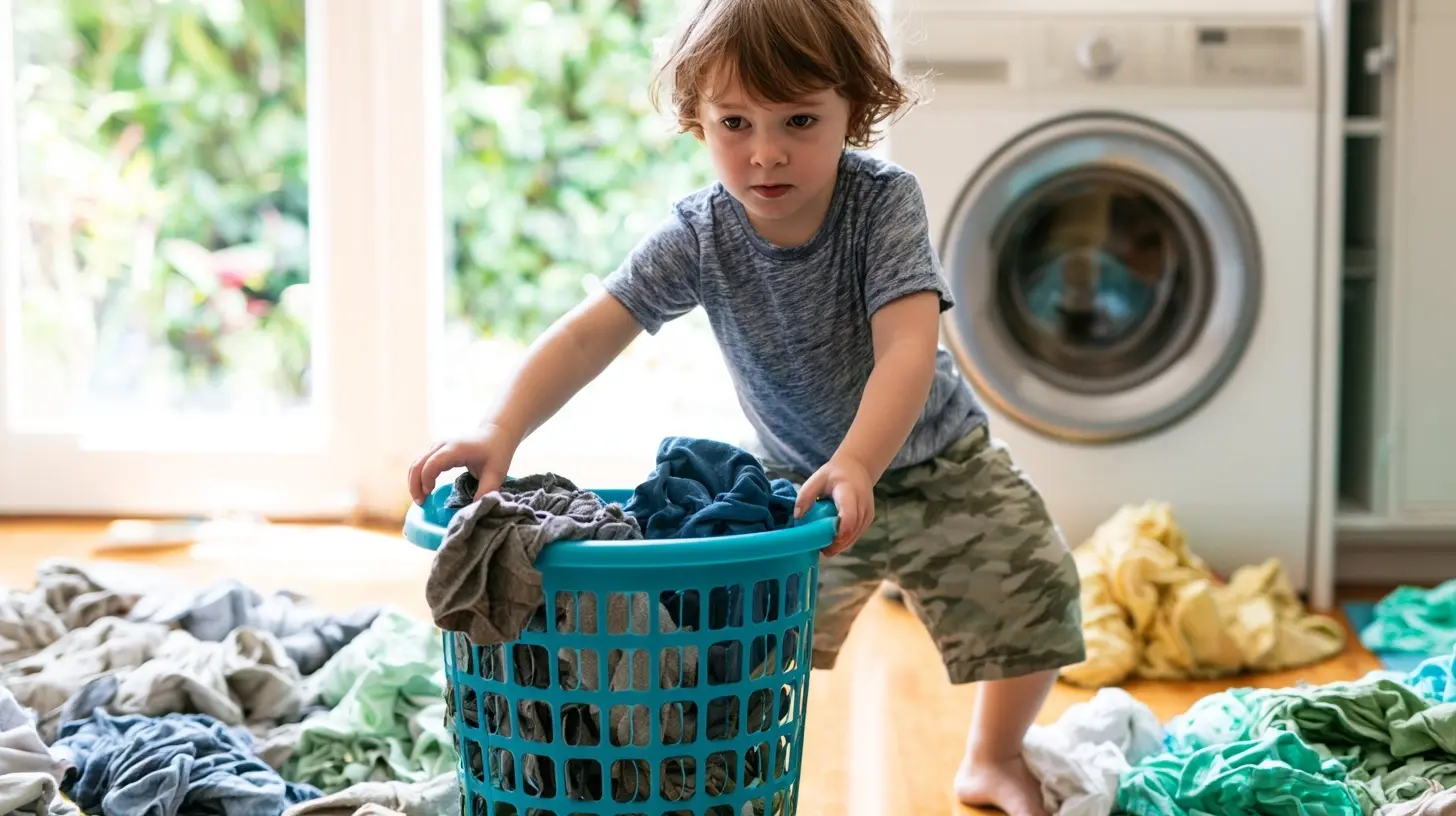
What it is: Timed sorting tasks with a leaderboard. Laundry by color, silverware by type, toys by category, recycling by material.Why it works: Sorting is classification, which is foundational to math and science. Adding a clock adds urgency and turns a dull task into a personal record attempt. Kids will re-run the same sort to beat their own time, which means the laundry gets sorted three times without complaint.
How to run it: Set a timer. Record the result on a whiteboard. Let them try to beat their record next time. Compete against a sibling only if both kids handle losing well, because head-to-head competition between unevenly matched kids breeds resentment fast.
Trade-off: Speed can hurt quality. Build in a "quality check" rule where a sloppy sort costs five seconds. Otherwise you'll get silverware jammed into the wrong slots at record speed.
The Mystery Basket Challenge
What it is: Fill a basket with random household items that need to be put away. The child draws items one at a time and races to return each to its correct home before the next draw.Why it works: It converts a boring "put your stuff away" into a recall and spatial memory game. Kids have to remember where things belong, which is exactly the executive function skill you want to build anyway.
Best for: Ages five to nine. Older kids will find the basket gimmick thin unless you raise the stakes with a timer and a personal best.
The Grocery Store Scavenger Hunt
What it is: Hand your child a short list with pictures or simple words and let them navigate the store to find items. Bonus points for comparing unit prices or finding the item on the lowest shelf.Why it works: This is real-world reading, budgeting, and spatial navigation. It also solves the "kids melt down in the cereal aisle" problem because they're occupied and purposeful.
When it backfires: Crowded stores and tired kids. Keep the list to three or four items and don't run this on a rushed trip. A failed scavenger hunt is worse than no scavenger hunt.
The Five-Minute Blitz
What it is: Everyone in the house, adults included, gets five minutes to put away as much as possible in one designated room. Count items at the end.Why it works: The time limit removes the feeling of endlessness. The shared participation removes the feeling of unfairness. Counting items at the end turns it into a score without making it a competition between people.
The mistake to avoid: Don't count items your kid just moved from one pile to another. Define "put away" as "returned to its proper home." Otherwise you're training a very efficient pile-shuffler.
The Repair Shop
What it is: A weekly session where the family fixes, mends, or maintains something together. A wobbly chair leg, a button, a squeaky hinge, a bike chain.Why it works: This is the most underrated chore-learning game on this list. It teaches cause and effect, tool use, patience, and the deeply satisfying idea that broken things can be made whole. Kids who fix things develop a bias toward agency instead of helplessness.
Reality check: This requires an adult who actually knows how to do the repair and has the patience to slow down. If you're faking it, your kid will notice. Start with something genuinely simple.
The Role Reversal
What it is: Your child becomes the inspector. You do a chore, and they grade it with a checklist you both designed.Why it works: Kids learn the standard by enforcing it. It also flips the power dynamic in a way that feels delicious to a child who is usually on the receiving end of correction. The catch: you have to accept your grade gracefully, even when it's a C-minus on bed-making.
Comparing Approaches: What Works, When, and for Whom
Not every game suits every kid, and pretending otherwise is how parents end up frustrated. Here's a straight comparison.| Approach | Best age range | Strength | Weakness |
|---|---|---|---|
| Timed challenges | 5 to 12 | Instant engagement, easy to set up | Rewards speed over care |
| Story and role-play | 3 to 8 | Huge buy-in for younger kids | Falls flat with older kids |
| Point and reward systems | 6 to 13 | Builds consistency over time | Can turn into pure transaction |
| Team and family games | All ages | Reduces resentment, builds cooperation | Harder to run with uneven ages |
| Real responsibility with stakes | 12 and up | Builds genuine maturity | Requires more upfront negotiation |
The honest summary: timed and story-based games are your best entry point for younger kids. Point systems work for building habits but rot into entitlement if overused. Team games are the most sustainable long-term. And with teens, drop the game framing entirely and lean on real stakes.
The Mistakes That Quietly Kill the Whole Project
I've watched parents sabotage this in predictable ways. Here are the big ones.Turning the game into a bribe
There's a difference between a game and a payoff. A game has intrinsic interest. A bribe is "do this and I'll give you that," which teaches a child that the work has no value on its own and that their cooperation is for sale. Use rewards sparingly and tie them to effort or mastery, not to basic household participation. Every member of a household contributes. That's not a paid gig.Making it a competition between siblings
Sibling competition can be electric, but it can also be corrosive, especially with an age gap or a kid who hates losing. If you use competition, compete against the clock, against a personal record, or against a team score. Reserve head-to-head for kids who are close in age and genuinely enjoy it.Forgetting the quality bar
Games optimize for the metric you set. If the metric is items moved, you get items moved, not items put away correctly. Always define what counts. Always spot-check. If you don't, you're teaching your kid that the appearance of work is the same as work.Never rotating the games
The fourth time you run the Mystery Basket, the magic is gone. Plan for a rotation of three or four games and swap them before they go stale. Novelty is fuel. Don't run the tank dry.Running games when everyone is exhausted
A game requires energy from both of you. If your kid is melting down or you're fried, a game will backfire into a power struggle. On low-energy days, drop the game and use a simple, boring instruction with a clear finish line. That's fine. Consistency matters more than creativity on any given day.
When Games Are the Wrong Tool
This is the part most articles skip. Games are not universally good. Here's when to shelve them.When the chore is genuinely dangerous. Knife work, chemical cleaners, and heavy lifting aren't game material. Teach those directly, slowly, and with supervision. Fun can wait.
When your child is old enough to understand the fairness argument. Around twelve or thirteen, most kids start asking why they should be entertained to do their share. They're right. At that point, shift to a family contribution model with clear expectations and real consequences, not a points system.
When the game is masking a deeper problem. If your child is chronically avoidant about chores, the issue might be anxiety, executive function struggles, or a power dynamic in the household. A game won't fix that. It'll just paper over it. Pay attention to patterns.
When you're using games to avoid conflict. If the real issue is that your partner doesn't pull their weight, or that expectations are wildly inconsistent, no timer will solve it. Fix the system before you decorate it.
Making It Stick: Building a Sustainable System
Games are the spark, not the engine. Here's how to keep the whole thing running after the novelty fades.Build a family contribution chart, not a chore chart. The language matters. "Chores" implies a burden. "Contributions" implies membership. Kids who see themselves as contributors rather than hired help develop a healthier relationship with responsibility.
Make the standard visible. Post a simple checklist of what "done" looks like for each task. This removes the endless "is this good enough?" loop and hands the standard to the child instead of keeping it in your head.
Let them own a domain. Give each child a zone they're genuinely responsible for. Not a rotating task, a zone. The bathroom shelf, the shoe rack, the recycling corner. Ownership builds pride in a way that task-completion never does.
Review and adjust monthly. Sit down once a month and ask what's working and what isn't. Include the kids. This teaches them that systems are negotiable and that their input matters. It also gives you early warning when a game has gone stale.
Celebrate mastery, not compliance. When your kid beats their own record or figures out a faster way to fold a fitted sheet, notice it out loud. Mastery is the most durable motivator there is, and it's free.
The Bottom Line
Turning chores into learning games isn't about tricking your kids into labor. It's about respecting how their brains actually work. Kids engage with challenge, feedback, autonomy, and mastery. Chores contain all four if you structure them right.The parents who succeed at this are the ones who treat it as a design problem, not a morale problem. They define clear wins, give instant feedback, protect quality, rotate the games, and know when to stop playing and start expecting. That's the whole playbook. Now go put a timer on the laundry and watch what happens.
all images in this post were generated using AI tools
Category:
Play Based LearningAuthor:

Steven McLain
Discussion
rate this article
1 comments
Amos McHugh
Chores don't have to be a drag. Turn them into fun games and watch your kids learn while they help out.
October 21, 2026 at 4:16 AM