The Neuroscience of Learning Through Play
11 October 2026
Ask a parent what play is for and you will often get a shrug. It looks like the opposite of work, the opposite of learning, the opposite of progress. A child stacking blocks is not memorizing multiplication tables. A child pretending to be a doctor is not practicing spelling. So we tend to treat play as a reward for finishing the real stuff, or as something to tolerate until school begins.
Neuroscience tells a different story. Play is not a break from learning. In many ways, it is the most powerful learning engine a young brain has. Understanding why changes how you set up your home, how you respond when your child is deep in a game, and how much you worry about whether they are "behind."
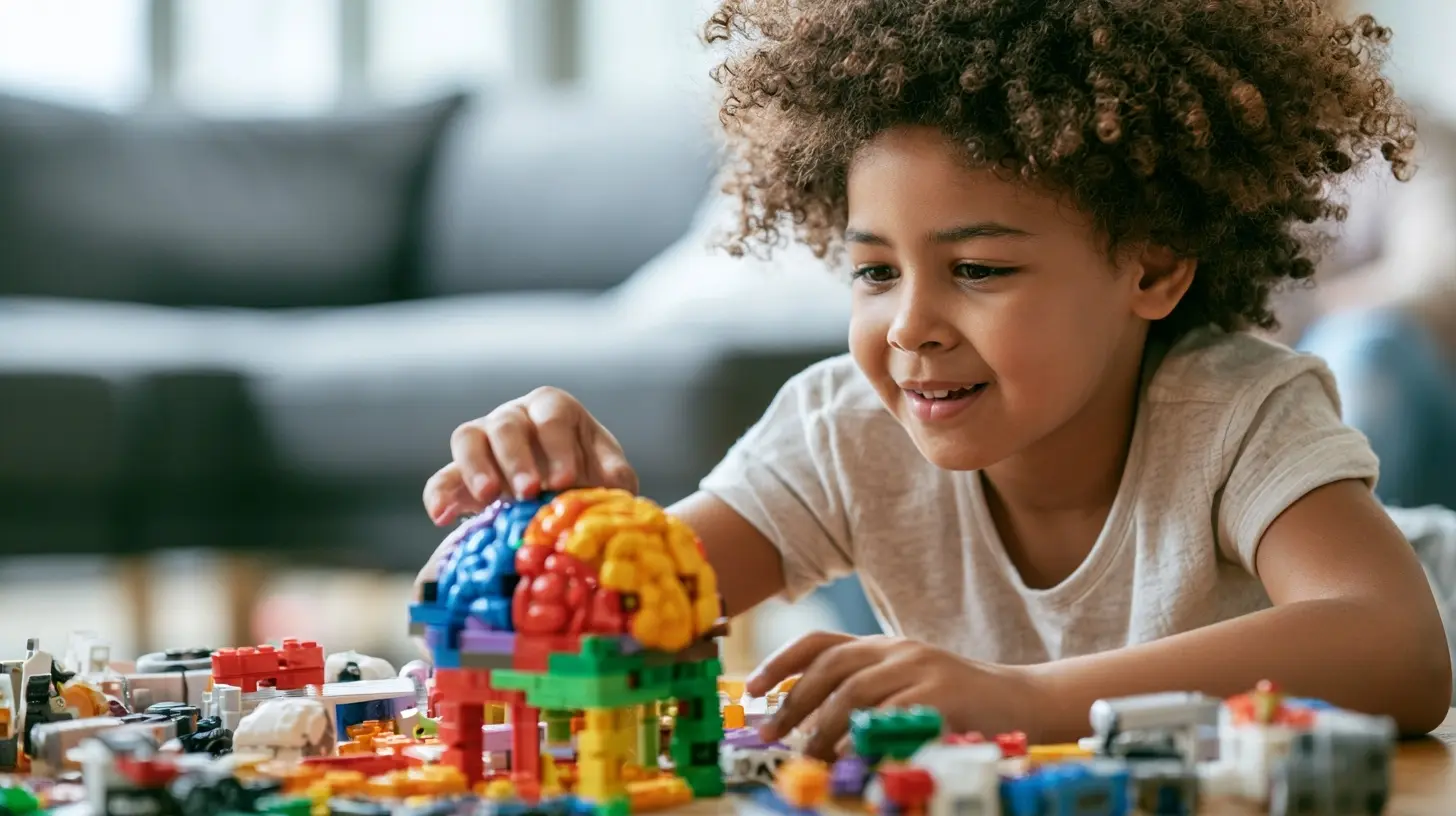
What Is Actually Happening in a Playing Brain
The brain is not a container you fill with facts. It is a prediction machine. It constantly builds models of how the world works, then tests those models against reality. When a prediction fails, the brain updates. That update is learning.Play is the safest possible environment for prediction testing. A child building a tower predicts it will stand. It falls. They adjust the base. It stands a little longer. No one grades them. No one is disappointed. The cost of being wrong is zero, which means the brain can afford to be bold.
Three systems matter most here.
First, the prefrontal cortex, which handles planning, impulse control, and flexible thinking. It develops slowly, well into the mid twenties. Play gives it low-stakes repetitions.
Second, the hippocampus, which consolidates memory and helps a child connect new experiences to old ones. When play is varied and self-directed, the hippocampus has more to work with.
Third, the brain's reward circuitry, driven largely by dopamine. Dopamine is not just a pleasure chemical. It is a motivation and learning signal. It surges when something is novel, when a challenge is just hard enough, and when a child feels agency. That surge tags the experience as worth remembering. This is one reason a game a child chose themselves sticks in memory far better than a worksheet they were handed.
There is also a well-documented phenomenon called synaptic pruning. Early childhood produces an enormous overgrowth of neural connections. Over time, the brain prunes what it does not use and strengthens what it does. Play is one of the main forces that decides which connections survive. A child who spends hours negotiating roles in pretend play is strengthening social and language circuits. A child who builds and rebuilds is strengthening spatial and motor circuits. The brain keeps what it practices.
Why Play Beats Direct Instruction for Young Children
This is where many well-meaning parents go wrong. They assume that if play is good, formal instruction must be better. It is more structured, more measurable, more obviously productive.For young children, the opposite is often true. Direct instruction can produce fast short-term gains, particularly in narrow skills like letter recognition. But those gains tend to fade, and they can come at a cost. When a four-year-old is drilled on flashcards, the brain is doing something different than when that same child hunts for letters on signs during a walk. In the first case, the child is learning to comply and recall. In the second, the child is learning that symbols carry meaning, that print is everywhere, and that figuring things out is interesting.
The second lesson is more durable. It also transfers. A child who learns to read because print is meaningful will keep reading when no one is watching. A child who learns to read because they were drilled may stop the moment the pressure lifts.
This does not mean instruction is useless. It means timing and dosage matter enormously. A short, playful introduction to a concept, followed by free exploration, tends to outperform an hour of seatwork for a child under seven. For older children, structured practice becomes more valuable because their prefrontal circuits can handle sustained focus and abstract reasoning. The mistake is applying the older-child model to the younger child.
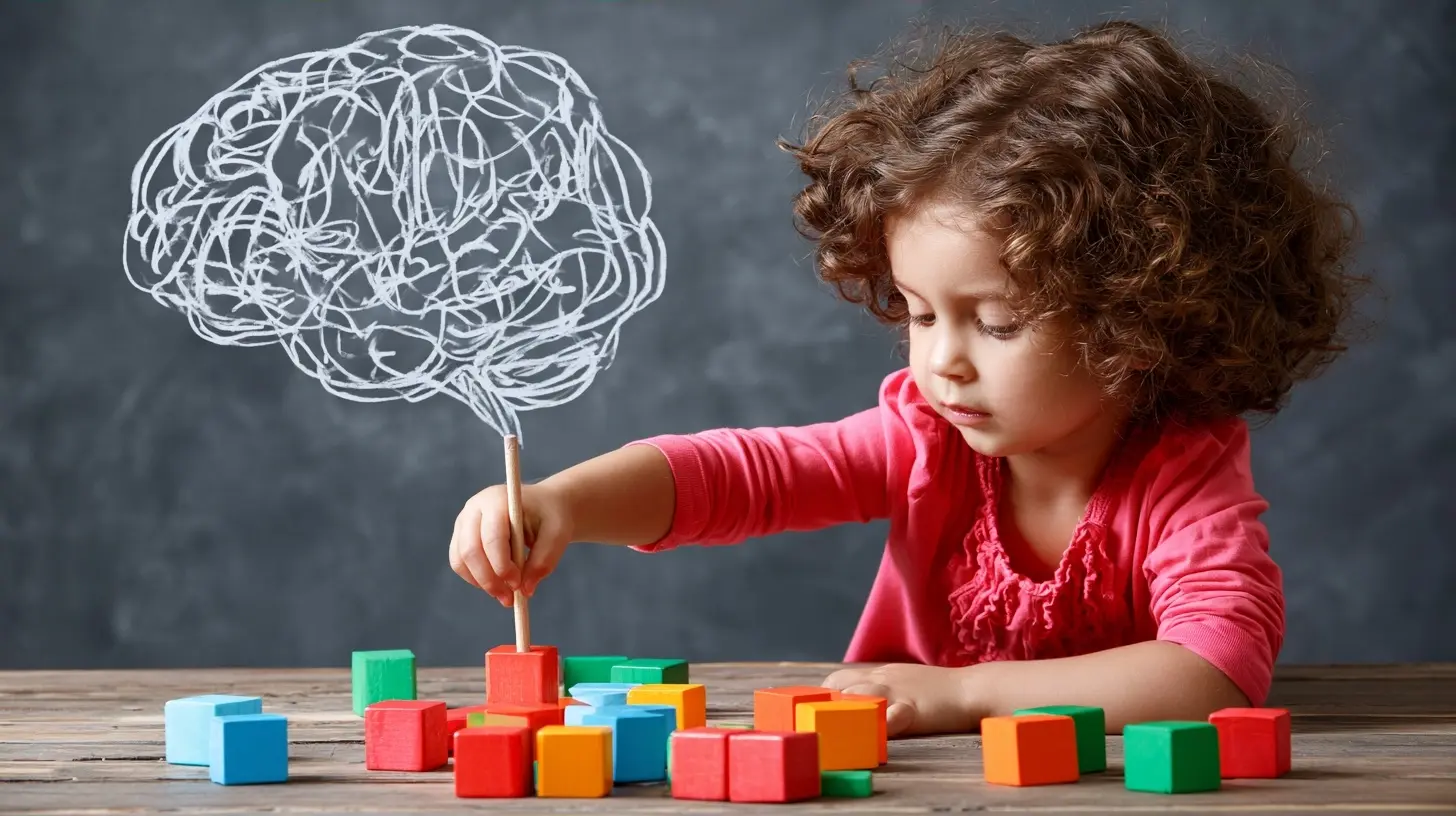
The Ingredients of Play That Actually Builds the Brain
Not all play is equal. A child passively watching a video is not getting the same neural workout as a child directing a game. The research on play consistently points to a few features that do the heavy lifting.Self-direction
When a child chooses the game, the rules, and the goal, the brain treats the activity as personally relevant. Dopamine rises. Attention sharpens. This is why a child who cannot sit still for a puzzle you chose will spend forty minutes on a game they invented.Self-direction does not mean you disappear. It means you follow rather than lead. You can offer materials, ask questions, and join in when invited. But the moment you take over the plot, you convert play into instruction, and the neural benefits shift.
Just-manageable difficulty
The brain learns best when a challenge is slightly beyond current ability. Too easy and there is no prediction error, so no update. Too hard and the stress response takes over, which shuts down the exploratory system.Children do this naturally. Watch a toddler with a shape sorter. They will attempt the same stubborn shape several times, fail, try a different angle, and eventually succeed. That is a self-calibrated difficulty curve. Your job is to avoid interrupting it. Resist the urge to say "try the square one." The struggle is the point.
Repetition with variation
A child who asks for the same story twenty times is not being difficult. They are consolidating. The brain strengthens a circuit through repeated activation, and it refines it through small variations. This is why children love the same book with tiny changes, the same game with new rules. Repetition builds the pathway. Variation sharpens it.Social back-and-forth
Play with others adds a layer that solo play cannot. A child must read faces, predict intentions, negotiate, and repair misunderstandings. These are complex cognitive tasks disguised as fun. The brain regions involved in perspective-taking and language get a serious workout.That said, solo play has its own value. It builds sustained attention, imagination, and the ability to tolerate boredom, which is itself a skill. A healthy play diet includes both.
What Pretend Play Does That Nothing Else Does
Pretend play deserves special attention because it is one of the most cognitively demanding things a young child does.When a child holds a banana to their ear and says "hello," they are holding two ideas at once: this is a banana, and this is a phone. That dual representation is a genuine cognitive feat. It requires the brain to suppress the obvious meaning and substitute an invented one. This is the same underlying capacity that later lets a child understand that a letter makes a sound, that a number stands for a quantity, and that a map represents a place.
Pretend play also builds what researchers call executive function: working memory, inhibition, and cognitive flexibility. A child playing restaurant must remember their role, resist the urge to be the customer, and adapt when the "customer" orders something off-menu. These are the same skills that predict school readiness far better than early reading ability.
You can support pretend play without hijacking it. Provide open-ended props: boxes, fabric, kitchen tools, cardboard tubes. Avoid toys that do everything for the child. A talking cash register that announces prices removes the need for the child to invent them. A plain wooden block requires the child to supply the meaning, and that is where the growth happens.
The Role of Movement and the Body
The brain does not live in a jar. Movement is deeply tied to learning, especially in early childhood.Physical play, climbing, chasing, balancing, roughhousing, activates the cerebellum and vestibular system, which are involved in coordination but also in attention and emotional regulation. A child who has been still for too long often cannot focus, not because they are defiant, but because their body needs input to reset their arousal level.
This is why recess is not a break from learning. It is part of it. If your child comes home from school and seems unable to settle, consider that they may need twenty minutes of physical play before homework, not after. The order matters more than most parents realize.
Rough-and-tumble play, in particular, has been observed across many species and appears to serve social functions: learning to read signals, testing strength without harm, and practicing self-control. If your child wants to wrestle, and everyone is willing, that is not chaos. It is a lesson in boundaries.
Common Mistakes Parents Make
Even informed parents fall into predictable traps. Here are the ones worth watching.Over-scheduling. A child with activities every afternoon has no time to invent. Downtime looks unproductive, but it is where self-directed play happens. Protect empty hours the way you protect meals.
Interrupting flow. When a child is absorbed, they are in a state of deep learning. Calling them to dinner mid-project, or asking constant questions, breaks the spell. When possible, give a five-minute warning and let them reach a stopping point.
Correcting the play. If your child is pretending a cow says "moo" but they insist it says "boop," let it go. The goal is not accuracy. It is imagination and agency. You can correct facts later, in a different context.
Buying too many single-purpose toys. A toy that does one thing gets used one way, then abandoned. A set of blocks, a pile of fabric, a bucket of loose parts, these get used a thousand ways. Fewer, more open materials usually produce richer play.
Treating screen time as equivalent. Some digital games do involve problem-solving and creativity. But passive consumption is not play. If a screen is involved, ask whether the child is directing the experience or receiving it. The former can be valuable. The latter rarely is.
Measuring play by its output. If you need to see a finished craft to feel the time was well spent, you will push your child toward products rather than process. The process is where the brain grows.
What This Means for School and Screen Decisions
Parents often ask whether play-based preschools put children behind. The honest answer is that it depends on what you measure and when.If you measure letter recognition at age four, a drill-based program may look better. If you measure reading comprehension, motivation, and self-regulation at age eight, the picture often reverses. Play-based early education tends to produce children who like school more and who catch up quickly on academic skills once formal instruction begins, because the underlying cognitive and emotional foundations are stronger.
This is not a guarantee. Quality matters enormously. A play-based program with engaged, trained teachers who scaffold learning is very different from one where children are simply left to wander. The key is whether adults are noticing what children are working on and gently extending it.
For screens, the same principle applies. A child using a drawing app to create a comic is doing something different from a child watching autoplay videos. One is active, one is passive. One builds, one consumes. Age matters too. Younger children benefit more from physical, three-dimensional play because their brains are still building spatial and motor maps that screens cannot fully provide.
Practical Ways to Support Play Without Controlling It
You do not need a playroom full of expensive equipment. You need a few conditions.Time. Unstructured, unhurried blocks of at least an hour, ideally daily. This is the single most important factor and the hardest to protect.
Space. A corner where a project can stay out for days. Nothing kills a long game like having to pack it up each night.
Materials. Loose parts: blocks, boxes, string, tape, fabric, rocks, cups. Rotate them occasionally so they feel new.
A light touch. Sit nearby. Be available. Follow their lead. Ask open questions like "what happens next?" rather than "what is that?"
Tolerance for mess. Some of the best play is messy. If every spill ends the game, you are teaching your child to play small.
Your own play. Children learn what matters by watching you. If you never do anything for the joy of it, they will absorb that lesson.
A Balanced View
It would be easy to turn this into a rule: play is good, instruction is bad. That is not accurate either.Structured activities have real value. Music lessons, sports, and guided projects teach persistence, technique, and the experience of working toward a goal. Direct instruction becomes increasingly important as children get older and need to master specific skills. The point is not to eliminate structure. It is to stop treating play as optional and instruction as the only legitimate use of time.
The healthiest approach is a rhythm: plenty of free play, some guided exploration, and a gradually increasing amount of formal learning as the child's brain matures. The proportions shift with age. What should not shift is the respect for play as a genuine form of learning, not a distraction from it.
The Long View
The neuroscience here is not a trick to make play sound productive so parents will allow it. It is a description of how brains actually build themselves. Play is the mechanism through which children practice the skills they will need, in a context where mistakes are cheap and curiosity is the guide.If you take one thing from this, let it be this: when your child is deep in play, they are not wasting time. They are doing the most important work of childhood. Your job is not to direct it. It is to protect it.
all images in this post were generated using AI tools
Category:
Play Based LearningAuthor:

Steven McLain