Supporting Dual Language Learning Through Play
16 October 2026
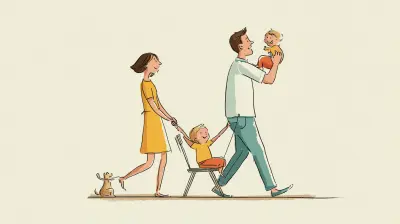
Raising a child with two languages is one of the most rewarding gifts a family can offer. It is also one of the messiest, loudest, and most joyful projects you will ever take on. Books slide off the shelf, snacks get shared in two languages, and somewhere between the kitchen table and the backyard, a small person starts switching codes like a tiny diplomat. The good news is that you do not need flashcards, expensive curricula, or a linguistics degree. You need play.
Play is the native language of childhood. It is how children test ideas, build relationships, and make sense of the world. When you weave a second language into play, you stop treating it as a school subject and start treating it as a living part of your family's daily rhythm. This article digs into why play works so well for dual language learning, how to set up environments that make it happen, what to do when progress stalls, and which common mistakes quietly sabotage even the most well-intentioned efforts.
Why Play Is the Engine of Dual Language Learning
Children do not acquire language by memorizing word lists. They acquire it through meaningful interaction in contexts that matter to them. A toddler does not care that "agua" means water. She cares that she is thirsty and that someone responds when she reaches and babbles. The word gets attached to the experience, and the experience is what makes it stick.Play creates exactly the kind of rich, repetitive, emotionally warm context that language acquisition thrives on. Here is what is happening beneath the surface:
- Repetition without boredom. A child who plays the same pretend grocery store game ten times hears "How much does this cost?" ten times. In a worksheet, that repetition would be tedious. In play, it is the whole point.
- Predictable routines with room for variation. Games have structure, which gives children a safe frame for trying new words. They also have openings, which invite them to improvise.
- Low stakes. When the goal is to have fun, a wrong word is not a failure. It is just a bump in the game. That emotional safety matters enormously for a child learning to take linguistic risks.
- Embodied learning. Running, building, pouring, and pretending involve the whole body. Movement and language get wired together, which strengthens memory.
- Social motivation. Children want to be understood by the people they love. Play gives them a reason to reach for the second language instead of defaulting to the one that comes easier.
The key insight is that play is not a break from language learning. It is the delivery system.
The Two Big Approaches: One Parent, One Language and Mixed Use
Before you plan a single game, it helps to know which family language strategy you are working with, because it shapes how play unfolds.One Parent, One Language (OPOL)
In this approach, each parent consistently speaks a different language to the child. It is popular because it gives children a clear, predictable map of who speaks what. The advantage is consistency: the child quickly learns that Dad is the Spanish channel and Mom is the English channel. The trade-off is that it can feel rigid, and it depends heavily on both parents being present and fluent.Minority Language at Home (mL@H)
Here, the whole family speaks the minority language at home and the majority language is picked up from the community, school, or media. This gives the minority language a strong daily foothold, which is often the hardest thing to maintain. The risk is that the majority language may lag slightly before school entry, though most children catch up quickly once surrounded by it.Mixed or Flexible Use
Many families blend languages depending on context, energy, and who is in the room. This is realistic and common, especially in multilingual households with grandparents, cousins, and caregivers in the mix. The downside is that without some intentional structure, the minority language can quietly shrink until it is only used for bedtime stories.None of these is objectively best. The right choice depends on your family's languages, your community, your children's ages, and how much support you have. What matters most is that the minority language gets consistent, joyful exposure, and play is the easiest place to guarantee that.
Setting Up a Play Environment That Invites Two Languages
You do not need a dedicated playroom. You need a few deliberate choices that make the second language visible, audible, and useful.Make Language Part of the Furniture
Labeling is a classic early literacy move, but it works even better when it is playful rather than instructional. Instead of neat index cards, try a pretend "menu" in the play kitchen with words in both languages. Write a "shopping list" that lives in the toy grocery basket. Put a world map on the wall with family photos pinned to the places your languages come from. The goal is not decoration. It is to make the second language feel like part of the landscape rather than a special guest.Curate Toys That Beg for Conversation
Some toys are language machines. Others are silent. A talking electronic toy that recites the alphabet in one language does very little for dual language development because it does not require the child to respond. A set of wooden animals, a doctor kit, or a box of dress-up clothes does far more, because it demands narration, negotiation, and pretend dialogue.Ask yourself: does this toy need a human to bring it to life? If yes, it is probably a good language toy.
Create a "Language Corner" or Rotating Basket
A small basket that rotates every week or two keeps novelty high. Fill it with items tied to a theme: farm animals, vehicles, cooking tools, or seasonal objects. When the basket changes, the vocabulary changes with it. This is a gentle way to expand vocabulary without turning play into a lesson.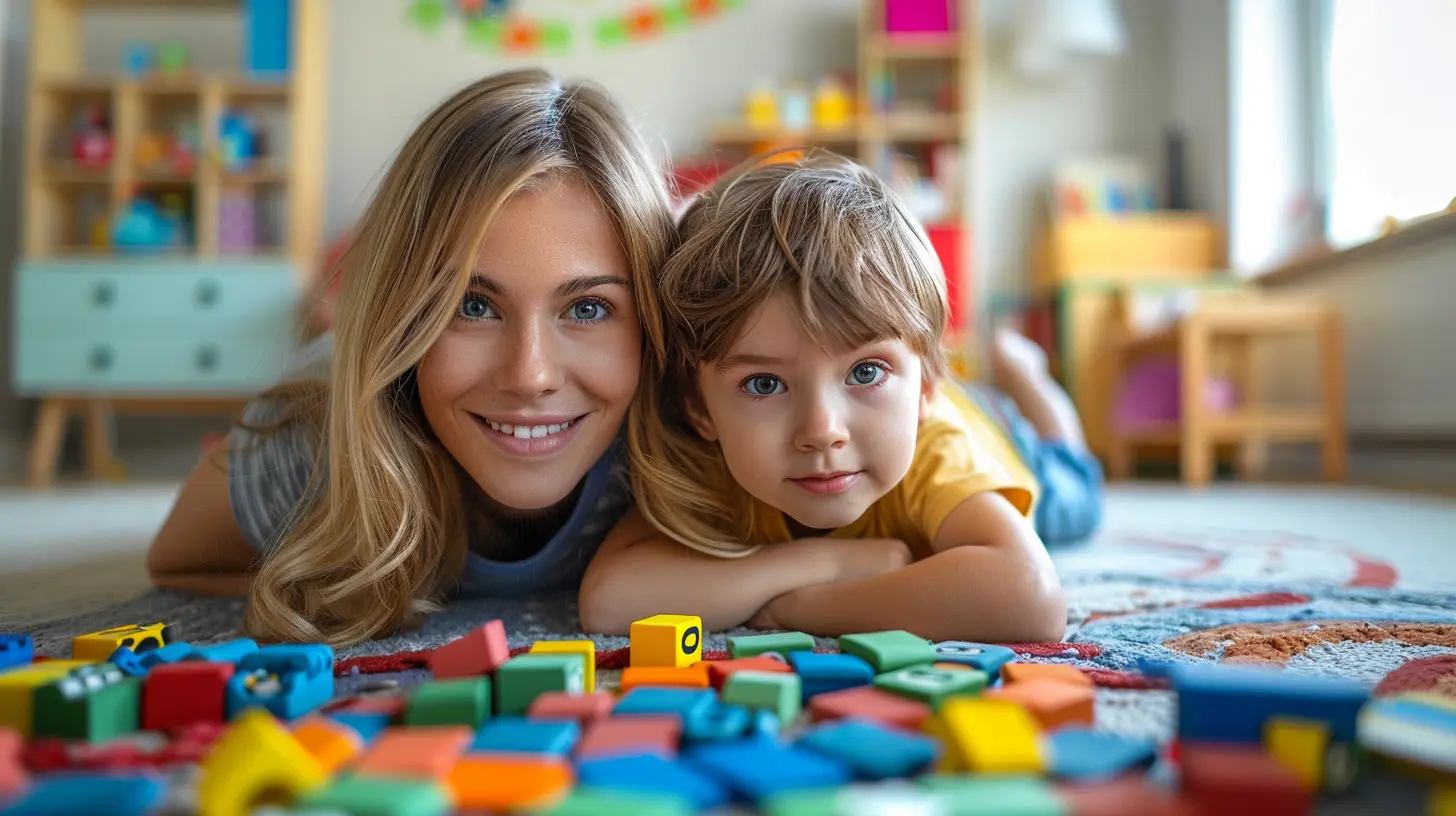
Play Ideas by Age and Stage
Children's play changes as they grow, and so should your language strategies. What works for a two-year-old will bore a six-year-old, and what challenges a six-year-old will frustrate a toddler.Toddlers (Ages 1 to 3): Parallel Play and Naming
At this stage, children play alongside you more than with you. Your job is to narrate, name, and respond. Keep sentences short and concrete.- Peekaboo in two languages. Alternate the words you use to announce yourself. The game is the same, the language shifts.
- Animal sounds. Animal noises are a wonderful bridge because they are similar across many languages and children love them. Name the animal in both languages and make the sound.
- Water play. Pouring, splashing, and floating invite words like "wet," "dry," "full," "empty," and their equivalents. Repeat them often and naturally.
- Stacking and knocking down. "Up, up, up... down!" works in any language, and the physical action cements the meaning.
At this age, do not worry about correcting pronunciation. Focus on connection and exposure.
Preschoolers (Ages 3 to 5): Pretend Play and Storytelling
This is the golden age for pretend play. Children can hold a role, follow a simple plot, and negotiate with a partner. This is where dual language learning can really accelerate.- Restaurant or cafe. One person is the chef, one is the customer. Menus, orders, and polite phrases appear naturally. If you can, do the whole game in the minority language.
- Doctor and patient. Body parts, feelings, and comfort phrases all show up. This is also a lovely way to build emotional vocabulary in both languages.
- Grocery store. Counting, colors, and food names combine. Use real empty boxes and a toy cash register to add realism.
- Puppet shows. Puppets are forgiving. A shy child will often speak through a puppet in a way they would not speak directly. Use two puppets, one for each language, and let them "translate" for each other.
Early Elementary (Ages 6 to 9): Rule-Based Games and Projects
Older children want challenge, fairness, and a sense of competence. Board games, card games, and building projects are ideal.- Board games. Games with clear rules and repeated phrases are excellent. The same sentence structures come up again and again, which builds fluency.
- Cooking together. Following a recipe in the minority language is a real-world literacy task disguised as fun. Measuring, mixing, and tasting all generate language.
- Comics and storytelling. Have your child draw a comic strip and dictate the dialogue in the minority language. You write it, they read it back.
- Treasure hunts. Write clues in the minority language. The reward is the payoff, and the reading is the work.
The Role of Music, Rhythm, and Movement
Music deserves its own section because it does something that conversation alone cannot. Songs embed language in melody and rhythm, which makes them easier to recall. A child who cannot yet produce a full sentence may still sing one.- Sing the same song in both languages. If you know a tune in one language, find or create a version in the other. The melody gives the words a home.
- Use movement songs. Songs with actions, like clapping, stomping, or spinning, link vocabulary to physical memory.
- Make up silly songs. You do not need to be a good singer. You need to be a willing one. Nonsense songs in the minority language lower the pressure and raise the joy.
- Transition songs. A clean-up song in the minority language turns a chore into a game and gives you a reliable language anchor for daily routines.
Common Mistakes and Misconceptions
Even enthusiastic families run into the same traps. Knowing them in advance can save you months of frustration.Mistake 1: Treating the Second Language as a Performance
If every interaction becomes a quiz, children learn to avoid the language. "Say it in Spanish" said too often turns a gift into a test. Instead, model the language and let the child respond in whatever language they choose. Comprehension comes first. Production follows when the child is ready.Mistake 2: Correcting Too Much
Constant correction interrupts play and dampens motivation. A better approach is recasting: repeat what the child said, but in the correct form. If the child says "I goed to the park," you say, "Oh, you went to the park? What did you see?" The child hears the correct version without being told they were wrong.Mistake 3: Assuming Screen Time Counts as Play
Passive video in a second language can support exposure, but it does not replace interactive play. Children learn language best when they are responding, not just watching. Use screens as a supplement, not a substitute.Mistake 4: Believing Children Will Just Absorb It
Some children do seem to absorb a second language effortlessly. Most do not. Consistent, meaningful exposure is what makes the difference. Play is the easiest way to provide that exposure without it feeling like work.Mistake 5: Giving Up When Progress Feels Slow
Dual language development is not linear. Children often go through silent periods, mix languages, and seem to plateau. This is normal. Mixing languages is not confusion. It is a sign of a flexible, active brain. Keep playing, keep talking, and trust the process.Misconception: Two Languages Cause Speech Delays
This is one of the most persistent myths, and it worries many parents unnecessarily. Research generally shows that bilingual children reach language milestones on a similar timeline to monolingual children, though their total vocabulary may be split across two languages. If you have genuine concerns about your child's speech or hearing, talk to a professional. But do not drop a language out of fear. That decision is rarely necessary and often regretted.Balancing Two Languages Without Burning Out
One of the hardest parts of raising a bilingual child is keeping both languages alive when the world around you pushes hard toward one. Here are some practical ways to protect the minority language without exhausting yourself.- Protect the minority language during play. If the majority language dominates every other part of the day, make play the one zone where the minority language lives.
- Recruit allies. Grandparents, cousins, babysitters, and friends who speak the minority language are gold. Even a weekly video call can make a difference.
- Travel or connect culturally. Food, festivals, and stories from the culture tied to the language give it meaning beyond words. A child who feels connected to a place or a person is more motivated to speak the language.
- Accept the seasons. Some weeks will be rich in language play. Others will be survival mode. That is fine. Consistency over years matters more than perfection over days.
- Celebrate small wins. The first joke in the minority language. The first time your child translates for a relative. These moments are worth noticing out loud.
When to Seek Support
Most families can support dual language learning through play alone, especially in the early years. But there are times when outside help is wise.- If your child is not responding to sound or speech by the expected ages.
- If your child seems frustrated or distressed by communication in either language.
- If you are the only speaker of the minority language and you feel isolated or unsure.
- If a teacher or pediatrician raises a concern.
A speech-language pathologist with bilingual experience can offer guidance without asking you to drop a language. In fact, most professionals now encourage families to keep both languages going.
A Final Word on Joy
The families who succeed at raising bilingual children are rarely the ones with the most elaborate systems. They are the ones who kept it fun. They sang badly, told silly stories, mispronounced words, and laughed about it. They made the second language a place where their child wanted to be, not a task to complete.Play is not a technique you add to your parenting to-do list. It is the thing you are already doing. All you have to do is let a second language ride along. Speak it while you build the tower. Sing it while you wash the dishes. Whisper it during hide and seek. Over time, those small, joyful moments add up to something remarkable: a child who moves between two worlds with ease, curiosity, and delight.
all images in this post were generated using AI tools
Category:
Play Based LearningAuthor:

Steven McLain
Discussion
rate this article
1 comments
Capri Garcia
I love this approach! Play makes learning a second language feel natural and fun for kids. It's amazing to see how they pick up new words while just being themselves. Can't wait to try these ideas with my little ones at home!
October 16, 2026 at 3:35 AM