Parenting with Flexibility in a Structured World
22 September 2026
There is a moment every parent knows. The schedule says one thing. The child says another. The clock is ticking, the bag is packed, the shoes are on, and yet your four-year-old has decided that today is the day she will sit on the floor and cry because her socks feel wrong. You have two choices in that moment, and neither of them is easy. You can hold the line, or you can bend. Most parenting advice treats this as a binary: be consistent or be permissive. But the real craft, the one that takes years to learn, lives in the space between those poles.
Flexibility is not the absence of structure. It is the intelligent use of structure. A tree that cannot bend in wind will snap. A tree with no trunk at all will collapse. Parenting works the same way. The trunk is your values, your routines, your boundaries. The bending is your response to the specific child in front of you on a specific day. This article is about how to build both, and how to know which one the moment calls for.
Why Structure Matters in the First Place
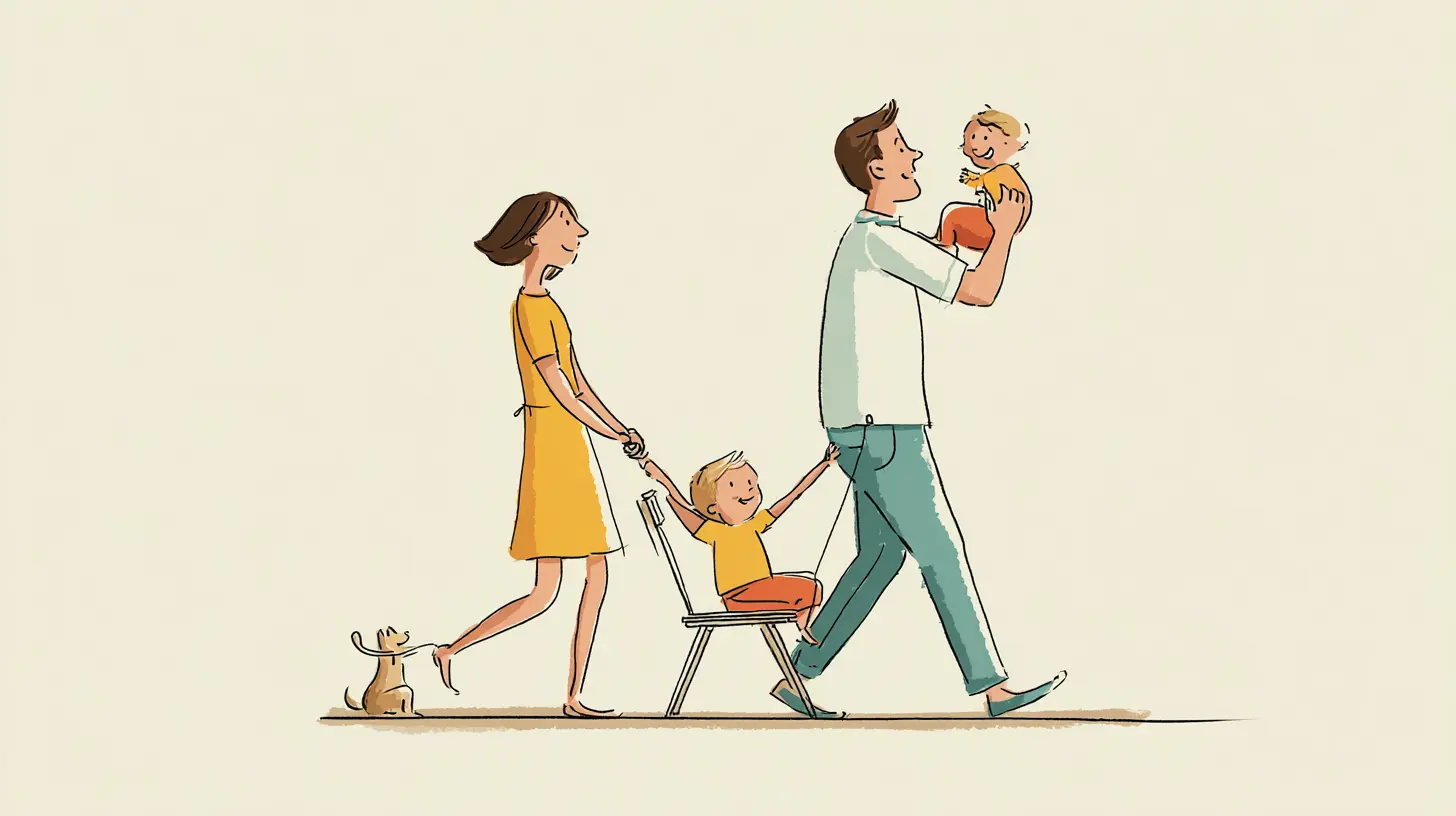
Before we talk about flexibility, we have to be honest about why structure earns its place. Children's brains are still developing the systems that govern impulse control, time perception, and emotional regulation. A predictable environment reduces the cognitive load on those immature systems. When a child knows what comes next, she does not have to spend energy bracing for the unknown. That energy becomes available for play, connection, and learning.Structure also functions as a form of safety. A home where dinner happens at roughly the same time, where bedtime has a recognizable rhythm, where adults respond in reasonably consistent ways, teaches a child that the world is navigable. This is not about rigidity. It is about the difference between a river with banks and a flood. The banks do not imprison the water. They give it direction.
The mistake many parents make is treating structure as an end in itself. They build elaborate systems of charts, timers, and consequences, then defend those systems against all evidence that they are not working. Structure should serve the child. When it stops serving, it becomes decoration at best and tyranny at worst.
What Flexibility Actually Means
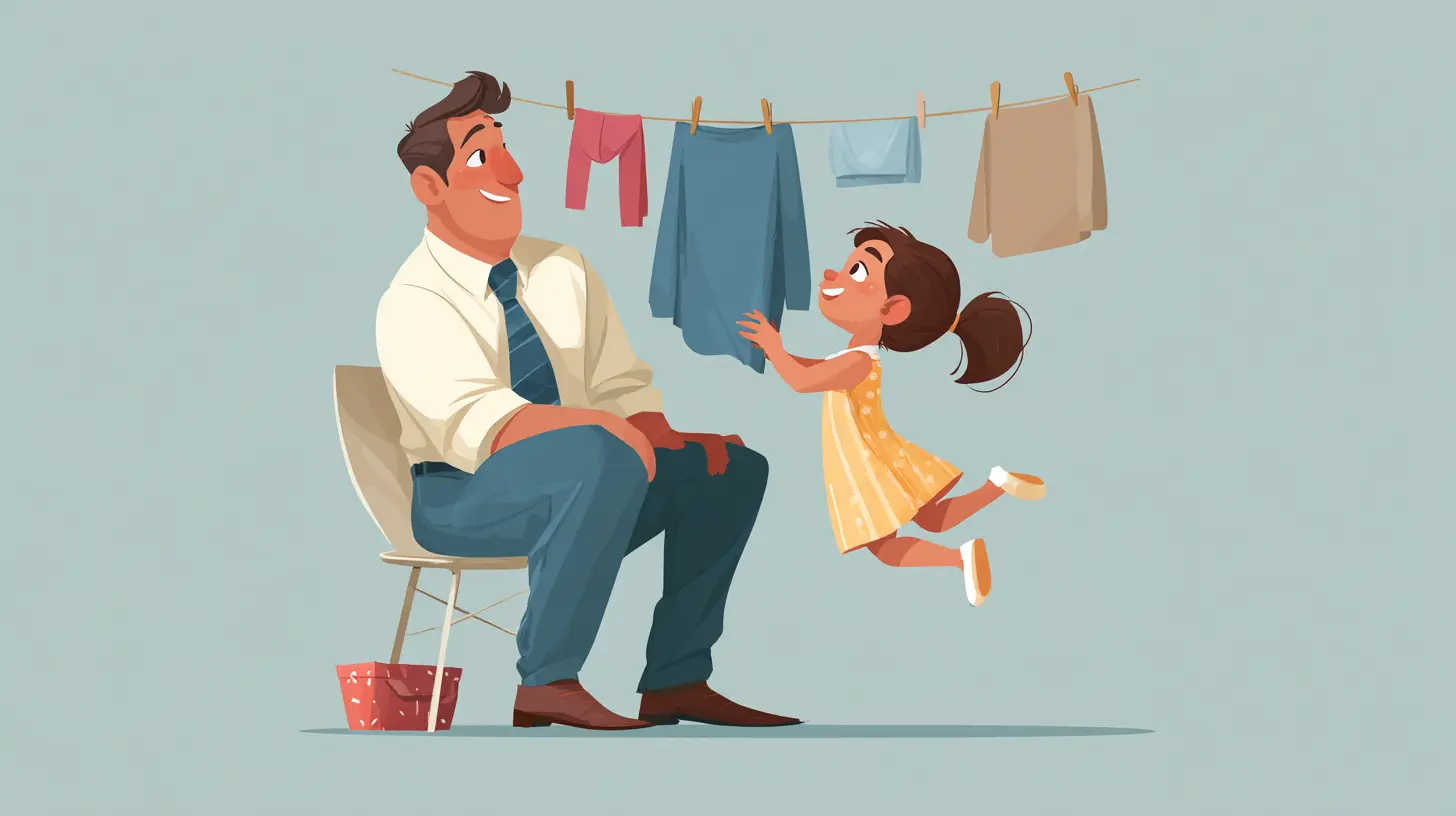
Flexibility is often confused with leniency. They are not the same thing. Leniency gives in because the parent cannot tolerate the child's distress, or because conflict feels unbearable in the moment. Flexibility adjusts because the parent has read the situation accurately and chosen a response that better serves the long-term goal.Consider the sock example. A lenient response is: "Fine, wear whatever, we will be late." A flexible response might be: "I hear that these socks feel wrong. Let us find a pair that works, and we will leave in two minutes." The boundary, leaving on time, holds. The path to it changes.
Flexibility requires three capacities that leniency does not: accurate observation, emotional regulation on the parent's part, and a clear sense of what actually matters. Without those three, flexibility slides into chaos, and chaos is not kind to children. It is disorienting.

The Difference Between Principles and Preferences
One of the most useful distinctions a parent can make is between principles and preferences. Principles are the non-negotiables: safety, respect for others, honesty, basic health. Preferences are everything else: the exact time of bath, the order of the bedtime routine, whether the sandwich is cut in triangles or rectangles.Most parental stress comes from treating preferences as principles. When you fight about triangle sandwiches as if they were a moral issue, you teach your child that small things are big things. You also exhaust yourself. Save your authority for the things that genuinely matter, and you will have more of it when you need it.
This does not mean children should run the household. It means the household should be governed by a small number of clear principles, applied with judgment, rather than a large number of arbitrary rules enforced by fatigue.

Reading the Child in Front of You
Flexibility begins with observation. Not the anxious, hyper-vigilant kind, but the calm, curious kind. What is this child's temperament? Some children thrive on routine and fall apart when it shifts. Others find too much predictability stifling and need room to improvise. The same parenting approach that calms one child will agitate another. This is not a failure of your method. It is a fact of human variation.Temperament is not destiny, but it is real. A child who is slow to warm up needs more warning before transitions. A child who is highly sensitive needs more preparation for sensory changes. A child who is intense needs more physical outlet before a quiet activity. None of this is indulgent. It is responsive.
The skill here is to distinguish between a child's genuine need and a child's momentary preference. A tired toddler melting down at the grocery store is not being manipulative. A ten-year-old who suddenly refuses to do homework may be signaling something deeper, or may simply be testing a boundary. The response should differ accordingly, and the only way to know which is which is to pay attention over time.
When Structure Should Hold
There are moments when flexibility is the wrong tool. When a child is in the middle of a tantrum, for example, negotiation is usually counterproductive. The child's nervous system is flooded. Reasoning will not reach her. What she needs is calm presence and a boundary that does not move. "I will not let you hit. I am here." That is not rigidity. It is containment, and containment is a form of care.Similarly, safety rules should not bend. Car seats, helmets, holding hands near traffic, not touching the stove. These are not preferences. They are the floor beneath the family. Children actually feel safer when they sense that some things are not up for debate. The absence of any firm ground is frightening, even when it looks like freedom.
There is also a case for holding structure during periods of family stress. When a parent is ill, when a marriage is struggling, when a move or a loss has disrupted everything, children often do better when the small routines remain. Dinner at the same time. The same bedtime story. The same goodbye ritual at school. These anchors do not fix the larger problem, but they steady the ground while the adults work on it.
When Flexibility Should Bend
Flexibility is most valuable during transitions, during illness, during developmental leaps, and during genuine emotional storms. A child who is learning to read may need a later bedtime for a few weeks. A child who is grieving a friend's move may need to skip a chore and sit with you instead. A teenager who is struggling with anxiety may need the rules around screen time renegotiated rather than enforced.The key is to make the bend intentional and temporary. "We are going to try this for two weeks, and then we will check in." This does two things. It signals that you are responsive, not arbitrary. And it prevents the exception from quietly becoming the new normal without anyone deciding that it should.
Bending without a frame is how families drift into patterns no one chose. Bending with a frame is how families adapt without losing their shape.
The Trap of Inconsistency
There is a real risk in flexibility, and it is worth naming plainly. If children cannot predict how you will respond, they will test constantly. Not because they are defiant, but because they are trying to locate the boundary. A boundary that moves unpredictably is more stressful than a boundary that is firm.The difference between healthy flexibility and harmful inconsistency is whether the child can understand the logic. "We are staying up late tonight because it is a holiday" is understandable. "We are staying up late tonight because I am too tired to fight" is not, and children sense the difference. They may not articulate it, but they feel it.
So the rule is this: bend for reasons you would be willing to explain. If you would be embarrassed to tell your child why you are making an exception, that is a sign you are bending for your own convenience rather than for the child's good. That is not flexibility. That is avoidance, and it teaches the wrong lesson.
Practical Strategies for Flexible Structure
Build Routines with Slack
Design your routines with built-in buffer. If bedtime is at eight, start the wind-down at seven fifteen, not seven fifty-five. The buffer absorbs the unexpected without blowing up the schedule. A routine that only works when everything goes perfectly is not a routine. It is a fantasy.Use "When-Then" Framing
Instead of "If you do not clean up, no dessert," try "When the blocks are back in the bin, we will have dessert." This keeps the boundary intact while giving the child agency over the timing. It also avoids the power struggle that "if" often invites.Offer Controlled Choices
Two acceptable options, both of which you can live with. "Do you want to brush teeth now or after your story?" The child experiences autonomy. You keep the outcome. This works best when the choices are genuine and the parent is genuinely fine with either.Name the Exception Out Loud
When you bend, say so. "Usually we do not have screens before school, but today you are sick and I want you to rest." This teaches the child that rules have reasons and that reasons can change. It also prevents the child from concluding that the rule was never real.Check In Periodically
Once a month, or once a season, sit down with your partner or with yourself and ask: what is working? What has drifted? What exceptions have become habits? This is the maintenance that keeps flexibility from becoming chaos.Common Mistakes and Misconceptions
The first misconception is that consistency means doing the same thing every time. It does not. Consistency means being the same kind of parent every time: the same values, the same warmth, the same underlying steadiness. The specific response can vary. The person behind it should not.The second is that flexibility means the child gets what she wants. It does not. Flexibility means the child gets a parent who is paying attention. Sometimes that means the answer is still no, but the no is delivered with understanding rather than reflex.
The third is that structure and flexibility are opposites. They are not. They are partners. Structure without flexibility becomes brittle. Flexibility without structure becomes formless. The goal is a living system, one that holds its shape while remaining responsive to what is actually happening.
A fourth mistake is applying the same approach to every child in the family. Siblings are not interchangeable. What works for one may be wrong for another. Treating them identically in the name of fairness often means treating them unfairly. Fairness is giving each child what she needs, not giving every child the same thing.
The Long View
Parenting is not a performance to be optimized. It is a relationship to be tended. The goal is not a child who complies, but a child who learns to regulate herself, to make decisions, to trust her own perceptions, and to know that the adults in her life are both reliable and reasonable.Flexibility, practiced well, teaches all of that. It shows a child that rules exist for reasons, that reasons can be discussed, that emotions are survivable, and that change is possible without collapse. Structure, practiced well, teaches that the world has shape, that some things can be counted on, and that freedom is most meaningful when it has a frame.
The parent who can hold both, who can be the trunk and the branch, gives a child something rare: a home that is both safe and alive.
A Closing Thought
You will not get this right every day. No one does. There will be mornings when you hold a line that did not need holding, and evenings when you bend when you should have stood firm. That is not failure. That is the work. The point is not to be perfectly consistent or perfectly flexible. The point is to stay in the conversation, to keep observing, to keep adjusting, and to keep showing up as the same steady person your child is learning to trust.The world outside your home will be structured in ways you cannot control. Inside your home, you get to build something that prepares your child for that world without crushing her spirit. That is the work of flexibility in a structured world. It is slow, it is imperfect, and it is worth every difficult morning.
all images in this post were generated using AI tools
Category:
Parenting ExpectationsAuthor:

Steven McLain