How to Use Everyday Objects for Meaningful Play
31 October 2026
A cardboard box sits in the corner of the kitchen. To you, it is trash waiting for recycling day. To a four-year-old, it is a spaceship, a cave, a delivery truck, and a hiding spot, all within the same afternoon.
That gap between what adults see and what children see is where meaningful play lives. It is also where many parents feel stuck. Toy aisles promise enrichment, but the most durable play materials are often already in your home: pots and lids, socks, buttons, cardboard tubes, laundry baskets, and wooden spoons. The question is not whether everyday objects can support play. It is how to use them in ways that actually matter, rather than simply handing a child a spatula and hoping for the best.
This guide is about that "how." It covers why ordinary objects work so well, how to choose and prepare them, how to match them to your child's developmental stage, and how to avoid the mistakes that turn open-ended play into frustration or mess for everyone involved.
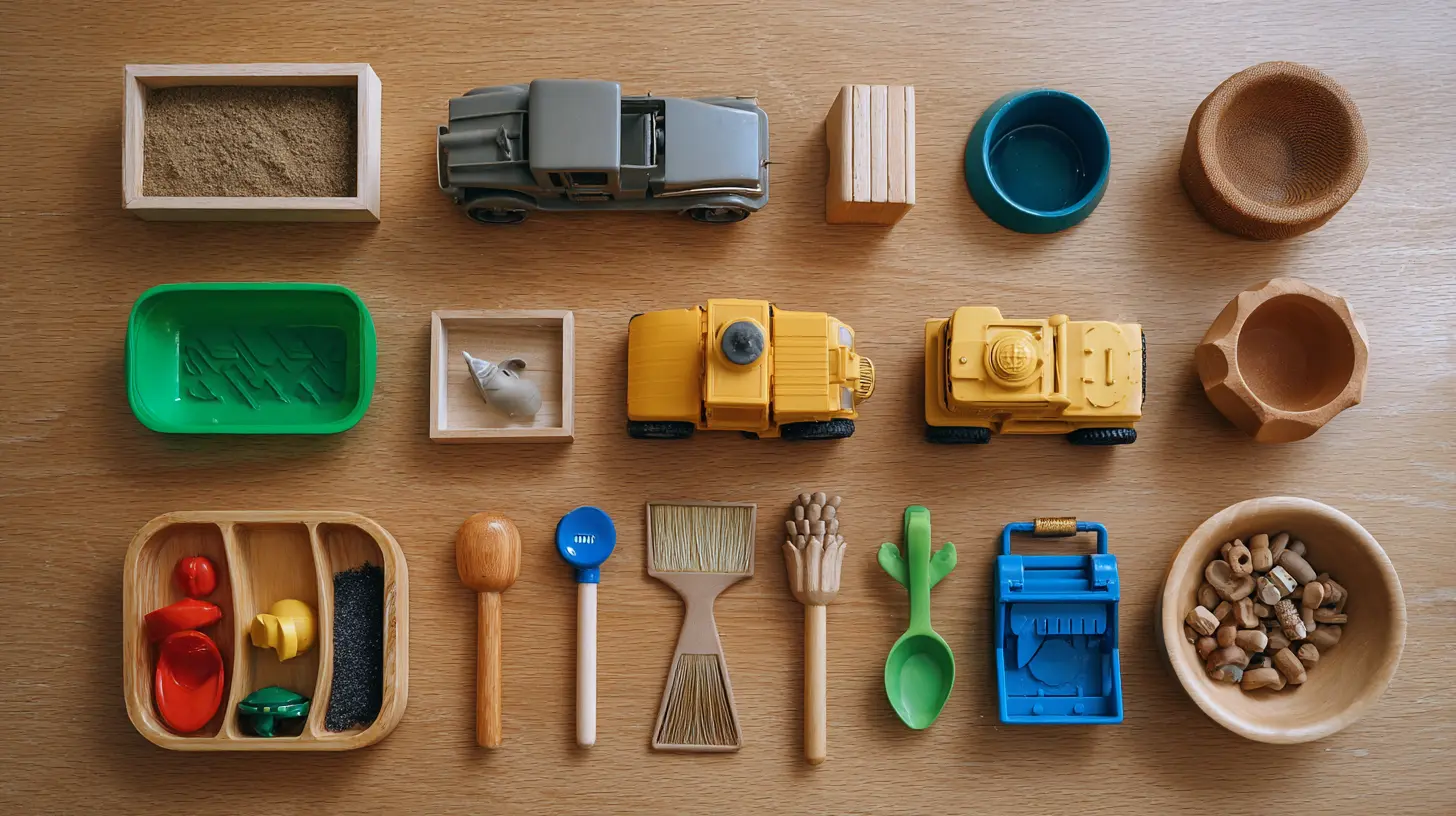
Why Everyday Objects Support Deep Play
Manufactured toys tend to have a fixed identity. A plastic cash register is a cash register. It does one thing, and once a child has mastered that thing, interest fades. Open-ended objects work differently. A colander can be a hat, a drum, a sieve for sand, or a boat for bath toys. Because the object does not dictate the play, the child has to supply the meaning, and that act of supplying meaning is where the cognitive work happens.There is a well-established idea in early childhood development, often called object substitution, in which children use one thing to stand for another. When a child picks up a block and calls it a phone, they are holding two ideas in mind at once: what the object is and what it represents. This is a precursor to symbolic thinking, and it shows up in language, drawing, and early literacy. A toy phone that looks like a phone does some of that work for the child. A block does not, so the child does more of it.
Everyday objects also carry a second advantage: they are familiar. Children feel competent around them because they have watched adults use them a thousand times. That familiarity lowers the barrier to entry. A child who hesitates in front of a complex toy may happily stir a pot of imaginary soup because they have seen soup made and feel they know the script.
Finally, household objects are cheap and plentiful, which changes the emotional stakes for parents. You are less likely to hover over a child using a cardboard tube than over a child using a fragile toy. That relaxation matters, because one of the strongest predictors of rich play is an adult who is present but not controlling.
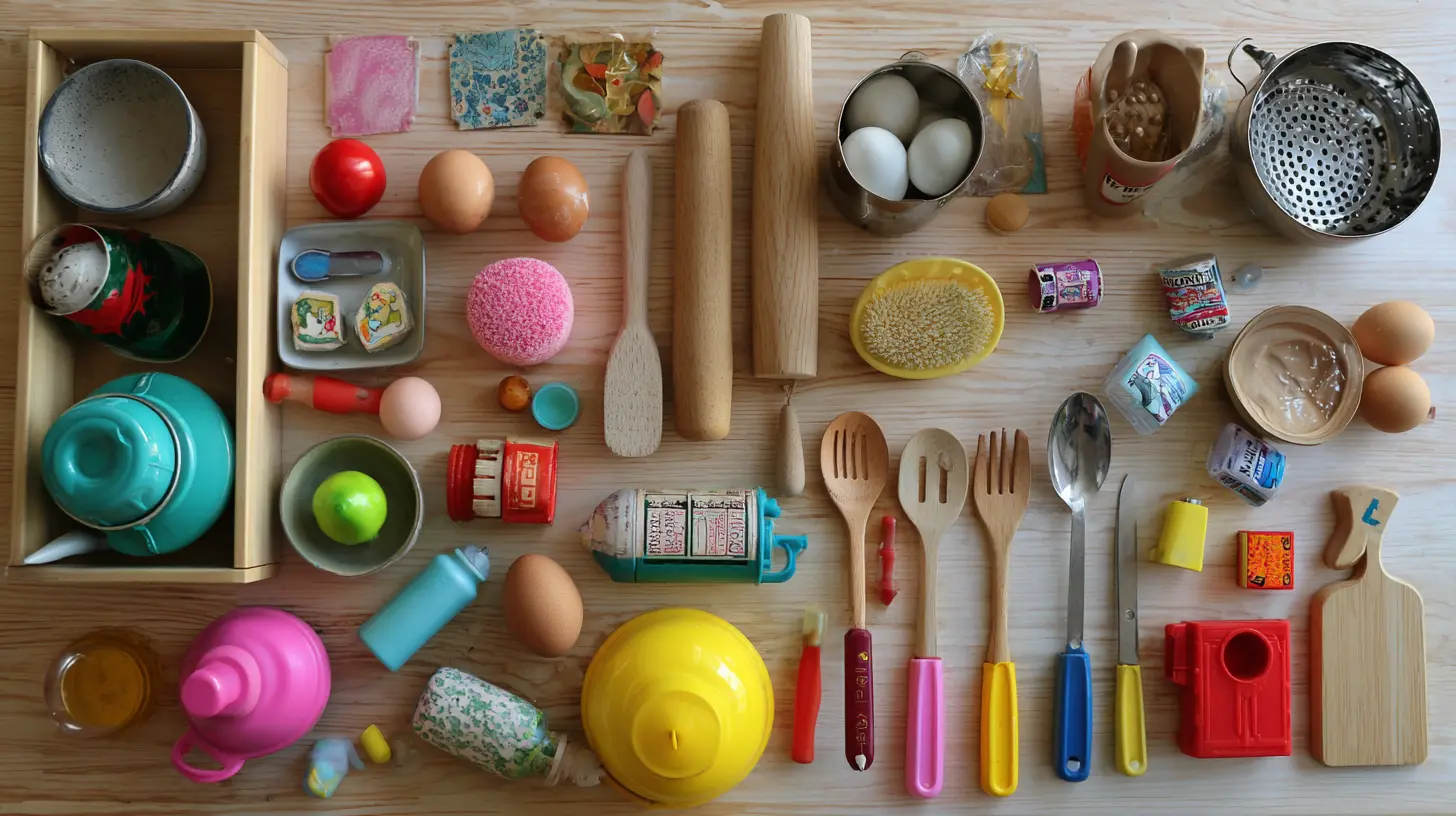
The Core Principle: Prepare the Environment, Then Step Back
The most common mistake with everyday objects is treating them as a substitute for planning. Handing a toddler a whisk and walking away rarely produces meaningful play. Handing the same toddler a whisk, a bowl, and a few large pompoms, sitting nearby, and saying nothing for the first few minutes often produces ten minutes of focused stirring, sorting, and experimenting.The principle is this: prepare the environment carefully, then reduce your involvement to observation and light response. Preparation means choosing objects that are safe and appropriate, arranging them so they invite action, and removing distractions. Stepping back means resisting the urge to direct, correct, or narrate every moment.
This balance is harder than it sounds. Many parents swing between two extremes: full orchestration, where the adult designs a craft-like activity with a predetermined outcome, and total neglect, where the child is left with a pile of random items and no scaffolding. Meaningful play sits between them. The adult sets the stage and stays close, but the child writes the script.
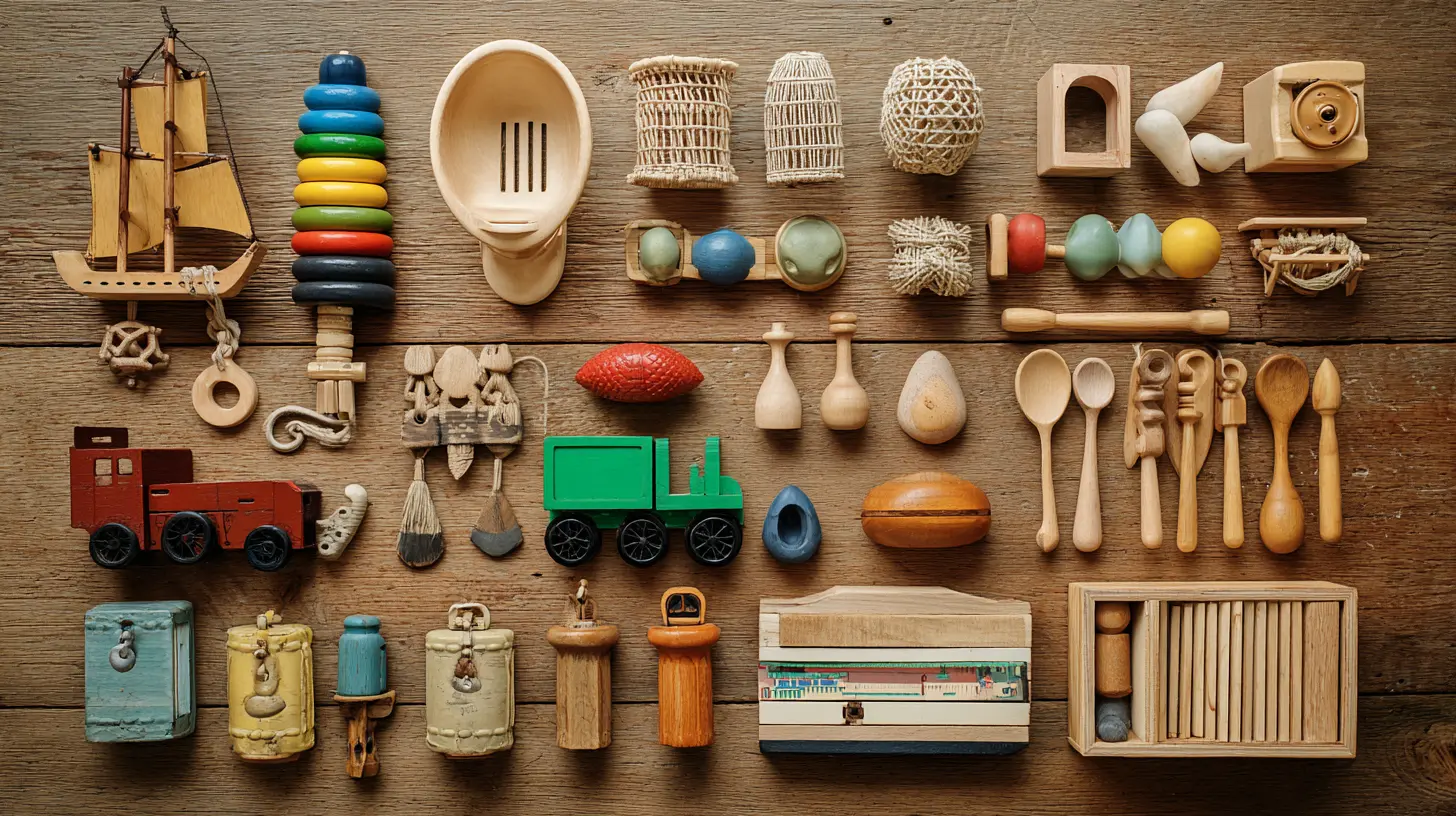
Choosing Objects: A Practical Framework
Not every household item is a good play material. A useful filter has four questions.Is it safe for this child right now? Choking hazards, sharp edges, glass, and anything small enough to swallow are out for children who still mouth objects. This is not a permanent exclusion, just a timing one. Buttons are wonderful for a five-year-old sorting by color and terrible for a one-year-old.
Does it have more than one plausible use? A single-use object, like a garlic press, tends to produce a single, brief interaction. A multi-use object, like a scarf, invites repetition and variation. When in doubt, favor objects with no obvious single purpose.
Does it invite action without instructions? A stack of plastic cups invites stacking and nesting on its own. A set of measuring spoons invites scooping. The best materials communicate a possible action through their shape and weight.
Can you tolerate how it will be used? If the answer is no, choose something else. A parent who winces every time a child bangs a pot will communicate that tension, and the play will suffer. Save the noisy items for outdoor play or for times when you have the patience for them.
A Starter List by Category
- Containers: laundry baskets, shoeboxes, plastic tubs, mesh produce bags, egg cartons- Tools: wooden spoons, whisks, tongs, ladles, spray bottles, paintbrushes
- Textiles: scarves, socks, dish towels, pillowcases, blankets
- Construction materials: cardboard tubes, boxes, paper rolls, plastic lids, clothespins
- Natural and sensory fillers: dry rice, dried beans, sand, water, shredded paper (supervised)
- Loose parts: buttons, bottle caps, corks, pom-poms, large beads, stones
Notice that most of these are not toys at all. That is the point. The list is a starting inventory, not a shopping list, and it should be adapted to what you already own.
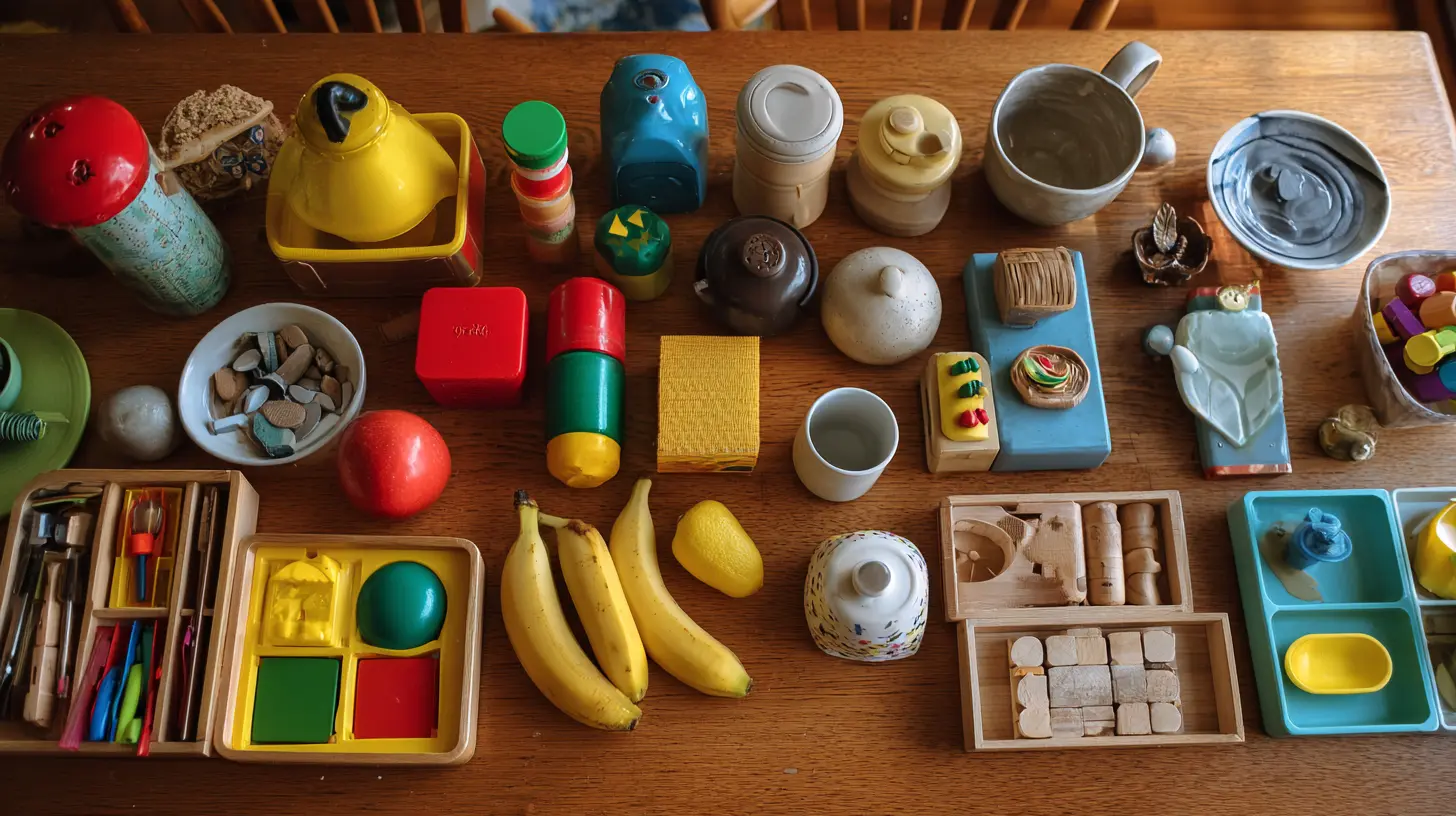
Matching Objects to Developmental Stage
The same object can be meaningful for a one-year-old and a seven-year-old, but the play looks completely different. Matching materials to stage prevents two common failures: materials that are too simple and get ignored, and materials that are too complex and get abandoned in frustration.Infants and Young Toddlers (roughly 6 to 18 months)
At this stage, play is largely sensory and exploratory. Babies are learning what objects feel like, how they move, and what happens when they are dropped, squeezed, or mouthed. The goal is not pretend play but physical investigation.Good choices include scarves pulled from a box, large plastic lids to bang, sealed sensory bags, and containers to fill and dump. A laundry basket with a few soft items inside becomes a treasure hunt. The key is supervision and a focus on mouth-safe, large items.
What to avoid: small parts, anything breakable, and elaborate setups. Babies do not need a themed activity. They need a few safe objects and your calm presence.
Toddlers (roughly 18 months to 3 years)
Toddlers are beginning to imitate. They stir, wipe, carry, and put things in bags. This is the golden age for household objects, because the child wants to do what you do and does not yet care whether the result is realistic.A toddler with a spray bottle of water and a cloth will "clean" a window for a surprisingly long time. A toddler with a bowl of dry pasta and a ladle will pour and scoop. A toddler with a scarf will wrap a doll. These are early pretend-play gestures, and they are meaningful because the child is practicing sequences: fill, pour, wipe, put away.
What to avoid: expecting a finished product. Toddler play is process, not outcome. Also avoid overcorrecting. If the child puts the pasta in the wrong bowl, let it be wrong.
Preschoolers (roughly 3 to 5 years)
Preschoolers build narratives. They assign roles, negotiate with peers, and sustain a scenario for twenty minutes or more. This is where everyday objects shine brightest, because a cardboard box can become a house, a bus, or a bed depending on the story the child is telling.At this stage, offer props that support a theme but leave room for invention. A set of old keys, a clipboard, and a bag can become a post office. Scarves and a blanket can become a fort, a costume, or a river. The adult's role shifts toward supplying materials and occasionally joining the story when invited.
What to avoid: props that are too literal. A fully assembled play kitchen leaves less to the imagination than a few pots and a shelf. The more complete the setup, the less the child has to invent.
Early School Age (roughly 5 to 8 years)
Older children often want rules, challenges, and projects. Everyday objects can support this through construction, games, and simple engineering. A ramp made from a cutting board and a stack of books becomes a physics experiment. A deck of cards becomes a building material. A set of clothespins and a string becomes a clothesline for doll laundry.At this stage, children benefit from having a say in what gets made. Ask what they want to build or what game they want to invent, then help them gather materials. The adult's role becomes more collaborative and less observational.
Setting Up Play That Actually Works
Preparation is where most of the practical value lies. A few habits make everyday-object play far more likely to succeed.Use a defined space. A tray, a mat, or a specific corner signals that this is play space. It also contains the mess. A baking sheet with a rim works well for sensory fillers because spills stay on the sheet.
Limit the number of objects. More is not better. A child facing twenty objects will often flit between them and settle on none. Five to eight well-chosen items tend to produce deeper engagement than a cluttered pile.
Rotate rather than replace. If play has gone stale, put the materials away for a week and bring them back. Novelty often comes from timing, not from new purchases.
Make it easy to clean up. Store loose parts in clear containers the child can reach. A child who can put things away independently is more likely to be allowed to get them out again.
Protect the play from interruption. A five-minute warning before dinner is fine. A stream of questions and corrections is not. If you must interrupt, do it gently and briefly.
Real-World Examples That Work
Abstract advice is easy to give and hard to apply. Here are concrete setups that use only common household items, with notes on why they work and what to watch for.The Kitchen Scoop Station
Set a baking sheet on the floor or table. Add two bowls, a measuring cup, a ladle, and a cup of dry rice or beans. The child scoops, pours, and transfers. This works because it mirrors real kitchen activity, gives immediate feedback, and has a clear beginning and end. Watch for mouthing in children under three, and keep the filler contained to the tray.The Cardboard Box Neighborhood
Give a child two or three boxes of different sizes, a roll of masking tape, and a few markers. The boxes become buildings, vehicles, or rooms. This works because boxes are structurally open. The trade-off is that tape and markers can be frustrating for younger children, so offer help without taking over.The Scarf Basket
Fill a low basket with scarves, dish towels, and socks. For a baby, this is a pulling and grasping activity. For a toddler, it is dressing up. For a preschooler, it is a fort or a costume shop. The same basket serves multiple ages, which makes it unusually efficient. The trade-off is laundry, so expect to wash the scarves periodically.The Lid Sort
Collect plastic lids of various sizes and colors. A preschooler can sort them by size, stack them, or use them as coins in a pretend shop. This works because sorting is a natural cognitive task at that age, and the lids are free. The trade-off is that lids accumulate, so keep a small, curated set rather than every lid that enters the house.The Ramp and Roll
Prop a cutting board or a piece of cardboard on a stack of books. Provide small balls, cars, or rolled socks. The child experiments with angle and speed. This works because it introduces cause and effect without a worksheet. The trade-off is that the setup collapses easily, so expect to rebuild it several times.Common Mistakes and Misconceptions
Mistake: believing the object must be "educational." A pot is not educational in any formal sense, but the play it supports is. The learning is in the doing, not in the label on the package.Mistake: over-preparing. Parents sometimes spend an hour setting up an elaborate invitation to play, only for the child to lose interest in five minutes. Simple setups tend to get more use. If preparation takes longer than the play, simplify.
Mistake: correcting the play. If a child uses a spoon as a microphone, that is not a mistake. It is substitution, and it is the whole point. Correct only when safety is at stake.
Mistake: treating everyday objects as a replacement for real toys. They are not a replacement. They are a complement. A child benefits from both open-ended materials and well-designed toys. The goal is balance, not purity.
Misconception: "My child won't play with anything unless it is a screen." This is usually a matter of habit and setup, not preference. Children who are used to passive entertainment may need a few sessions of gentle scaffolding before they settle into open-ended play. Start small and stay patient.
Misconception: mess means failure. Mess is often a sign of engagement. The goal is contained mess, not no mess. A tray, a mat, and a cleanup routine solve most of the problem.
Safety and Supervision: The Non-Negotiables
Everyday objects are not toys, and they were not designed with children in mind. That means a few rules are absolute.Check for choking hazards against the child's age and mouthing habits. Small buttons, bottle caps, and beads are for older children only. Inspect items for sharp edges, splinters, loose parts, and peeling paint. Avoid anything that held cleaning products, medications, or chemicals, even after washing. Keep plastic bags, cords, and long strings out of reach, since they pose strangulation risks. Supervise water play closely, even in shallow containers. And remember that a child who is quiet is not necessarily safe, so check in regularly.
None of this is meant to scare you away from everyday objects. It is meant to help you choose well so that you can relax and let the play unfold.
When Everyday Objects Are the Wrong Choice
Open-ended play is not the answer to every situation. There are times when a structured toy or a guided activity serves a child better.If a child is overwhelmed by choice, a smaller, more defined set of materials helps. If a child is working on a specific skill, such as cutting with scissors, a purpose-built tool may be safer and more effective. If a child is dysregulated or tired, open-ended play can feel like too much demand, and a calming, simple activity works better. And if you are exhausted, a setup that requires constant supervision is a poor fit for the day.
The point is not to romanticize cardboard and pots. It is to recognize them as one valuable option among several, and to choose them when the conditions are right.
Making It a Habit
The families who get the most from everyday-object play are not the ones with the most creative ideas. They are the ones who build small routines around it. A basket of scarves that lives in the living room. A drawer of loose parts that gets rotated monthly. A Saturday morning when the recycling bin is fair game before it goes out.Start with one setup this week. Choose a material you already own, prepare a small space, and sit nearby without directing. Notice what your child does with it. Then adjust: fewer objects, a different container, a new location. The adjustments are where the real learning happens, for both of you.
Meaningful play with everyday objects is not complicated. It is a matter of seeing what is already there, preparing it with care, and then getting out of the way.
all images in this post were generated using AI tools
Category:
Play Based LearningAuthor:

Steven McLain