How to Inspire Lifelong Learners at Home
13 August 2026
Every parent wants their child to do well in school. But school success and lifelong learning are not the same thing. A child can get straight A's and still stop reading the moment they graduate. Another child might struggle with grades yet spend hours building, questioning, and figuring things out on their own. The second child is the lifelong learner.
The home is the first and most powerful classroom. Not because of worksheets or educational apps, but because of the atmosphere parents create. Children absorb attitudes toward learning long before they understand the content. They watch how you react to a mistake, how you handle a question you cannot answer, and whether you ever pick up a book for fun. That modeling matters more than any curriculum.
This article is not about turning your living room into a school. It is about building a culture where curiosity is normal, effort is respected, and not knowing something is just the start of finding out.
Why "Learning" Feels Like a Chore at Home
The biggest mistake parents make is treating learning as something that only happens during designated times. When learning is a separate activity with a start and stop time, children naturally resist it. They see it as a break from real life.Think about how a toddler learns to walk. No parent schedules walking practice. No one gives a toddler a workbook on balance. The child tries, falls, gets up, tries again, and eventually walks because they want to get across the room. The motivation is internal. The reward is immediate. The process is messy.
That is the model for lifelong learning. It is not about sitting still and absorbing information. It is about wanting to do something, failing a few times, adjusting, and finally succeeding. When you bring that same energy to reading, math, science, or history, children do not need to be pushed. They pull themselves forward.
The problem is that most homes flip the model. Parents set aside thirty minutes for reading practice, hand over a book the child did not choose, and then check for comprehension with questions. The child learns that reading is a task to complete, not an experience to enjoy. Over time, they comply less and resist more.
The Difference Between Praise and Encouragement
Many parents believe that praising effort is enough. They say "good job" so often that the words lose meaning. But there is a deeper issue. Praise focuses on the outcome. Encouragement focuses on the process.When your child brings home a perfect spelling test, saying "you are so smart" teaches them that being smart is the goal. When they bring home a test with three wrong answers, saying "you tried hard" feels hollow if they actually did not try. The child knows the difference.
Instead, talk about what they did. Say "I noticed you practiced those words every night without being reminded" or "you figured out that tricky word by sounding it out." That kind of feedback gives the child information about their own strategies. It helps them see that their actions matter more than their innate ability.
This is not just feel-good advice. Children who hear process-focused feedback tend to take on harder challenges. They are less afraid of failure because failure is not a verdict on their worth. It is just a step in the process.

Let Boredom Do Its Job
Parents today are terrified of boredom. The moment a child says "I'm bored," there is a rush to provide entertainment, a screen, or a structured activity. But boredom is not a problem to solve. It is a signal that the child has space to create.Some of the most creative thinking happens when there is nothing to do. A child staring at the ceiling is not wasting time. They are processing, imagining, and generating ideas. When you fill every gap with an activity, you remove the need for the child to generate their own stimulation.
Try this. Next time your child says they are bored, do not offer solutions. Say "I'm glad you have some free time. I wonder what you will come up with." Then step back. The first few times, they might just sit there. That is fine. After a while, they will start building, drawing, writing, or investigating something on their own.
The key is to not rescue them immediately. If you jump in after two minutes, they learn that boredom ends when an adult fixes it. If you hold steady, they learn that boredom is the starting point for their own ideas.

The Question Habit
Children are naturally full of questions. "Why is the sky blue?" "Where do bugs go in winter?" "How does the remote control work?" Parents answer these questions, often with a quick explanation or a "I don't know, look it up." But the way you handle questions teaches more than the answer itself.When your child asks something you do not know, resist the urge to guess or dismiss. Instead, say "That is a great question. I do not know the answer. Let us find out together." Then actually find out. Look it up, read about it, and talk about what you found.
This does two things. It shows your child that adults do not have all the answers. And it shows that finding answers is an active, enjoyable process. You are not just giving them information. You are giving them a method.
You can also flip the script. When your child asks a question, sometimes ask "What do you think?" before you answer. This encourages them to reason before they receive an answer. Their guess might be wrong, but the act of guessing builds critical thinking. You can then say "That is a reasonable guess. Here is what I found out." That keeps the conversation going without shutting down their thinking.
The Power of "Yet"
There is a simple word that changes how children talk about their abilities. That word is "yet." "I cannot do this" becomes "I cannot do this yet." "I do not understand" becomes "I do not understand yet."This is not a magic trick. It does not instantly make a child believe they can learn anything. But it shifts the frame from fixed to fluid. It suggests that ability is not a permanent trait but a developing one.
Use it yourself. When you are trying to fix something around the house and you cannot figure it out, say "I have not figured this out yet." When you are learning a new recipe and it does not turn out, say "I have not mastered this yet." Your child hears that struggle is normal and that persistence is expected.
The danger is using "yet" as a hollow phrase. If you say "you just have not learned it yet" while your child is frustrated and crying over homework, it sounds dismissive. The word only works when paired with a plan. Say "you have not learned it yet. Let us try a different way." That is honest and helpful.
Real-World Learning Beats Worksheets
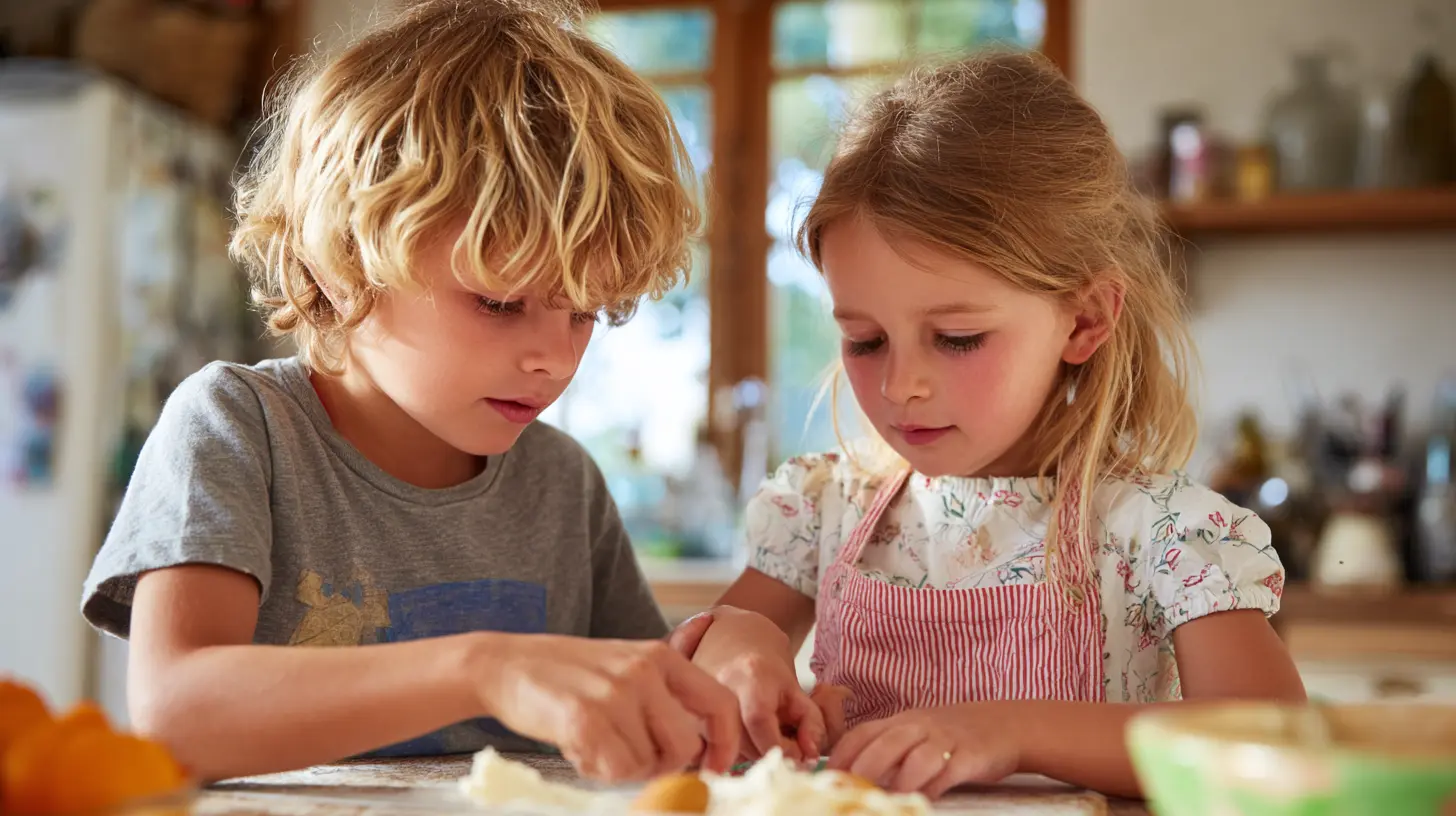
Worksheets have their place. They build fluency in basic skills like math facts and spelling. But they are not the heart of learning. The heart is applying knowledge to real situations.Cooking is a perfect example. A recipe involves reading, measuring, fractions, timing, and following directions. A child who helps cook dinner is practicing all of these without a single worksheet. They see why fractions matter when they need half a cup of flour. They see why reading matters when they need to know if the oven should be at 350 or 450 degrees.
Shopping is another opportunity. Comparing prices, calculating discounts, estimating totals, and making change are all real math. Let your child handle the budget for a small purchase. Give them cash and let them figure out if they have enough. Let them make mistakes. If they miscalculate and cannot afford what they wanted, that lesson sticks better than any math problem.
Gardening teaches biology, patience, and cause and effect. Building a birdhouse teaches measurement, geometry, and tool safety. Planning a trip teaches geography, time management, and budgeting. The list goes on.
The common thread is that these activities have real consequences. The cake burns if you misread the recipe. The plant dies if you water it too much. The birdhouse falls apart if you cut the wood wrong. Those consequences are more motivating than a red mark on a worksheet.
Screen Time Is Not the Enemy, But Passive Consumption Is
It is easy to blame screens for a lack of curiosity. But screens are just tools. The issue is what children do with them.Passive consumption means watching videos, scrolling through short clips, or playing games that require no thinking. This is like eating junk food. It fills time but does not nourish. Active use means creating, coding, researching, or engaging with challenging content. This is like cooking a meal. It takes effort but builds skills.
You do not need to ban screens. You need to shift the balance. Encourage your child to make videos instead of just watching them. Let them build a world in a game that requires planning and resource management. Show them how to use search engines to answer their own questions.
The key is to ask questions about what they are doing. "What are you making?" "How does that game work?" "What did you learn from that video?" When you show interest in their digital activities, you help them think more deeply about them.
But be honest with yourself. If your child is spending hours on a mindless game, that is not learning. It is entertainment. There is nothing wrong with entertainment, but do not confuse it with education. Limit the mindless stuff and make room for the active stuff.
The Reading Habit Starts With You
You cannot force a child to love reading. You can only create conditions where reading is likely to happen. The most powerful condition is seeing you read.If your child never sees you with a book, they will not believe reading is valuable. They will believe it is something adults make kids do. But if they see you reading for pleasure, they understand that books are a source of enjoyment, not just an assignment.
This does not mean you need to read classic literature. Read anything. Read a novel, a magazine, a cookbook, a biography. The point is that you choose to read when you do not have to.
Also, let your child see you struggle with reading. If you hit a word you do not know, look it up. If you read a passage twice to understand it, say so. This shows that reading is not always smooth and easy. It shows that good readers work at it.
When it comes to your child's own reading, give them freedom. Let them read graphic novels, comics, or books that seem too easy. The goal is to build the habit, not to impress anyone with reading level. A child who reads easy books for fun is better off than a child who reads hard books under pressure.
The Homework Trap
Homework is a common source of conflict. Parents want their children to do well, so they hover, remind, and sometimes even do the work. This creates a cycle where the child depends on the parent for motivation.The better approach is to make the child responsible for their own homework from an early age. Set up a routine. Have a consistent time and place for homework. Then step back.
This is hard. You will watch your child procrastinate, make mistakes, and sometimes fail. But those failures are lessons. If a child forgets their homework and gets a lower grade, they learn to remember next time. If you always remind them, they never learn.
There is a difference between supporting and rescuing. Supporting means being available for questions, providing a quiet space, and helping them plan their time. Rescuing means doing the work, emailing the teacher, or blaming the school for the child's lack of effort. Rescue feels good in the moment but teaches helplessness.
If your child is truly struggling with a subject, do not just drill them. Ask them what part is confusing. Often, the confusion comes from a missing foundation. They might not understand fractions because they never fully grasped division. Go back to the basics and build up from there.
The Myth of the "Smart" Kid
Many parents believe that some kids are just naturally smart and others are not. This belief is harmful because it lets children off the hook. If a child thinks they are not smart, they stop trying. If they think they are smart, they avoid challenges that might prove them wrong.The truth is that intelligence is not fixed. It grows with effort, practice, and good strategies. This is not just positive thinking. It is how the brain works. Learning creates new connections between neurons. The more you practice a skill, the stronger those connections become.
You can help your child understand this by talking about things you have learned over time. Talk about how you learned to drive, to cook, or to use a computer. Emphasize that you were not good at first. Emphasize the mistakes you made and how you improved.
Avoid labeling your child as "the smart one" or "the creative one" or "the math kid." These labels box them in. Instead, describe their actions. "You worked hard on that project." "You kept trying even when it was hard." "You asked a good question." These descriptions give them a sense of agency. They see that their choices shape their abilities.
Creating a Learning-Friendly Environment
The physical space of your home matters more than you might think. A child who has easy access to books, art supplies, and building materials is more likely to use them. A child who has to ask permission to get a pencil is less likely to start a project.Set up a shelf or a bin with open-ended materials. Paper, markers, scissors, tape, cardboard, string, and old magazines can keep a child busy for hours. These materials do not need to be expensive. In fact, the simpler the better. A cardboard box can be a spaceship, a castle, or a robot, depending on the child's imagination.
Have books in every room, not just the bedroom. Keep a basket of books in the living room, the bathroom, and the kitchen. The more books are around, the more likely a child will pick one up.
Limit the number of toys that do everything. A toy that makes sounds and moves on its own does not require much imagination. A simple set of blocks or a pile of LEGO bricks requires the child to create. The same principle applies to digital toys. A game that does everything for the player is not as valuable as one that requires planning and problem solving.
The Role of Failure
Failure is the most underrated teacher. Parents often try to protect their children from failure, but that protection comes at a cost. A child who never fails never learns to recover. They never learn that a setback is not the end of the world.Let your child fail in small ways. Let them forget their lunch. Let them miss the bus. Let them turn in a sloppy project. Then talk about what happened. Ask "What will you do differently next time?" That question turns failure into a learning experience.
Do not celebrate failure itself. That is dishonest. But do celebrate the response to failure. "You were really disappointed about that grade, but you asked for extra help and you improved. That took courage." That is the kind of message that builds resilience.
At the same time, do not manufacture failure. Life provides enough opportunities. Your job is to let those opportunities happen instead of shielding your child from them.
When to Push and When to Back Off
There is a fine line between encouraging and pushing. Encouragement says "I believe you can do this." Pushing says "You must do this or you are a failure." The first builds confidence. The second builds anxiety.A good rule of thumb is to push on the things that matter and back off on the things that do not. For example, it matters that your child learns to read. It does not matter that they finish a particular book by a particular date. It matters that they learn math. It does not matter that they finish a worksheet perfectly.
If your child is resistant to a subject, try to find the root cause. Are they frustrated because it is too hard? Are they bored because it is too easy? Are they distracted because they are worried about something else? Each cause requires a different response.
If it is too hard, break it into smaller steps. If it is too easy, give them something more challenging. If they are distracted, address the distraction first. Pushing harder without understanding the cause will only make things worse.
The Long Game
Inspiring a lifelong learner is not about any single moment. It is about the accumulated effect of thousands of small interactions. The way you react to a spilled cup. The way you answer a question. The way you handle your own mistakes. All of it matters.Some days you will do this well. Other days you will lose your patience and snap at your child. That is normal. The goal is not perfection. The goal is to keep showing up, keep modeling curiosity, and keep creating an environment where learning is a natural part of life.
Your child will not remember every worksheet or every lesson. But they will remember how it felt to be at home. They will remember whether questions were welcome or annoying. They will remember whether they were trusted to figure things out or constantly corrected. Those memories shape who they become.
Lifelong learning is not a skill you teach. It is a way of being that you model. When you are curious, your child learns curiosity. When you are persistent, your child learns persistence. When you are kind to yourself in the face of mistakes, your child learns self-compassion.
That is the real work of parenting. Not to produce a perfect student, but to raise a person who is not afraid of the unknown. A person who sees the world as full of things to understand. A person who keeps growing long after the school years are over.
Start small. Pick one thing from this article and try it this week. Maybe it is letting your child be bored. Maybe it is saying "I do not know, let us find out" the next time they ask a hard question. Maybe it is putting a book in your own hand instead of your phone. Whatever you choose, stick with it. The results will not show up overnight. But over the years, they will add up to something lasting.
all images in this post were generated using AI tools
Category:
Empowering KidsAuthor:

Steven McLain
Discussion
rate this article
1 comments
Mackenzie Reed
Who needs school when home is the real learning playground?
August 30, 2026 at 5:07 PM
Steven McLain
While home offers valuable lessons, school provides a structured environment and social interactions that are also important for growth. Balancing both can create the best learning experience.