Fostering Creativity Through Free Play
26 September 2026
Walk into almost any toy store and you will see shelves stacked with kits designed to make children smarter. Coding robots. Chemistry sets. Art kits with pre-cut shapes and step-by-step instructions. Parents buy them with good intentions, hoping to give their kids an edge. Yet some of the most creative adults I have known grew up building forts out of couch cushions, digging holes in the backyard for no particular reason, and turning cardboard boxes into spaceships.
That contrast is not nostalgia talking. It points to something real about how creativity develops. The unstructured, child-directed activity we call free play is not the opposite of learning. It is one of the most powerful learning engines a child has. And in many modern childhoods, it is quietly disappearing.
This article explains what free play actually is, why it matters for creativity, how it differs from the structured activities that increasingly fill children's schedules, and how parents can protect and nurture it without turning it into another chore to manage.
What Free Play Actually Means
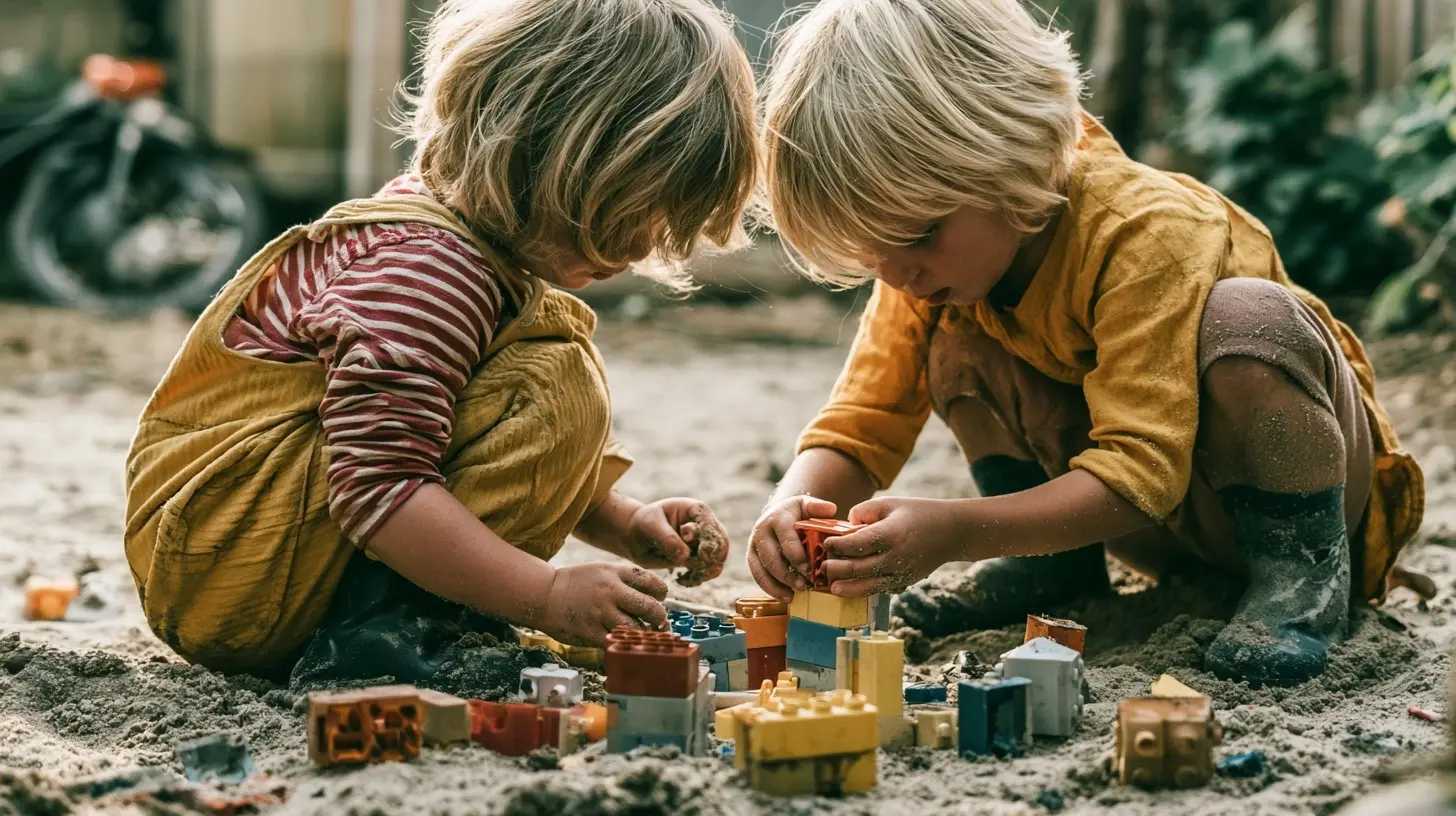
Free play is activity that is freely chosen, intrinsically motivated, and directed by the child rather than by an adult. The child decides what to do, how to do it, and when to stop. There is no external goal, no score, no finished product that an adult will evaluate.That definition sounds simple, but it excludes a lot of things parents assume count as play. A soccer practice run by a coach is not free play. A craft project where an adult sets out the materials and demonstrates the expected result is not free play. A video game with a fixed progression system is not free play in the developmental sense, even though it feels playful.
The key markers are:
- Choice. The child picks the activity.
- Intrinsic motivation. The child plays because it is interesting or enjoyable, not for a reward or grade.
- Process over product. The doing matters more than the outcome.
- Adult absence from the director's chair. Adults may be nearby, but they are not running the show.
Free play can be solitary or social. It can be loud or quiet. It can look like running around a park or sitting still arranging stones in a pattern. The form matters far less than the underlying freedom.
Why Free Play Fuels Creativity
Creativity is often misunderstood as a talent some children have and others do not. In reality, it is closer to a skill and a habit of mind. It depends on the ability to generate possibilities, tolerate uncertainty, combine ideas in unusual ways, and persist through frustration. Free play exercises all of these.It builds divergent thinking
Divergent thinking is the capacity to come up with many possible answers to an open question. When a child plays with a plain cardboard box, they are not solving a problem someone else defined. They are inventing the problem. Is this a boat? A cave? A delivery truck? A house for a stuffed animal? Each decision opens new branches.Structured activities tend to reward convergent thinking, which is finding the single correct answer. That skill matters too, but it is not the same as creativity. A child who spends most of their time filling in worksheets and following kit instructions gets plenty of convergent practice and very little divergent practice.
It teaches children to tolerate ambiguity
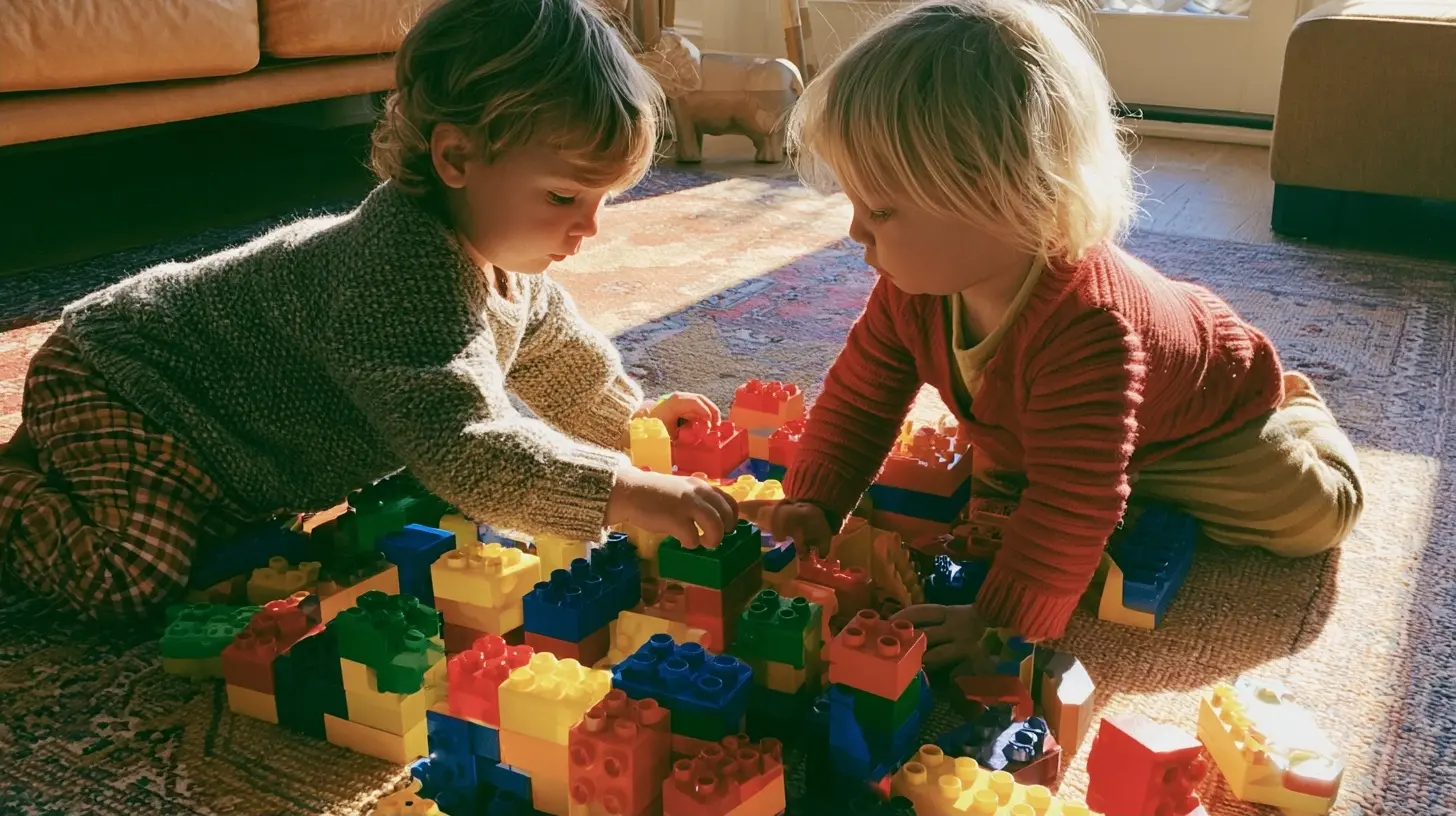
Creative work is uncomfortable. The early stages of any original project are messy and uncertain. Children who have practice sitting with that discomfort, because play is full of it, develop a higher tolerance for the blank page.Watch a child building with blocks. The tower falls. They rebuild. It falls again. They change the base. Nobody handed them a manual. They are learning that not knowing the next step is a normal part of making something.
It encourages intrinsic motivation
Creativity rarely thrives when the only reward is external. Children who create because they are curious and absorbed tend to produce more original work than children who create to earn praise or a grade. Free play is one of the few childhood contexts where intrinsic motivation is the entire point.It supports social creativity
When children negotiate roles in pretend play, they practice perspective-taking, compromise, and improvisation. "You be the doctor." "No, I want to be the doctor." "Okay, we can both be doctors but one of us is the one who fixes broken toys." That negotiation is creative problem-solving in real time.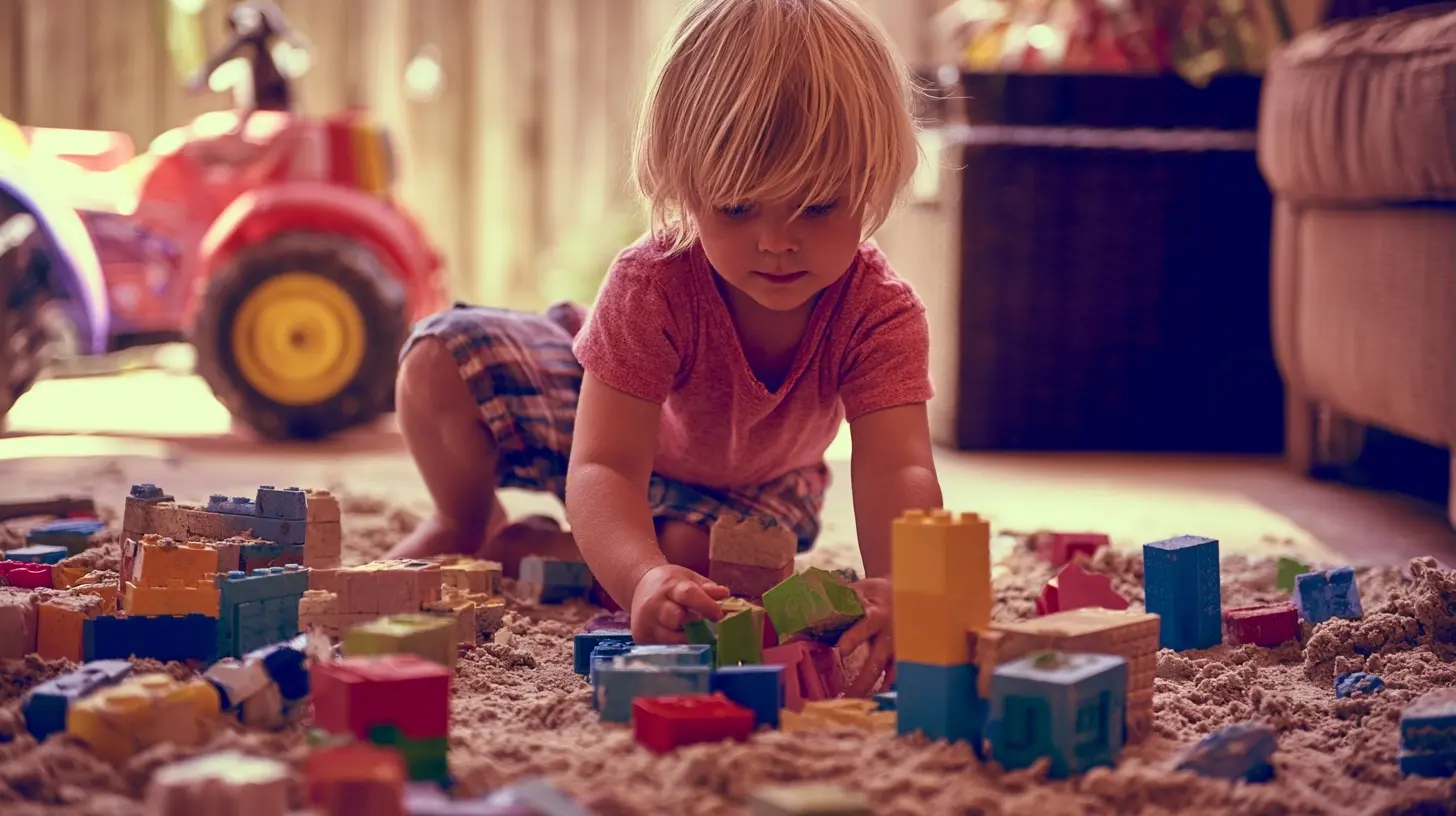
The Difference Between Free Play and Structured Play
Structured play is not the enemy. It has real value. Sports teach teamwork and discipline. Music lessons build skill and persistence. Organized crafts can introduce techniques a child would not stumble onto alone. The problem is not structure itself. The problem is when structure crowds out everything else.Here is a practical comparison.
| Dimension | Free Play | Structured Play |
|---|---|---|
| Who leads | Child | Adult or program |
| Goal | None external | Skill, score, or product |
| Rules | Invented or flexible | Fixed |
| Success | Defined by child | Defined by adult |
| Main benefit | Creativity, autonomy, self-regulation | Technique, teamwork, measurable progress |
| Risk | Can feel aimless to some children | Can reduce ownership and intrinsic drive |
The healthiest childhoods usually include both. A child who plays piano three times a week and also spends Saturday afternoon building a fort in the living room is getting the benefits of each. A child whose every hour is scheduled, even with enriching activities, is missing something that no class can fully replace.
What Free Play Looks Like at Different Ages
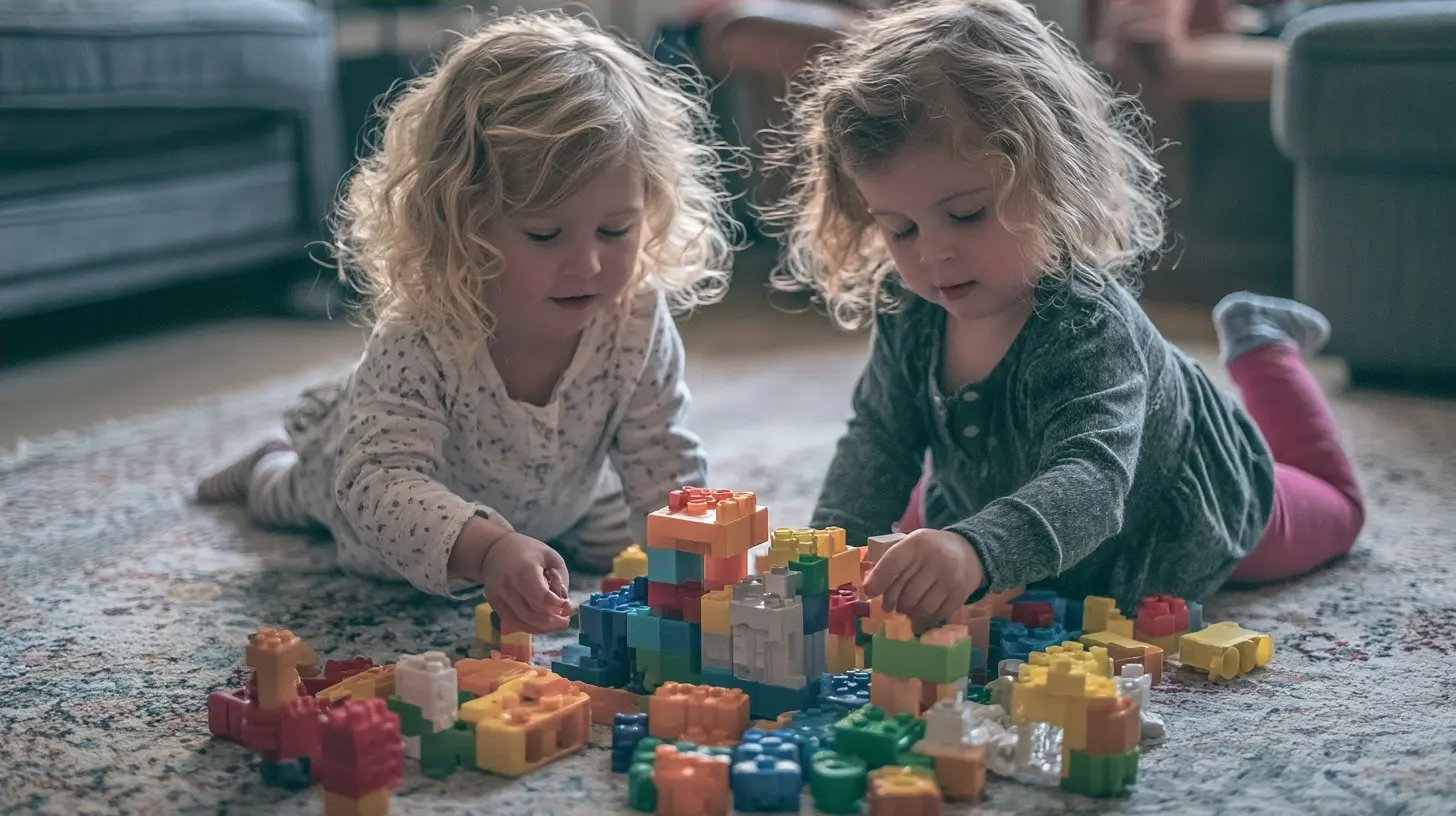
Free play changes shape as children grow. Parents who expect a nine-year-old to play the way a four-year-old does will be confused when the older child seems bored. That is normal development, not a problem to fix.Toddlers and preschoolers
At this stage, free play is often sensory and physical. Digging, pouring, stacking, crashing, and simple pretend play. The attention span is short. The mess is large. This is the phase where open-ended materials matter most: sand, water, blocks, fabric, pots and pans, cardboard.Early elementary
Pretend play becomes more elaborate and social. Children build entire worlds with rules and characters. They also start to enjoy collecting, sorting, and constructing. This is a good age for loose parts, which are materials that can be used in many ways: sticks, rope, tape, boxes, tubes, buttons, fabric scraps.Older children and tweens
Free play does not vanish, but it often looks different. It may become project-based, like building a go-kart, filming a stop-motion video, writing a comic, or organizing a neighborhood game. Adults often mistake this for "not playing" because it looks productive. It is still play if the child chose it and owns it.Teenagers
Teen free play frequently happens in peer groups and online spaces. It can include making music, coding, gaming, editing videos, or just hanging out and talking. The developmental need is similar: autonomy, experimentation, and a space where adults are not grading the result.Common Mistakes Parents Make
Even well-meaning parents can accidentally undermine free play. Here are the most common patterns and why they backfire.Over-scheduling
Filling every afternoon with classes leaves no room for boredom. Boredom is not a failure of parenting. It is often the doorway to creativity. Children who are never bored never have to invent something to do.Directing the play
When a parent says "Why don't you make it look like this?" or "That tower would be more stable if you put the big block on the bottom," the child learns that adult approval is the goal. The play becomes a performance. Step back and let the wobbling tower wobble.Correcting the mess
Free play is often messy. Paint on the table. Water on the floor. A living room that looks like a recycling center exploded. Some limits are reasonable, but if every mess is treated as a problem, children learn to keep their play small and tidy. That is the opposite of creative risk-taking.Confusing screens with free play
Some digital activity is genuinely creative. A child building in a sandbox game or editing a video is making choices and solving problems. But much screen time is passive consumption dressed up as play. The distinction is whether the child is creating and deciding, or simply reacting to a system designed to keep them engaged.Turning free play into a curriculum
The moment free play becomes a scheduled "creativity block" with learning objectives, it stops being free. Parents who read about the benefits of play sometimes overcorrect and start managing it. The point is to protect the space, not to run it.
How to Make Room for Free Play
Creating conditions for free play is less about doing more and more about removing obstacles. Here is what tends to work.Protect unstructured time
Look at your child's week and identify the gaps. If there are none, something has to give. Even thirty to sixty minutes of genuinely open time after school can make a difference. Weekends are often the best place to start.Offer open-ended materials
The best play materials are the ones that can become many things. Cardboard boxes, tape, string, blocks, fabric, clay, sticks, and containers outperform single-purpose toys almost every time. A toy that does one thing gets boring fast. A box can be anything.Allow boredom
When your child says "I'm bored," resist the urge to solve it immediately. Give it ten or fifteen minutes. Often the boredom turns into an idea. If you always provide the entertainment, your child never learns to generate their own.Create a yes space
A yes space is an area where the child can do almost anything without constant adult correction. It might be a corner of a room, a backyard, or a designated table. The fewer "don't touch that" moments, the longer the play lasts.Play outside when possible
Outdoor environments are naturally open-ended. Sticks, rocks, dirt, and water do not come with instructions. Research on play environments consistently suggests that natural settings support more varied and sustained play than highly structured playgrounds, though both have value.Join only when invited
If your child asks you to play, join. If they do not, watch from a distance. The goal is to be available without taking over.When Free Play Is Not Working
Free play is not a universal solution, and there are situations where it needs support or adjustment.Some children, particularly those who are highly anxious or who have difficulty with unstructured time, find free play stressful rather than freeing. For these children, a small amount of scaffolding helps. You might offer two or three choices, set up a simple provocation like a basket of materials on the table, or play alongside them briefly before stepping back.
Children with certain developmental differences may need more explicit modeling of pretend play or social play. That is not a failure of free play. It just means the child needs a bridge into it.
There is also a real trade-off between free play and skill development. A child who spends all their time in free play may not develop technical skills in music, sport, or academics at the same pace as a child in structured lessons. The answer is usually balance, not choosing one extreme. The question to ask is not "which is better?" but "what does this particular child need right now?"
What the Research Suggests
I want to be careful here, because the science of play is often oversimplified in popular articles. The honest summary is this: decades of research in developmental psychology and education point toward free play supporting creativity, self-regulation, social skills, and problem-solving. At the same time, the evidence is not uniform, and some claims about play are stronger than others.What is well supported is that child-directed play is associated with better self-regulation and social competence. What is more debated is the precise causal link between free play and measurable creativity in later life. Creativity is influenced by many factors, including temperament, environment, education, and opportunity.
That nuance matters for parents. It means free play is not a magic bullet. It is one important ingredient among several. The case for it is strong, but it is not a guarantee, and it does not require you to eliminate every structured activity from your child's life.
A Balanced Approach
The most useful way to think about this is not free play versus structured activities. It is free play plus structured activities, with attention to proportion and to your specific child.Some children thrive with more structure. Some need more open space. Some go through phases. A child who is passionate about violin may happily practice for hours and still need free play to recharge. A child who is anxious may need more scaffolding before they can enjoy open-ended time.
The practical question is simple: does your child have regular, protected time to choose what to do, with no adult agenda and no evaluation? If yes, you are probably doing enough. If no, that is the place to start.
Final Thoughts
Creativity is not something you install in a child with the right kit or the right class. It grows in the gaps, in the unstructured hours, in the cardboard box that becomes a spaceship because nobody told the child what it was supposed to be.Free play is not a luxury or a break from learning. It is one of the ways children learn to think, to invent, to recover from failure, and to trust their own ideas. Protecting it does not require a perfect playroom or a child-led curriculum. It requires time, a little mess, and the willingness to step back.
That is harder than it sounds in a world that rewards scheduling and measurable outcomes. But the payoff, a child who can generate their own ideas and follow them, is worth the mess.
all images in this post were generated using AI tools
Category:
Play Based LearningAuthor:

Steven McLain