Why Imaginative Play Fuels Problem Solving Skills
6 October 2026
A four year old ties a scarf around a chair leg, announces it is a rocket, and spends the next twenty minutes negotiating with a stuffed bear about who gets the window seat. To an adult watching from the doorway, this looks like nonsense. To a developmental specialist, it looks like a cognitive workout of remarkable sophistication. That child is running simulations, testing social rules, holding multiple perspectives at once, and solving a steady stream of small problems that nobody assigned.
Parents often treat imaginative play as a break from real learning. The opposite is true. Pretend play is one of the most efficient problem solving laboratories a young brain will ever enter, and the skills it builds transfer directly to math, reading, friendships, and eventually the workplace. Understanding why this happens, and how to protect it without hijacking it, changes the way you parent.
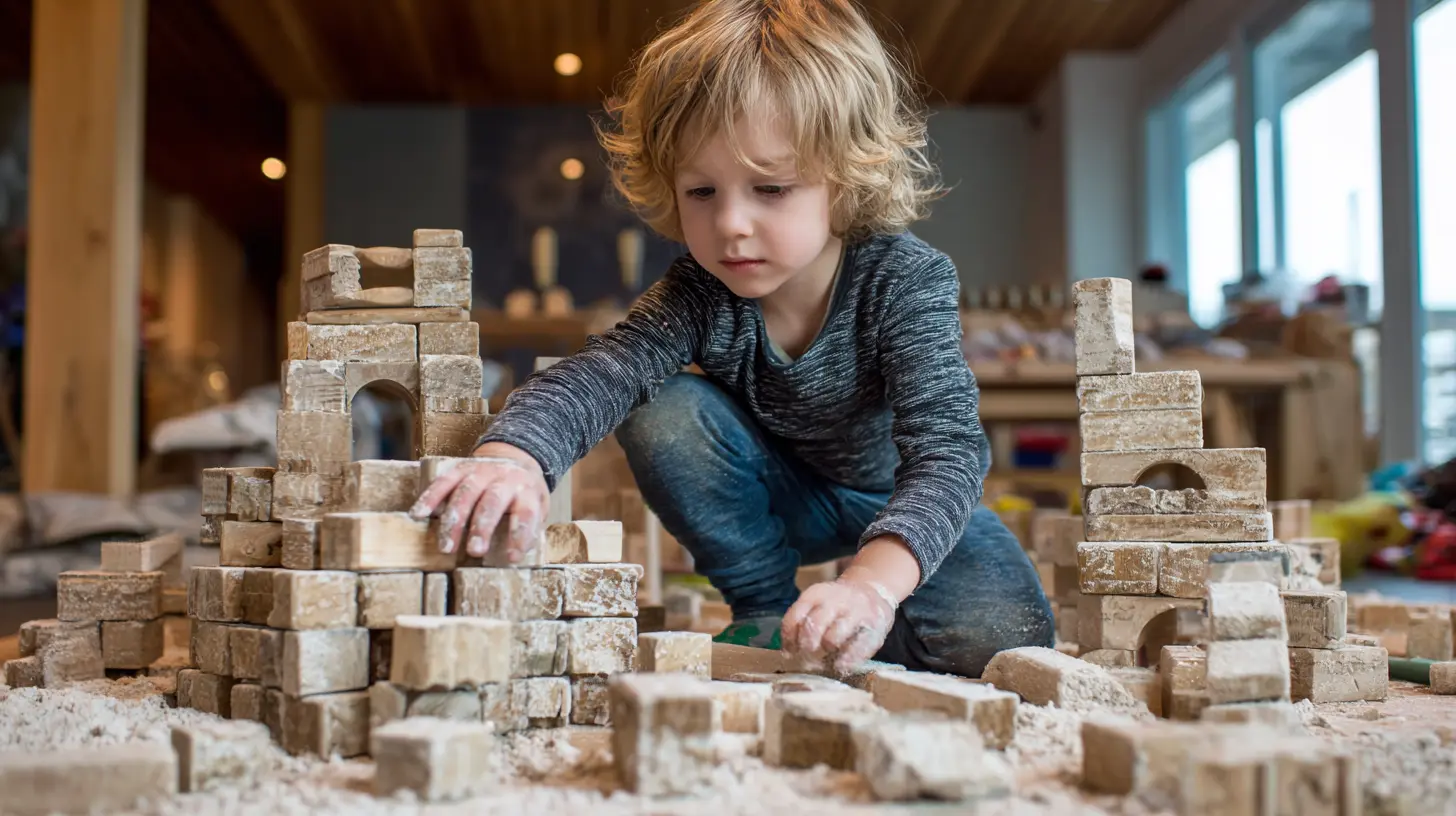
What Imaginative Play Actually Is
Imaginative play, sometimes called pretend play, dramatic play, or make believe, is any activity where a child deliberately transforms reality. A cardboard box becomes a submarine. A parent becomes a patient. A stick becomes a wand. The key marker is that the child knows the difference between the pretend frame and the real world, yet chooses to operate inside the pretend frame anyway.That dual awareness matters. A child who genuinely believes the box is a submarine is not playing. A child who says "pretend this is a submarine" is playing, and that act of labeling requires sophisticated thinking. They are holding two versions of reality in mind simultaneously, which is the same mental muscle used later for understanding metaphor, reading fiction, and predicting how another person might react.
There are several recognizable forms:
- Role play, where children take on characters like doctor, chef, or superhero.
- Object substitution, where one item stands in for another.
- Narrative play, where children build ongoing stories with plots and rules.
- Sociodramatic play, where multiple children coordinate roles and negotiate a shared storyline.
Each form exercises problem solving differently, and most children move fluidly between them in a single afternoon.

The Cognitive Machinery Behind Pretend Play
To understand why pretend play sharpens problem solving, it helps to know what is happening inside the child's mind during the game.Executive function gets a full workout
Executive function is the umbrella term for the mental skills that let us plan, focus, remember instructions, and juggle competing demands. Imaginative play stresses every one of those.Consider a child playing restaurant. They must remember the rules of their invented world, track who ordered what, resist the urge to eat the pretend food, and shift between being a waiter and being themselves when a parent asks a real question. That constant switching and holding of information is executive function training in disguise. The child is not practicing executive function on a worksheet. They are using it because the game demands it.
Working memory expands under narrative pressure
Working memory is the ability to hold and manipulate information in the short term. Pretend play loads it heavily. A child building a storyline must remember what happened five minutes ago, what their character wants, and what the other player just said, all while deciding what comes next. The story creates natural pressure to remember, which is far more motivating than being told to memorize.Inhibitory control develops through role boundaries
When a child plays a doctor, they must not suddenly behave like a dinosaur. Staying in role requires inhibiting impulses that do not fit the character. This is the same skill a child uses to raise a hand instead of shouting, or to wait for a turn in a game. Pretend play gives children a low stakes arena to practice self restraint, because breaking character only ruins a game, not a relationship or a test.
Why Pretend Play Is a Problem Solving Engine
The connection between imaginative play and problem solving is not mystical. It comes down to four mechanisms that show up again and again in research and in everyday observation.1. It forces flexible thinking
In pretend play, objects and rules are fluid. A block can be a phone, then a sandwich, then a car. Children learn that the meaning of a thing is not fixed, which is the foundation of creative problem solving. When a child later faces a math problem with more than one solution path, that flexibility is already familiar.2. It creates safe failure
In a pretend game, a failed idea costs nothing. The tower of pillows collapses, the pretend spaceship "crashes," and the child simply rewrites the story. This low cost of failure encourages experimentation. Children who are afraid to fail avoid novel problems. Children who have practiced failing inside a game are more willing to try, adjust, and try again.3. It requires perspective taking
The moment two children play together, they must figure out what the other person wants, expects, and understands. That is perspective taking, and it is the core of social problem solving. A child who can think "she thinks the cave is scary, so I will make it a friendly cave" is already solving a social problem in real time.4. It builds causal reasoning
Every pretend scenario has cause and effect. If the pretend baby cries, the pretend parent must respond. If the pretend bridge breaks, the travelers must find another way. Children naturally build if then logic into their stories, which is the same reasoning used in science and in everyday decision making.
Real World Examples That Show the Link
Abstract claims are easy to make. Concrete examples make them believable.The stuck zipper. A five year old whose coat zipper jams during pretend play might announce that the coat is "a broken robot arm" and then invent a repair sequence. That reframing turns a frustrating real problem into a solvable story problem, and the child often solves the real problem in the process.
The missing ingredient. Two children playing bakery realize they have no pretend flour. One suggests using sand. The other suggests using a pillow as a giant bag of flour. Both are practicing substitution, which is the same skill used in algebra when a variable stands in for an unknown number.
The unfair rule. A group of children playing school argues about who gets to be the teacher. They invent a rotation system. That is negotiation, rule creation, and fairness reasoning, all emerging from a game.
The scary monster. A child who is afraid of the dark creates a pretend monster, then gives the monster a silly voice and a favorite food. By controlling the monster in the story, the child gains a sense of control over the fear. This is a form of emotional problem solving that adults sometimes pay therapists to relearn.
What the Research Suggests Without Overclaiming
It would be dishonest to claim that pretend play guarantees a higher IQ or a future career in engineering. The relationship between play and problem solving is real but complex. Studies generally find associations between rich pretend play and better executive function, language, and social skills, but correlation is not the same as causation. Children who are already strong thinkers may simply gravitate toward elaborate pretend play.What is fair to say is this: pretend play provides a natural context where problem solving skills are practiced repeatedly, with motivation coming from the child rather than an adult. That combination of repetition and intrinsic motivation is powerful. It is also difficult to replicate with flashcards or apps.
A balanced view acknowledges that play is not the only path to problem solving. Direct instruction, guided practice, and real world responsibility all contribute. Pretend play is one important thread, not the whole fabric.
How Imaginative Play Compares to Other Approaches
Parents today have many options for building thinking skills. It helps to compare them honestly.Pretend play versus structured puzzles
Puzzles and logic games teach specific skills well. They have clear rules and measurable progress. Their weakness is that the problem is defined by someone else. Pretend play has no predefined problem. The child must generate the problem, which is closer to real life, where problems rarely arrive neatly packaged.Pretend play versus screen based learning apps
Many apps claim to teach problem solving. Some do teach useful skills, particularly in math and coding. The trade off is that the app controls the pace and the possible solutions. A child cannot decide that the number seven is actually a friendly alien who needs a snack. Pretend play allows that kind of lateral move, which is where creative problem solving lives.Pretend play versus adult led activities
Adult led activities, like cooking together or building a model, offer guidance and real world stakes. They are valuable. Their limitation is that the adult often holds the correct answer. Pretend play is child led by definition, which means the child owns the problem and the solution. Both have a place, and the healthiest childhoods include a mix.When Imaginative Play Works Best
Pretend play is not a magic switch. Its benefits depend on conditions.Time without interruption. A child needs long, unstructured stretches to build a complex story. Fifteen minutes here and there rarely produces deep play. Ninety minutes of open time often does.
Simple, open ended materials. Cardboard boxes, fabric scraps, blocks, and plain dolls outperform elaborate toys with fixed functions. A toy that only does one thing limits the story. A toy that does nothing in particular invites the child to decide.
A respectful audience. Children play best when adults are nearby but not directing. A parent who watches with interest and answers questions when asked provides security without taking over.
Permission to be messy and loud. Deep play often looks chaotic. If every game must be tidy and quiet, children will self censor and the stories will shrink.
Common Mistakes Parents Make
Even well meaning parents can accidentally undermine pretend play. Here are the most frequent missteps.Taking over the story. When a parent says "no, the dragon should be friendly, not scary," they replace the child's problem solving with their own. The child learns to wait for instructions instead of generating ideas.
Correcting the pretend logic. If a child says the moon is made of cheese and can be reached by ladder, correcting them kills the game. Pretend logic is supposed to be loose. Reality checks can wait.
Buying too many single purpose toys. A toy that only works one way reduces the number of problems a child can invent. Fewer, simpler toys usually produce richer play.
Treating play as a reward for finished work. When play is positioned as something earned after "real" learning, children absorb the message that play is trivial. It is not.
Filling every quiet moment. Boredom is often the doorway to imaginative play. A parent who rushes in with an activity every time a child sighs removes the very condition that sparks creativity.
Practical Ways to Support Imaginative Play Without Controlling It
You do not need a curriculum. You need a few habits.- Protect unstructured time. Guard large blocks of the day from scheduled activities, especially for children under eight.
- Keep a stash of open ended props. Scarves, cardboard tubes, tape, empty containers, and plain blocks go further than most toy store purchases.
- Follow, do not lead. If your child hands you a pretend teacup, drink from it. Do not redirect the story.
- Ask open questions sparingly. "What happens next?" is fine. A barrage of questions turns play into an interview.
- Play alongside, not above. Sit on the floor. Match their energy. Let them assign your role.
- Tolerate repetition. Children replay the same story many times because repetition is how they master a problem. The tenth rescue mission is not a waste. It is practice.
- Notice without praising constantly. Constant praise pulls children out of the game to seek approval. A simple smile or a nod keeps them immersed.
Adapting for Different Ages and Temperaments
Imaginative play looks different across childhood, and not every child dives in the same way.Toddlers often begin with simple imitation, feeding a doll or driving a toy car. Their problem solving is physical and immediate. Provide safe props and plenty of repetition.
Preschoolers build elaborate stories with roles and rules. This is the golden age of pretend play. Give them time, space, and other children to play with.
Early elementary children often combine pretend play with real skills, like writing menus for a pretend restaurant or building a fort with actual tools. Their problems become more complex and more satisfying to solve.
Quiet or cautious children may prefer solo play or play with one trusted friend. Do not push group play. A single rich imaginary world can be just as cognitively demanding as a crowded game.
Highly active children may express imagination through movement, building, or physical role play. Meet them where they are rather than insisting on quiet pretend games.
The Long Game
The child tying a scarf to a chair today is not just passing time. They are practicing the mental moves that will later help them debug a line of code, mediate a disagreement at work, or redesign a process that no longer works. Problem solving is not a subject to be taught in a single unit. It is a habit of mind built through thousands of small experiments, most of which look like play.Parents do not need to manufacture these moments. They need to stop interrupting them. The best thing you can do for your child's problem solving skills might be to leave the cardboard box on the floor, step back, and let the story unfold.
all images in this post were generated using AI tools
Category:
Play Based LearningAuthor:

Steven McLain