What Empowerment Really Means for Girls Today
14 August 2026
Walk into any bookstore, scroll through any social media feed, or sit through any school assembly, and the word "empowerment" is everywhere. It is printed on t-shirts, plastered across motivational posters, and repeated in graduation speeches. But after all that repetition, the word has started to lose its shape. For parents, educators, and mentors, it is worth pausing to ask a more useful question: what does empowerment actually look like in the daily life of a girl today? Not the slogan version. Not the hashtag version. The real version, with all its messiness, contradictions, and practical demands.
Empowerment is not a feeling of invincibility that arrives once and stays forever. It is not a certificate you earn or a milestone you hit at age sixteen. It is a set of skills, a way of interpreting the world, and a habit of action that develops over time through practice, failure, and reflection. Understanding this distinction matters because it changes what we do as adults. We stop looking for the perfect program or the right speech, and we start looking at the small, consistent interactions that build a girl's sense of agency.

The Core Components of Genuine Empowerment
To talk about empowerment with any real precision, we have to break it down into parts. Empowerment for girls today rests on four interconnected pillars: agency, competence, belonging, and self-worth. None of these works in isolation, and ignoring one weakens the others.Agency is the sense that your choices matter. It is the internal conviction that you can influence what happens to you, even when you cannot control everything. Competence is the actual skill and knowledge to act on that conviction. A girl can feel a strong sense of agency but lack the practical tools to execute her ideas, which leads to frustration. Conversely, she can have plenty of skills but believe she has no right to use them, which leads to silence. Belonging is the experience of being accepted and valued by a community, whether that is a friend group, a team, or a family. It provides the safety net that makes risk-taking possible. Self-worth is the baseline belief that she deserves respect, fair treatment, and a seat at the table, independent of her achievements or popularity.
Here is the part that often gets missed. Empowerment is not about eliminating fear, doubt, or discomfort. It is about developing a relationship with those feelings that does not stop you from acting. Many well-meaning adults try to shield girls from any situation that might cause anxiety. But that approach accidentally teaches them that they cannot handle difficulty. The more helpful path is to let them face manageable challenges, fail safely, and discover that they can recover.

How Media and Messaging Shape the Idea
The cultural noise around empowerment is loud and often contradictory. On one hand, girls are told they can be anything. On the other hand, they are bombarded with narrow images of what success looks like, usually involving perfection in appearance, academics, and social presence. The phrase "you can do anything" is well-intentioned, but it is also a heavy burden. It implies that if you do not achieve your dream, it is because you did not try hard enough. That is a recipe for shame, not empowerment.A more honest message might be: "You can try many things. Some will work out. Some will not. Both outcomes teach you something valuable." That is less catchy, but it is far more useful. When girls understand that their worth is not tied to constant success, they become more willing to experiment, ask for help, and pivot when something is not working.
There is also a commercial angle to consider. Empowerment is now a marketing strategy. Brands sell products by associating them with female strength and independence. Buying a particular pair of shoes or a skincare line will not make a girl feel powerful in any lasting way. It might give a temporary boost, but that is not the same as the deep confidence that comes from mastering a skill or standing up for a belief. Parents should help girls recognize the difference between a transaction and genuine growth.
The Role of Parents and Caregivers
Parents are the first and most influential teachers of empowerment, whether they realize it or not. The way you respond to a daughter's questions, failures, and opinions sends powerful signals about her place in the world. The goal is not to be perfect but to be deliberate.One of the most effective things you can do is to give her real decision-making power early and often. This does not mean letting a six-year-old plan the family budget. It means offering choices that are appropriate for her age and then respecting her decisions. Let her pick her own extracurricular activities, within reason. Let her choose how to spend her allowance. Let her decide how to organize her homework time, even if you know her method is inefficient. The outcome matters less than the experience of making a choice and living with the consequences.
When she makes a mistake, resist the urge to immediately fix it or lecture. Ask a question instead: "What do you think you will do differently next time?" or "What part of that felt hard?" This shifts the focus from shame to problem-solving. It communicates that you trust her to learn from her own experience, which is the foundation of agency.
Another important practice is to model what it looks like to handle frustration and failure yourself. If your daughter sees you lose your temper, apologize, regroup, and try again, she learns that setbacks are a normal part of being a capable person. If she only sees you succeed effortlessly, she may conclude that struggle is a sign of weakness.

The School Environment and Peer Dynamics
Schools play a massive role in shaping girls' sense of what is possible. The formal curriculum matters, but the hidden curriculum matters just as much. That includes who gets called on in class, which students are praised for being "nice" versus "smart," and how teachers respond to assertiveness from girls compared to boys.Research has consistently suggested that girls are often rewarded for compliance and neatness, while boys are more likely to be praised for ideas and effort. This is not a universal rule, but it is a pattern worth noticing. A girl who speaks up confidently may be labeled as bossy, while a boy doing the same thing is seen as a leader. Helping girls navigate this double standard is a critical part of empowerment. It is not enough to tell her to be confident. She also needs to understand why her confidence might be received differently and how to decide whether to adapt or push back.
Peer dynamics are equally significant. The social world of girls can be intense, and the pressure to fit in is real. Empowerment in this context means having the inner strength to maintain her own values even when they are unpopular. That is a tall order for a teenager whose brain is wired to care deeply about social acceptance. Parents can support this by creating a home environment where she can be her authentic self without judgment. If she knows she has a safe landing zone, she is more likely to take social risks.
It is also helpful to talk explicitly about friendship quality. Many girls stay in friendships that drain them because they have been taught that being a good friend means always being available and agreeable. Empowerment includes the ability to set boundaries, say no, and walk away from relationships that do not respect her. This is a skill that requires practice and adult guidance.
The Digital World and Online Identity
Social media is the terrain where much of modern girlhood takes place, and it presents unique challenges for empowerment. On the positive side, girls can find communities of like-minded peers, explore interests, and express themselves creatively. On the negative side, they are exposed to constant comparison, curated perfection, and sometimes outright harassment.The key to navigating this space is not to ban it entirely, which is unrealistic and often counterproductive, but to build critical media literacy. Girls need to understand that what they see online is a highlight reel, not a documentary. They need to know that filters, angles, and editing create an illusion that is not attainable or even real. They also need to recognize the difference between a healthy online interaction and one that is toxic.
A practical approach is to have regular, low-stakes conversations about what they are seeing online. Ask questions like "How did that post make you feel?" or "What do you think the person was trying to achieve by posting that?" This helps them develop their own internal compass rather than relying on your judgment. It also keeps the lines of communication open, which is vital when they do encounter something upsetting.
Another important lesson is the value of a private life. Empowerment includes the right to keep parts of yourself offline. Many girls feel pressure to share everything with their followers, but true confidence comes from knowing that your worth is not dependent on public validation. Encouraging offline hobbies, in-person friendships, and quiet time without a screen helps reinforce this idea.
The Importance of Physical and Emotional Autonomy
Empowerment is not only about the mind. It is also about the body. Girls receive constant messages about how they should look, what they should wear, and how they should take up space. Developing a healthy relationship with her own body is a critical component of empowerment.This starts at home with the language you use about bodies, including your own. If you constantly criticize your appearance, your daughter learns that body dissatisfaction is normal. If you talk about food as a moral issue, she may develop a complicated relationship with eating. Instead, focus on what bodies can do rather than how they look. Celebrate strength, endurance, coordination, and health. Let her see you moving your body for pleasure, not punishment.
Physical autonomy also includes the right to set boundaries around touch and personal space. From a young age, girls should be taught that they are the boss of their own bodies. They should be allowed to decline hugs, even from relatives, and their refusal should be respected without guilt. This seemingly small practice lays the groundwork for understanding consent in all areas of life.
Emotional autonomy is the flip side of this coin. It is the ability to recognize your own feelings, name them, and decide how to respond to them. Many girls are socialized to suppress anger or to prioritize others' comfort over their own emotional needs. Empowerment involves giving them permission to feel the full range of human emotions and to express those feelings in constructive ways. This might mean teaching them phrases like "I feel frustrated when you interrupt me" or "I need some time alone right now."
The Trade-Off Between Protection and Freedom
One of the hardest balancing acts for any parent is deciding how much freedom to give and how much protection to provide. In the context of empowerment, this tension is constant. Overprotection can leave a girl unprepared for the real world. Too much freedom too early can leave her exposed to risks she is not ready to handle.There is no single right answer, but there are some useful guidelines. The principle of gradual independence is a good starting point. Give her more autonomy as she demonstrates responsibility. Let her make small mistakes and learn from them before she faces larger decisions with bigger consequences. For example, let her manage her own schedule for a week and experience the natural result of missing a deadline. That is a safer lesson to learn at fourteen than at twenty-four.
It is also important to distinguish between real risks and perceived risks. Many parents worry about dangers that are statistically unlikely, while overlooking more common threats like the pressure to conform or the impact of sleep deprivation. Taking a step back to assess actual risks can help you make calmer, more rational decisions about what freedom to grant.
Common Mistakes Adults Make
Even with the best intentions, adults often make mistakes that undermine the very empowerment they hope to foster. One of the most common is rescuing too quickly. When a girl is struggling with a challenging assignment, a difficult friendship, or a disappointing outcome, the instinct to step in and fix it is strong. But every time you solve her problem for her, you send a subtle message that you do not believe she can do it herself. Instead, offer support, ask what she needs, and let her take the lead.Another mistake is praising results over effort. When you only celebrate the A grade, the winning goal, or the lead role, you teach her that her worth depends on outcomes. This creates anxiety and a fear of failure. Praising the process, the persistence, and the courage to try something hard is far more effective at building long-term confidence.
A third mistake is comparing her to others, especially siblings, classmates, or even yourself at her age. Comparison is the enemy of empowerment because it shifts the focus from her unique path to someone else's. It also implies that her value is relative, not inherent. Keep the focus on her own growth: "You handled that argument more calmly than you did last month" is a far more powerful statement than "Why can't you be more like your sister?"
Finally, many adults make the mistake of confusing empowerment with approval. They think that by constantly telling a girl she is amazing and can do anything, they are building her up. But empty praise is easily detected and quickly discounted. Real empowerment comes from being seen accurately, including your flaws and struggles, and being accepted anyway. That kind of honesty is more valuable than a thousand empty compliments.
The Role of Mentors and Role Models
While parents are central, they are not the only influences. Mentors, coaches, teachers, and older peers can provide something that parents sometimes cannot: a different perspective and a sense of possibility. A girl who sees a woman in a career she finds interesting, a coach who treats her like an athlete rather than a "girl athlete," or an older student who is kind and confident can all expand her sense of what is available to her.The most effective role models are not perfect. They are people who are honest about their struggles and how they overcame them. A mentor who says "I failed that exam too, and here is what I did differently" is far more inspiring than one who pretends everything comes easily. This authenticity helps girls understand that success is not a straight line.
If you are looking for mentors for your daughter, consider her interests first. Does she love science? Look for a female scientist in your community or online. Does she enjoy writing? A local author or journalist might be willing to talk with her. Does she play a sport? A female coach or athlete can offer guidance. The key is not to force a connection but to create opportunities for natural relationships to develop.
Practical Strategies for Everyday Empowerment
Beyond the big-picture philosophy, there are concrete actions you can take starting today. First, have regular conversations about current events and social issues, and genuinely listen to her opinions. This teaches her that her voice matters and helps her develop critical thinking skills.Second, encourage her to take safe risks. This could be trying out for a play, speaking up in class, or starting a small business. The specific activity matters less than the experience of stepping outside her comfort zone and discovering that she can survive the discomfort.
Third, teach her practical life skills. Knowing how to change a tire, manage a bank account, cook a meal, or navigate public transportation builds a kind of confidence that no amount of praise can match. These skills also reinforce the idea that she is capable of taking care of herself.
Fourth, help her develop a growth mindset by paying attention to her self-talk. If she says "I'm just not good at math," gently challenge that. Ask her to rephrase it: "I have not learned this yet" or "This is hard for me right now." This small linguistic shift can have a big impact on her willingness to persist.
Fifth, create a family culture where questions are welcome and mistakes are not punished. If she feels safe asking "dumb" questions at home, she will be more likely to ask them in the classroom or the workplace later.
When Empowerment Is Not Enough
It would be a disservice to pretend that individual empowerment is a cure-all. A girl can have all the confidence and skill in the world and still face systemic barriers like sexism, racism, or economic inequality. It is important to be honest with girls about this reality without making them feel defeated. The goal is not to ignore obstacles but to give them the tools to recognize, navigate, and challenge those obstacles.This is where the distinction between personal empowerment and collective action becomes relevant. Individual confidence helps a girl speak up in a meeting, but it does not change the fact that the meeting might be dominated by men. Real change requires both personal strength and social awareness. Parents can help by talking honestly about inequality, by exposing their daughters to diverse perspectives, and by encouraging them to get involved in causes they care about.
It is also worth acknowledging that empowerment can feel like a burden. There is a version of this message that tells girls they must be strong, ambitious, and unstoppable all the time, and that any moment of weakness is a failure. That is not empowerment; it is a new form of pressure. True empowerment includes the freedom to be vulnerable, to rest, to ask for help, and to admit that you are struggling. It is not about being superhuman. It is about being fully human.
A Final Word for the Adults in Her Life
As you work to empower the girls in your life, remember that you are not building a product. You are tending a garden. You cannot force the bloom, but you can create the conditions where it is most likely to happen. That means providing consistent support, honest feedback, and enough room to grow. It means being patient with setbacks and celebrating small victories. It means trusting her, even when you are nervous, and letting her know that you believe in her capacity to figure things out.The most powerful thing you can say to a girl is not "You are perfect" or "You can do anything." It is "I see you, I trust you, and I will be here while you figure it out." That combination of acceptance and confidence is the real foundation of empowerment. Everything else, the skills, the courage, the resilience, grows from that.
In the end, empowerment is not a destination. It is a way of moving through the world. It is the quiet voice inside that says "I can try" even when success is uncertain. It is the willingness to ask for what you need and the grace to accept help when it is offered. It is the knowledge that your worth is not up for debate, no matter what anyone else says. That is what we are really working toward, and it is worth every bit of effort we can give.
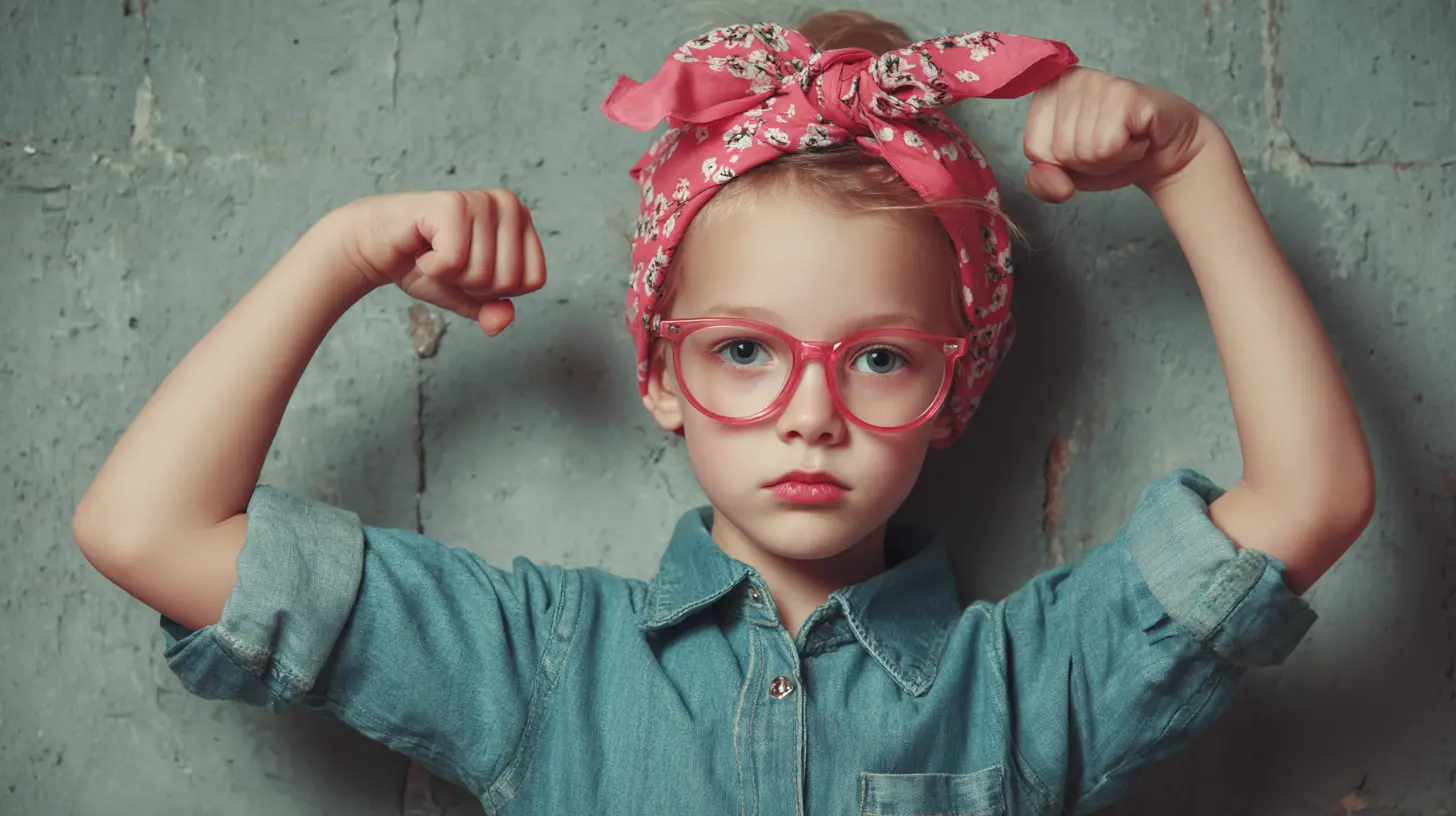
all images in this post were generated using AI tools
Category:
Raising Girl EmpoweredAuthor:

Steven McLain
Discussion
rate this article
1 comments
Zelda McPhail
This article beautifully captures the essence of empowerment for girls today. It's crucial to foster an environment where they feel confident to express themselves and pursue their dreams without fear. Let's continue to support and uplift them as they navigate their unique journeys in this world.
August 19, 2026 at 4:41 AM
Steven McLain
Thank you for your thoughtful comment. It's vital that we create spaces for girls to thrive and express themselves freely. Your support makes a difference.