Music and Movement: The Ultimate Play-Based Learning Combo
21 September 2026
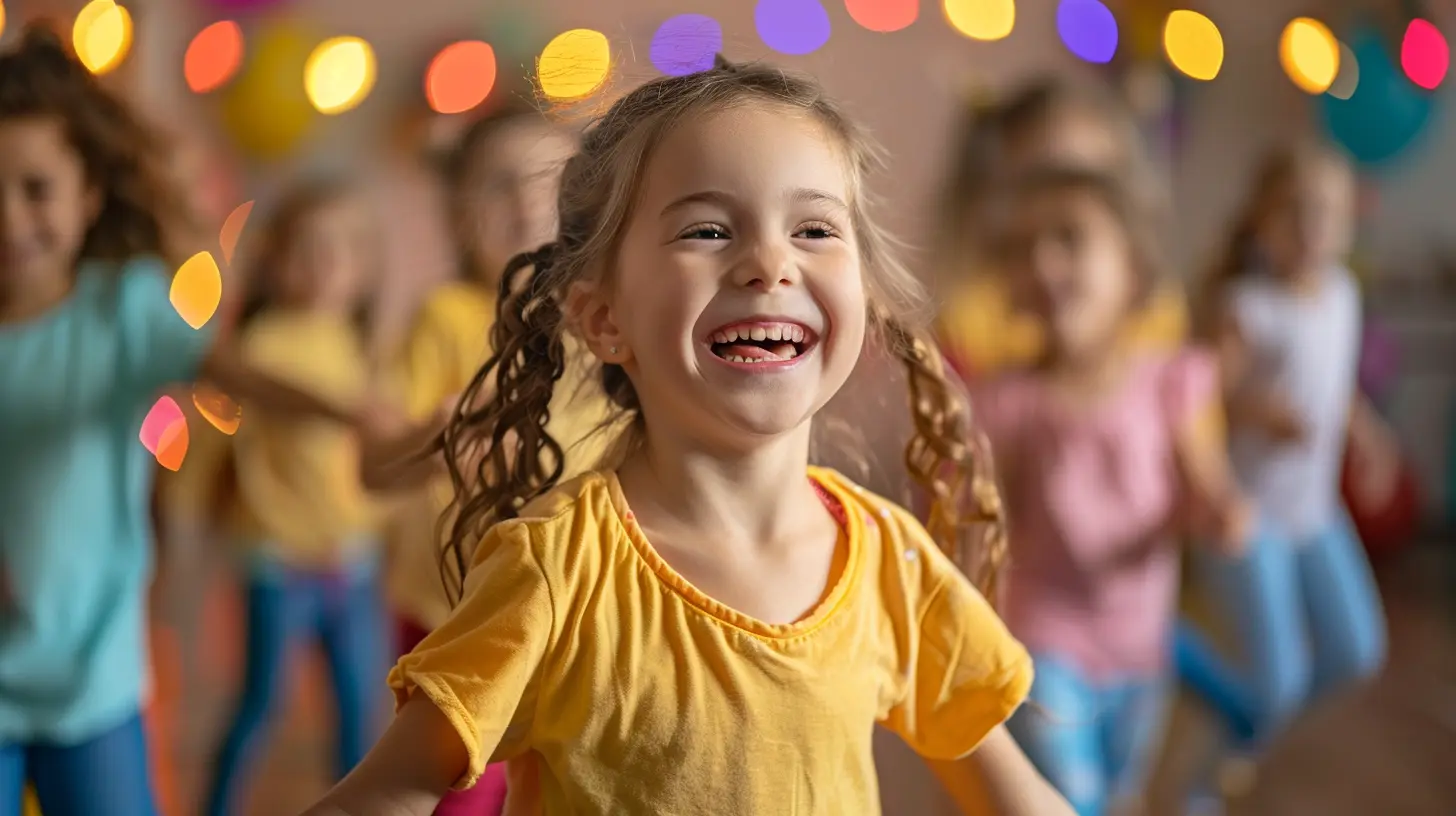
If you have ever watched a toddler freeze mid-step the moment a favorite song starts, you have already seen the power of music and movement working together. The body stops. The ears tune in. Then the whole child lights up and starts to bounce, clap, or spin. That moment is not just cute. It is one of the most efficient learning states a young brain can enter.
Music and movement is not a subject you teach. It is a condition you create. When rhythm, sound, and physical motion combine, children practice motor planning, language, emotional regulation, social cooperation, and early math concepts at the same time, often without realizing they are doing anything academic at all. That is the heart of play-based learning, and it is why this particular combination deserves a deliberate place in your daily routine rather than being treated as a rainy-day backup.
This article is for parents, caregivers, and early childhood educators who want more than a list of songs to play. It explains how the combination actually works, when it works best, where it can go wrong, and how to build it into real life without turning your home into a performance academy.
Why Music and Movement Belong Together
Plenty of activities use music. Plenty use movement. The magic happens at the intersection, and the reason is biological before it is educational.The human brain processes rhythm in circuits that overlap heavily with those used for timing, sequencing, and motor control. When a child hears a steady beat and tries to match it with their body, they are doing something cognitively demanding: predicting when the next sound will arrive, adjusting their muscles to meet it, and correcting in real time. This is called entrainment, and it is one of the few experiences where perception and action are genuinely fused.
Movement, meanwhile, builds what researchers call the body schema, the internal map of where limbs are and how they move. A child who has a well-developed body schema finds it easier to sit still later, because stillness is an active skill built on top of controlled motion, not the absence of it. Anyone who has tried to reason with a child who has been indoors all day has felt the cost of an underused body.
Put the two together and you get a loop. Sound prompts movement, movement reinforces the sound pattern, and the repetition strengthens the neural pathways involved in both. Add a caregiver who is smiling and participating, and you layer in social connection, which is the strongest motivator a young child has.
The Difference Between Music Class and Musical Play
A formal music class usually has a goal: learn the song, play the instrument correctly, perform the routine. Musical play has a different goal. It uses music as a medium for whole-child development.Neither is wrong. They serve different purposes, and many families do both. But if your aim is play-based learning, you want the second approach most of the time. That means:
- Following the child's energy rather than a fixed lesson plan
- Repeating the same songs until they become familiar, not moving on for novelty's sake
- Allowing imperfect singing and messy dancing
- Treating the adult as a co-player, not an instructor
The trade-off is real. Structured classes offer progression, peer interaction, and exposure to instruments a home may not have. Free musical play offers flexibility, deeper attachment, and the freedom to respond to a child's mood on any given day. If you can only choose one, choose play. You can always add structure later, but you cannot easily recreate the relaxed, low-pressure tone that makes young children willing to try.
What Is Actually Being Learned
Parents often ask what a child is "getting" from dancing around the kitchen. The honest answer is a lot, but it helps to name it.Motor Development
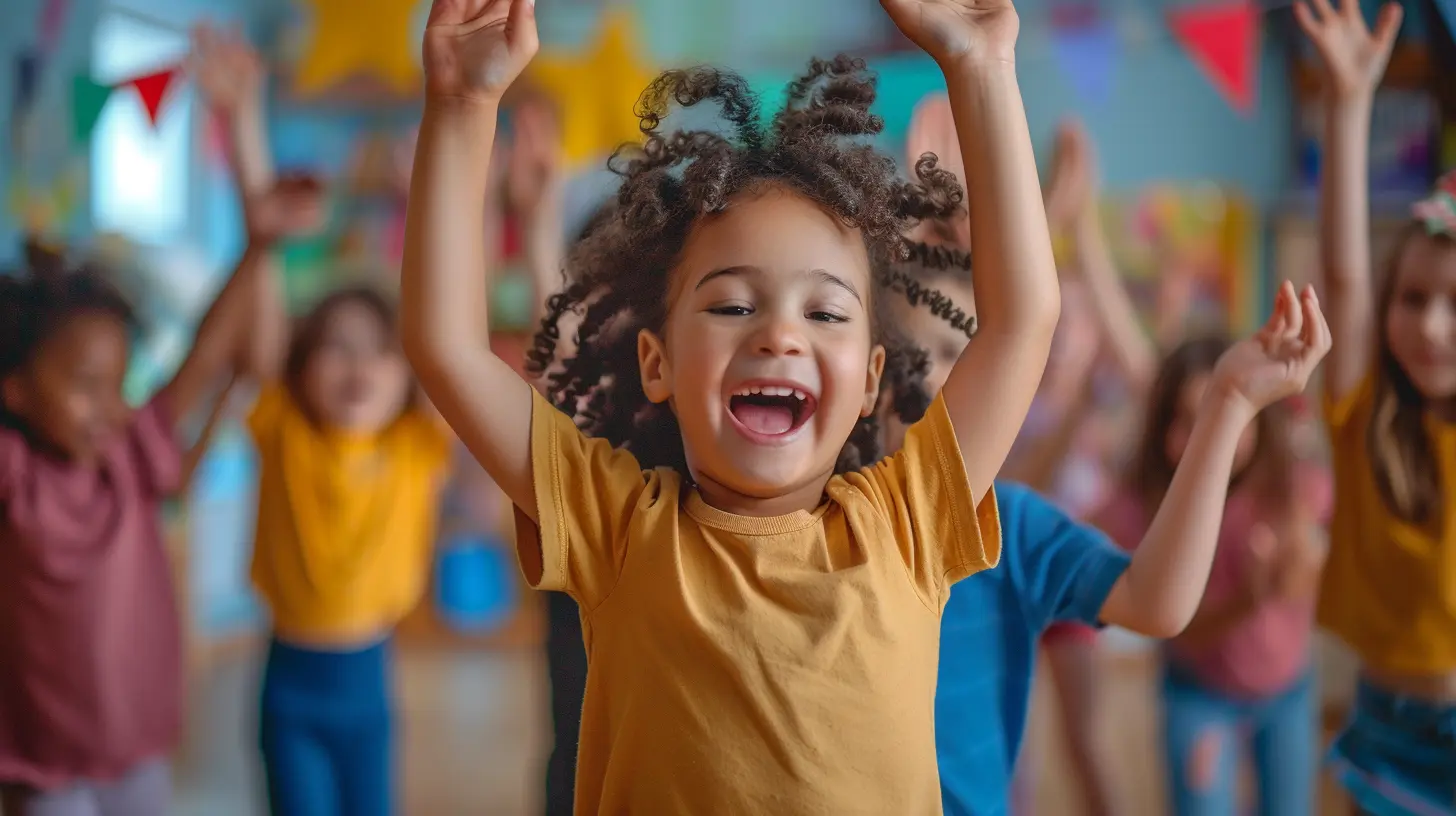
Jumping, swaying, stomping, and clapping all build gross and fine motor control. Crossing the midline, meaning reaching across the body with an arm or leg, is a specific milestone that supports later reading and writing because it strengthens communication between the brain's hemispheres. Songs that ask children to touch the opposite knee or pass an object from hand to hand quietly encourage this.Balance develops when children freeze on one foot or sway to a slow tempo. Coordination develops when they try to clap on the beat while stepping. These look like games because they are games.
Language and Literacy
Songs are language delivered in a format the brain holds onto. Rhyme, alliteration, and repetition are the same tools poets use, and they are the tools children use to crack the code of reading. A child who has sung "the itsy bitsy spider" fifty times has practiced the "sp" sound blend, syllable stress, and narrative sequence without a single worksheet.Action songs are especially powerful because the gesture anchors the word. When a child makes a climbing motion with their fingers, the word "climbed" is stored with a physical memory. That dual coding makes recall easier.
Early Math and Pattern Recognition
Music is math you can hear. Steady beat is a repeating unit. Loud and soft, fast and slow, high and low are all comparisons. Call-and-response songs teach turn-taking, which is a precursor to conversation and to understanding sequences.When a child notices that a song has a pattern, they are doing the same cognitive work as recognizing that a red-blue-red-blue bead string continues. You do not need to announce this. You just need to give them many chances to feel it.
Emotional Regulation
This is the benefit parents notice first and understand least. A child who is overwhelmed can often be calmed by a slow, familiar song with a gentle rocking motion. The rhythm gives the nervous system an external pacemaker. The movement discharges some of the physical tension. The familiarity signals safety.The reverse is also true. A sluggish, grumpy child can be gently shifted by an upbeat song with big movements. This is not manipulation. It is co-regulation, and it is one of the most valuable skills you can model.
Social Skills
Group music and movement requires watching, waiting, matching, and leading. These are the building blocks of cooperation. A circle game where each child gets a turn to suggest a move teaches patience and gives every child a moment of being in charge, which is rare and valuable in early childhood.
How to Build a Music and Movement Routine at Home
You do not need a curriculum. You need a rhythm of your own.Anchor It to Existing Transitions
The easiest way to make musical play a habit is to attach it to something you already do. Cleanup time, bath time, the walk to the car, and the wind-down before bed are natural anchors. A specific song for each transition gives children a predictable cue, which reduces resistance because they know what is coming.For example, a two-minute tidy-up song played every afternoon does more for cooperation than repeated verbal instructions, because the song carries the expectation and the child's body is already moving.
Keep Sessions Short and Frequent
Ten minutes twice a day beats an hour once a week for young children. Attention spans are short, and repetition is where the learning lives. Short sessions also lower the bar for you, which matters because consistency is the whole game.Let the Child Lead More Than You Think
Adults tend to over-direct. Try this: start a song, then pause and let your child change a word, add a move, or decide what comes next. You will get strange results, and that is fine. Ownership is what keeps them coming back.Use Your Voice Before You Use a Speaker
Recorded music is convenient and useful, but your live voice is more responsive and more emotionally meaningful to a young child. You can slow down, speed up, pause, and change the words to fit the moment. You can also sing badly without consequence, which is a quiet gift to a child who is still learning to try things.
Practical Activities by Age
The following are starting points, not rules. Follow the child, not the calendar.Babies, Roughly 0 to 12 Months
Bounce songs on your lap. Rock gently to a slow tune. Sing while you change a diaper or prepare a bottle. At this stage, the goal is exposure and connection, not participation. Your baby is learning that sound and touch go together and that your face is a source of pleasure.Toddlers, Roughly 1 to 3 Years
This is the golden age of action songs. "Head, shoulders, knees and toes," "wheels on the bus," and any song with a clear gesture will land well. Toddlers love repetition and will ask for the same song many times in a row. Give in. That repetition is the point.Also introduce simple instruments. A pot and a wooden spoon are enough. Shakers made from sealed containers with rice inside work well. Do not worry about rhythm accuracy. Worry about whether they are enjoying the cause-and-effect of making sound.
Preschoolers, Roughly 3 to 5 Years
Preschoolers can follow multi-step directions in a song, play simple circle games, and invent their own verses. This is a good time for freeze games, which build inhibitory control, and for songs that require listening for a change, such as a tempo shift or a pause.You can also introduce basic notation ideas through movement. A long sway for a long note, a quick hop for a short one. This is pre-literacy for music and pre-math for duration.
Early Elementary, Roughly 5 to 8 Years
Children this age can handle more complex patterns, clapping games with a partner, and simple choreography. They may also start showing preferences and wanting to choose the music. Respect that. Letting them pick is part of building autonomy, even if their taste is not yours.Common Mistakes and Misconceptions
Most of the problems parents run into come from a handful of understandable errors.Mistake One: Treating It as Performance
The moment you start correcting your child's singing or dance moves, you convert play into evaluation. Some children will rise to the challenge, but many will quietly opt out. Save correction for formal lessons if you choose them later. At home, aim for joy.Mistake Two: Waiting for the Right Equipment
You do not need a music room, a piano, or a subscription. You need a voice and a floor. Buying gear can be fun, but it should never be a prerequisite. The families who do this well are usually the ones with the least equipment and the most willingness to look silly.Mistake Three: Using Music Only for Energy
Upbeat music is great for burning energy, but if that is all you use, you miss the calming half of the toolkit. Slow songs, lullabies, and gentle swaying are just as valuable, especially in the late afternoon when everyone's patience is thin.Mistake Four: Assuming Some Children Are Not Musical
Some children are more reserved about moving. Some are sensitive to loud sound. Some prefer to watch before joining. None of this means they are not musical. It means they need a different entry point. Offer a quieter instrument, a smaller movement, or simply permission to observe. Watching is participation.Mistake Five: Overstimulation
Music and movement can tip into chaos. Watch for signs: frantic running, covering ears, meltdowns that seem to come from nowhere. When that happens, drop the tempo, lower the volume, and shift to something slow. The skill is in the transition, not the peak.
When to Seek Structured Instruction
Play-based musical movement covers a great deal of ground, but there are situations where formal instruction adds real value.If your child shows a strong, sustained interest in a specific instrument, a good teacher can teach technique safely and prevent injury. If your child thrives on group settings and you want regular peer interaction, a class can provide that. If you feel out of your depth and want guidance, a parent-and-child class can give you a repertoire and a rhythm to bring home.
The trade-off is cost, scheduling, and the risk of turning something joyful into an obligation. A useful rule: keep at least some musical play at home that has no goals attached, so the child always has a place where music is simply theirs.
Making It Work in Real Life
Here are a few practical habits that make the difference between a good intention and a real routine.Keep a short list of go-to songs so you are not searching your memory in the moment. Five or six is plenty.
Store a few simple instruments somewhere accessible. A basket by the couch works better than a box in a closet.
Accept that some days it will not happen. Missing a day does not break the habit. Quitting because you missed a week does.
Notice what your child responds to and do more of it. If they love songs about animals, lean in. If they hate being lifted, stop lifting them.
Sing during mundane tasks. The car, the kitchen, and the bathtub are all stages.
The Long View
The real payoff of music and movement is not that your child will become a musician, though some will. It is that they will grow up with a body they trust, a voice they are not afraid to use, and a memory of adults who joined them in play rather than directing it from the sidelines.That memory matters. Children who associate learning with delight keep learning longer. The songs change, the dances get more complicated, but the underlying message stays the same: moving, singing, and being together is worth doing.
You do not need to do this perfectly. You need to do it often, with warmth, and with enough flexibility to follow where your child goes. Start with one song today. The rest will follow.
all images in this post were generated using AI tools
Category:
Play Based LearningAuthor:
Steven McLain