How Storytelling Can Empower Young Minds
14 October 2026
A child sits cross-legged on the floor, eyes wide, waiting. The parent leans in and says, "Once, in a village at the edge of a dark forest, there lived a girl who was afraid of the dark." That single sentence does something remarkable. It invites the child into a world where fear is real but manageable, where problems have shapes, and where the child's own mind becomes an active participant rather than a passive receiver.
Storytelling is one of the oldest tools humans have for passing on knowledge, calming fears, and shaping character. Long before books were common, families gathered around fires and told stories. Today, despite screens competing for attention, storytelling remains one of the most powerful ways to help children grow into confident, thoughtful, and resilient people. But not all storytelling works the same way. How you tell a story, when you tell it, and what you do after matters enormously.
This article examines why storytelling empowers young minds, how it works on a psychological level, and how parents and caregivers can use it deliberately rather than accidentally. It also covers common mistakes, trade-offs, and practical techniques you can apply tonight.

Why Stories Reach Children Differently Than Instructions
Most parents eventually notice that direct instructions lose their power fast. "Be kind." "Don't give up." "Tell the truth." These are good messages, but repeated often enough they become background noise. Stories bypass that resistance.The reason is partly about how memory works. Facts and rules are stored as isolated pieces of information. Stories are stored as networks: a character, a problem, an emotion, an action, and a result. When a child hears a story, their brain links the lesson to a face, a feeling, and a sequence of events. That web of connections makes the lesson easier to recall and apply later.
There is also an emotional component. Children do not simply hear stories. They live inside them. When a character feels left out, the child feels a version of that exclusion. When the character finds courage, the child experiences a small rehearsal of courage. This is why a story about a nervous child starting school can do more for a worried five-year-old than a dozen conversations about being brave.
The Difference Between Hearing and Participating
Passive listening has value, but active participation multiplies it. When a child predicts what happens next, suggests what a character should do, or argues with a decision, they are practicing perspective-taking, moral reasoning, and language. A story that ends with a question ("What would you have done?") turns a monologue into a dialogue. That shift is where much of the empowering effect lives.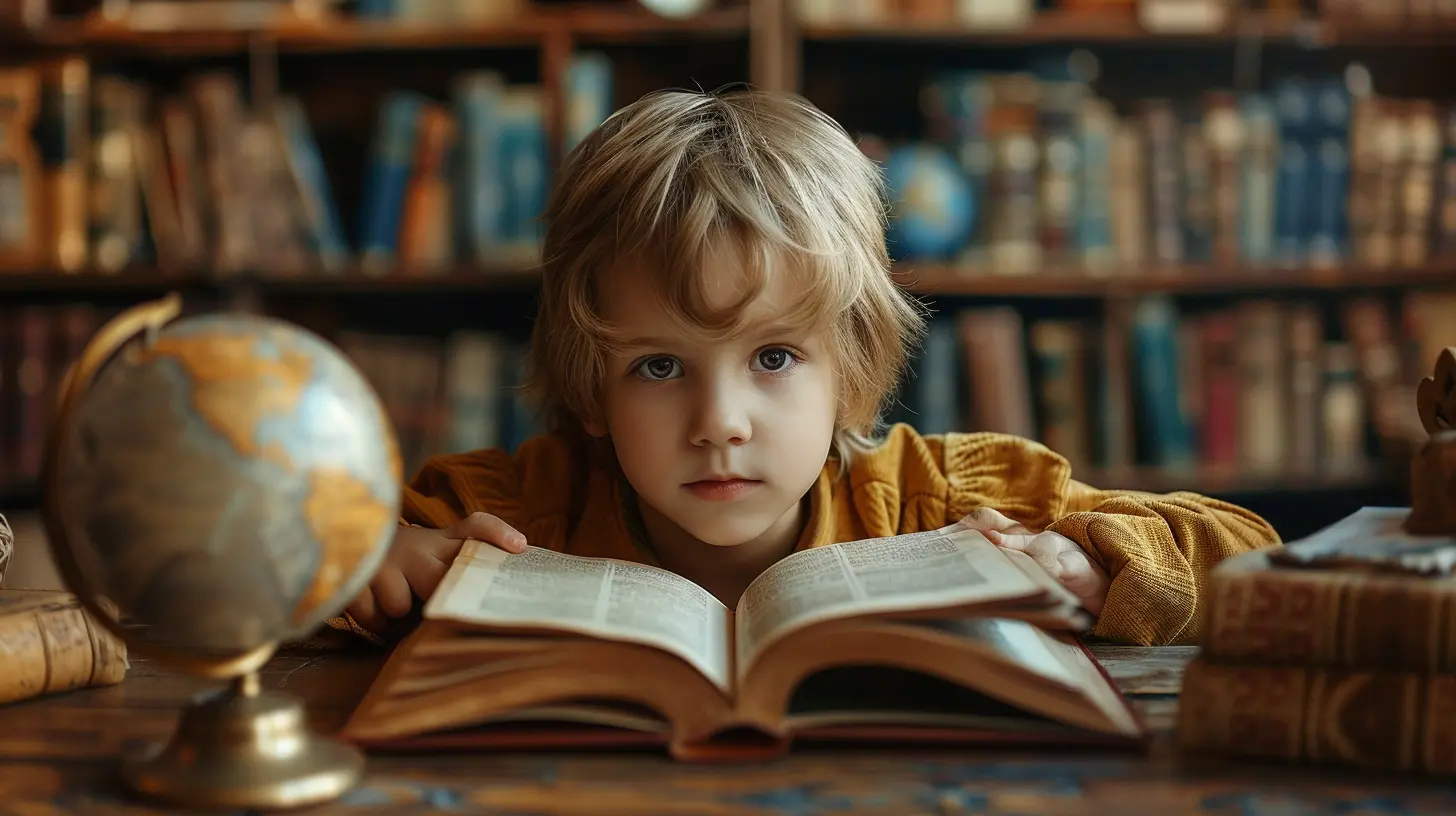
The Psychological Mechanisms Behind Storytelling
To use storytelling well, it helps to understand what is actually happening in a child's mind.Narrative as a Safe Container for Big Feelings
Young children experience intense emotions but lack the vocabulary and self-regulation to manage them. Stories offer a container. A scary event inside a story is one step removed from the child's own life, which makes it tolerable. The child can feel fear, sadness, or anger without being overwhelmed, because the story holds the feeling at a slight distance.This is why fairy tales have survived for centuries despite their darkness. A story about a child lost in the woods lets a real child practice the feeling of being lost while remaining physically safe on a parent's lap. The story ends, the feeling resolves, and the child learns that difficult emotions are survivable.
Modeling and Mental Rehearsal
Children learn a great deal by watching others, and characters in stories function as models. When a character faces a dilemma and chooses well, the child mentally rehearses that choice. Over time, these rehearsals build a kind of internal library of responses. When the child faces a similar situation, they have something to draw on.This is not the same as telling a child what to do. Modeling through story lets the child arrive at the conclusion themselves, which makes the lesson feel like their own idea. Ownership matters. A value a child adopts voluntarily tends to stick better than one imposed from outside.
Language, Vocabulary, and Cognitive Growth
Stories expose children to words and sentence structures they do not hear in everyday conversation. A story might use "hesitated," "curious," or "reluctant" in a context that makes the meaning clear. This kind of rich input supports vocabulary growth, which in turn supports reading comprehension and academic performance later.Stories also build what researchers often call executive function: the ability to hold information in mind, shift attention, and plan. Following a plot requires remembering what happened earlier, tracking multiple characters, and anticipating consequences. These are cognitive workouts disguised as entertainment.

How Storytelling Builds Specific Life Skills
The general benefits are well known. The specific mechanisms are more useful for parents who want to be intentional.Emotional Regulation
A child who hears stories about characters managing anger, disappointment, or jealousy gains a vocabulary for their own inner life. Instead of a formless wave of frustration, the child can think, "This is like when the bear lost the race." Naming an emotion reduces its power. Stories provide the names.Empathy and Perspective-Taking
Stories put children inside someone else's experience. A story about a new student who does not speak the local language can help a child understand loneliness from the inside. This is different from being told to be nice to newcomers. It is a felt understanding, and felt understanding tends to translate into behavior more reliably than abstract rules.Problem-Solving and Resilience
Stories rarely present problems that solve themselves. Characters try, fail, adjust, and try again. When children see this pattern repeatedly, they internalize the idea that setbacks are part of the process rather than a sign to quit. A story about a character who fails three times before succeeding teaches persistence without a lecture.Identity and Self-Worth
Children are constantly assembling a sense of who they are. Stories, especially those that reflect the child's own culture, family, or experiences, affirm that identity. A child who hears stories where people like them are brave, clever, or kind absorbs a positive self-image. This is one reason diverse stories matter for all children, not only for those who rarely see themselves represented.
Practical Techniques That Actually Work
Knowing why storytelling helps is useful. Knowing how to do it well is more useful. The following techniques are grounded in common practice and can be adapted to different ages.Choose the Right Story for the Moment
A story's power depends on fit. A high-energy adventure before bed will not calm a child. A quiet, repetitive tale might bore a child who needs to process a difficult day. Match the story to the child's state. If a child is anxious about a change, a story about a character facing a similar change can help. If a child is wound up, a rhythmic, soothing story can settle them.Use Your Voice as an Instrument
Pacing, pauses, and volume changes do more than entertain. They signal what matters. A pause before a reveal gives the child time to anticipate. A softer voice during a tense moment draws the child in. These techniques are not gimmicks. They teach children how language carries meaning and emotion, which supports their own communication skills.Invite Participation Without Forcing It
Some children want to interject constantly. Others prefer to listen silently. Both are valid. You can offer openings ("What do you think she should do?") without demanding answers. If a child does not respond, let it go. The invitation itself signals that their thinking matters.Keep It Short and Repeat Often
A ten-minute story told nightly beats a forty-minute story told once a month. Repetition is how children consolidate understanding. They often ask for the same story again and again, and that is not a failure of imagination. It is how they master a narrative and the feelings inside it.Tell Stories About Your Own Life
Personal stories are especially powerful. A story about the time you got lost as a child, or the time you were nervous on your first day of work, shows your child that you were once small and uncertain too. It builds connection and gives the child a model of how to narrate their own experience.Storytelling Across Ages: What Changes and What Does Not
The core principles hold across childhood, but the delivery shifts.Toddlers and Preschoolers
At this age, stories should be simple, sensory, and repetitive. Characters are often animals or familiar figures. The plot can be a single problem resolved in a few steps. Participation looks like sounds, gestures, and simple predictions. The goal is comfort, language exposure, and the beginnings of narrative thinking.Early Elementary Children
Children in this range can handle more complex plots, multiple characters, and moral dilemmas. They enjoy stories where they can choose what happens next. This is a good age for stories that address friendship, fairness, and fear. Questions after the story can be more open-ended.Older Children and Tweens
Older children may resist being read to, but they still respond to stories, especially when the stories respect their intelligence. This is the age for stories with ambiguity, where characters make mistakes and consequences are not always neat. Personal stories from your own life, told without moralizing, often land well. So do stories from history, science, or current events, framed as narratives rather than lectures.
Common Mistakes and Misconceptions
Even well-intentioned storytelling can go wrong. Here are the pitfalls worth avoiding.Turning Every Story Into a Lesson
If every story ends with a pointed moral, children learn to brace for the lecture. The story becomes a vehicle for instruction rather than an experience. This kills the very quality that makes stories effective. Let some stories simply be stories. The lesson, if there is one, can surface later on its own.Over-Explaining
Children are capable of filling gaps. When you explain every metaphor and motive, you rob them of the mental work that makes stories empowering. Trust the child to wonder. Answer questions when asked, but do not preempt them.Using Stories to Manipulate
A story told specifically to make a child feel guilty or to win an argument tends to backfire. Children sense the agenda. Stories work best when they are offered generously, not deployed as weapons.Assuming One Story Fits All
A story that resonates with one child may bore or frighten another. Temperament matters. A sensitive child may need gentler stories. A thrill-seeking child may need more adventure. Pay attention to signals and adjust.Neglecting the Child's Own Stories
Empowerment is not only about receiving stories. It is also about telling them. When children narrate their own experiences, they practice organizing events, expressing emotion, and making meaning. Asking "What story would you tell about today?" can be as valuable as telling a story yourself.Storytelling Versus Other Approaches: Trade-Offs to Consider
Storytelling is not the only tool, and it is not always the best one. It helps to compare it honestly with alternatives.Storytelling Versus Direct Instruction
Direct instruction is faster and clearer. If a child is about to touch a hot stove, you do not tell a story. You say "No." Stories are better for values, emotions, and long-term character, where direct instruction tends to bounce off. The trade-off is time and indirection. Stories take longer and their effects are less immediate, but they often go deeper.Storytelling Versus Screens
Screen-based stories offer vivid visuals and professional production. They can be engaging and educational. But they are usually passive, and they do not adapt to the individual child in the room. A parent telling a story can pause, adjust, respond, and tailor the content to the child's mood. That responsiveness is hard to replicate. Screens are not the enemy, but they are not a substitute for the live, interactive version.Storytelling Versus Reading Aloud
Reading aloud is a form of storytelling and carries many of the same benefits. It also builds print awareness and vocabulary tied to written language. Oral storytelling, however, allows more improvisation and eye contact. Both are valuable. A healthy routine might include both.
Building a Storytelling Habit That Lasts
Habits survive on convenience and pleasure. If storytelling feels like a chore, it will fade. Here are ways to make it stick.Anchor It to an Existing Routine
Attach storytelling to something you already do: bedtime, bath time, the walk to school, or dinner. The existing routine becomes the cue. You do not have to remember to tell stories. The moment reminds you.Keep a Small Bank of Go-To Stories
You do not need endless material. A handful of stories you know well can be told in many ways. Folk tales, family stories, and simple invented tales are enough. Over time, you can add to the bank.Let Children Choose and Shape
When children have a say in the story, they invest in it. Let them pick the character, the setting, or the ending. This is not indulgence. It is engagement, and engagement is what makes the habit last.Do Not Aim for Perfection
A clumsy story told with warmth beats a polished story told with distance. Children are not critics. They are participants. Your willingness to try matters more than your skill.What the Research Suggests, Cautiously
It is worth being careful here. Research on storytelling and child development is broad and varied, and it does not always point in one direction. Some studies suggest that narrative exposure supports vocabulary and emotional understanding. Others emphasize the role of interactive dialogue around stories rather than the stories alone. The safest conclusion is that storytelling is a promising and widely used practice, not a guaranteed intervention. Its effects depend on frequency, quality, and the relationship between teller and listener.This is not a reason to dismiss storytelling. It is a reason to use it thoughtfully, observe your child, and adjust based on what you see rather than what you have read.
Final Thoughts
Storytelling empowers young minds because it meets children where they are. It speaks in the language they already use to make sense of the world: characters, feelings, and events. It builds vocabulary, empathy, resilience, and identity, not through pressure but through invitation. It gives children a safe place to practice being brave, kind, and curious.The most important thing is not technique. It is presence. A parent who tells a story, even imperfectly, is saying to a child: I see you. I have time for you. Your imagination matters. That message, repeated over years, does more than any single tale.
Start tonight. Pick a character. Give them a problem. See where it goes.
all images in this post were generated using AI tools
Category:
Empowering KidsAuthor:

Steven McLain