Helping Your Child Face Their Fear of the Dark in 2027
3 September 2026
Fear of the dark is one of the most common childhood anxieties, and it is not going anywhere by 2027. In fact, the way children experience darkness is changing. With smart nightlights that change color by voice command, bedtime apps that play calming soundscapes, and parents who are more aware of sleep science than any generation before, you might assume this fear is easier to handle now. It is not. Technology adds new layers, but the core of the fear remains the same: a child's brain is wired to detect threats in low visibility, and that wiring does not care about your smart home setup.
As a parent, your goal is not to eliminate the fear overnight. It is to help your child build a toolkit for managing it, so that darkness becomes neutral instead of terrifying. This takes patience, consistency, and a willingness to understand what is actually happening in your child's mind. Let's break down what works, what does not, and why so many common approaches backfire.
Why Children Fear the Dark: The Real Biology and Psychology
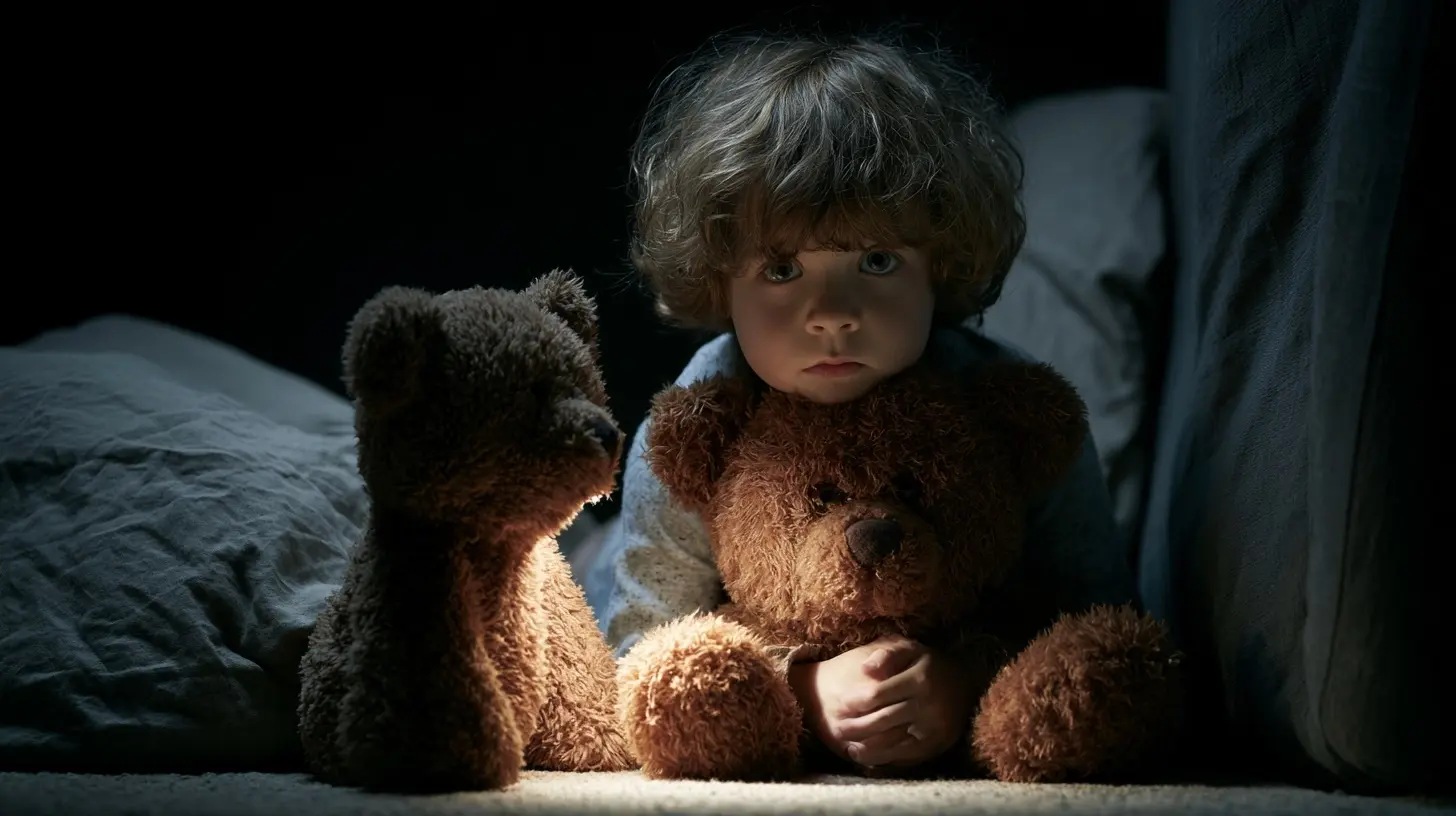
Before you can help your child, you need to understand the mechanism. Human beings are born with a primitive threat-detection system located in the amygdala. In daylight, visual information flows freely, and your child's prefrontal cortex, the logical part of the brain, can quickly confirm that the shadow in the corner is just a sweatshirt. In darkness, that visual confirmation is gone. The brain fills in the gaps with imagination, and for a young child, imagination is not a tool for creativity. It is a survival mechanism.This is not a sign of weakness or a behavioral problem. It is a developmental stage that peaks between ages three and six, though it can persist longer. Some children are more sensitive because of temperament. Highly imaginative kids, kids with anxiety tendencies, and kids who have recently experienced a stressful event are more likely to struggle. There is also a genetic component. If you were a fearful child, your child may be too.
By 2027, we also have to consider the influence of screens. A child who watches a scary clip on a tablet, even accidentally, will process that image at night. The brain does not distinguish between a real threat and a fictional one when it is in a state of fear. So the first step is not a fancy nightlight. It is an honest assessment of what your child is consuming before bed.
The Mistake of "Just Prove There Is Nothing There"
One of the most common parental responses is to turn on the lights, show the child the empty closet, and say, "See? Nothing." This seems logical, but it fails on a neurological level. Fear is not rational. When your child is in a state of high arousal, their brain is not processing logical evidence. Showing them an empty room once does not rewire the fear response. In fact, it can make things worse because the child learns that you need to prove safety, which implies that danger is possible.Instead of proving the absence of threat, you need to teach your child to tolerate the uncertainty of darkness. This is a gradual process, not a single event. A better approach is to say, "I know it feels scary right now. Let's sit together for a few minutes and look at what you can see in the dim light." This validates the feeling without reinforcing the fear.

The 2027 Reality: Smart Nightlights and Sleep Tech
Let's talk about nightlights, because the market has exploded. You can buy a projector that puts stars on the ceiling, a light that slowly dims over thirty minutes, or a lamp that changes color when your child says a command. These are useful tools, but they are not solutions. A nightlight is a bridge, not a destination. The goal is to eventually sleep in full darkness or at least in a consistent low-light environment that does not require active management.The trade-off here is important. A nightlight that is too bright can suppress melatonin production, making it harder for your child to fall into deep sleep. A light that changes color or sound might become a sleep crutch. If your child cannot sleep without the specific blue glow of their favorite dinosaur lamp, you have replaced one fear with a dependency. The best approach is to use a fixed, dim, warm light placed on the floor rather than at eye level. This reduces shadows and allows the child to see the room without creating a bright focal point.
In 2027, many parents also use audio devices that play white noise or nature sounds. These can be excellent for masking household creaks and outside traffic, which often trigger nighttime fears. But be careful about volume. A sound machine set too loud can damage hearing over time. Keep it at a low, comfortable level, and place it away from the child's head.
The Gradual Exposure Method That Actually Works
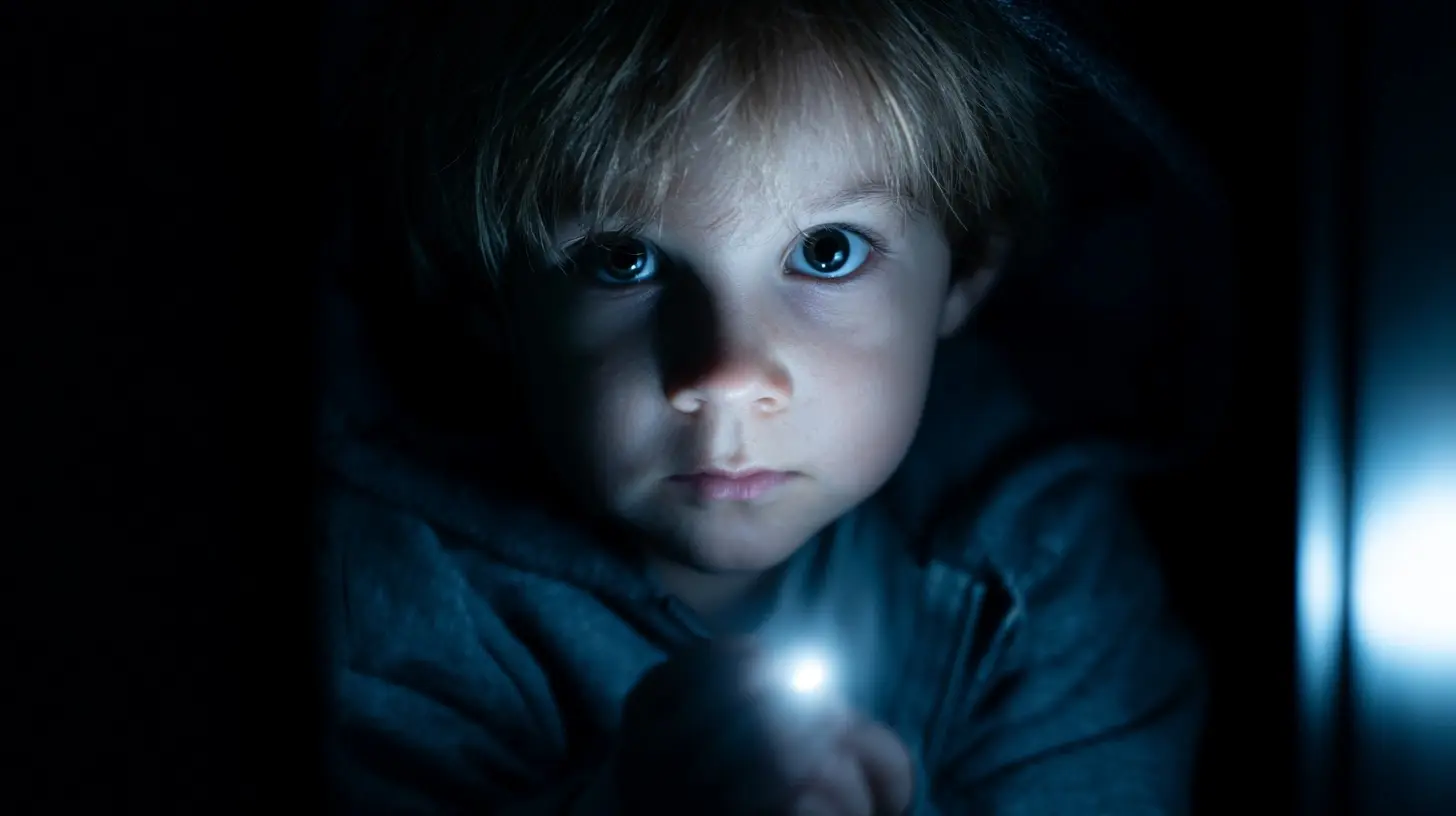
The most effective strategy is graduated exposure, but you need to do it correctly. The mistake most parents make is moving too fast or too slow. Here is a step-by-step approach that respects your child's pace.Start by sitting with your child in their room with the door open and the hallway light on. The room should be dim, not pitch black. Spend ten minutes talking about their day or reading a calm book. This builds a positive association with the room at night. After a week, move to sitting just outside the door, with your child visible to you but you not in the room. Tell them, "I am right here. You can call me if you need me." This gives them a sense of control.
The next step is to leave the door half closed, then fully closed with the hallway light off but a dim nightlight on. Then eventually, you turn off the nightlight after they fall asleep. This process might take two weeks or two months. The key is to let your child lead. If they are crying and unable to settle, you have moved too fast. Step back one level and hold there for several more nights.
A common mistake is to do this only at bedtime. Fear of the dark is not just about sleeping. It can also happen when your child needs to use the bathroom at night or when they wake up at 2 a.m. and cannot fall back asleep. Practice the same gradual exposure during these times. Keep a small flashlight on their nightstand that they know how to use. This gives them agency, which is more powerful than any reassurance you can offer.
The Role of "Worry Time" and Cognitive Reframing
Older children, around age seven and up, can benefit from structured thinking exercises. One technique is called "worry time." Set aside ten minutes each day, not at bedtime, where your child can list everything they are afraid of. Write these fears down on a piece of paper. Then, during that time, you discuss whether each fear is realistic. This separates the fear from the moment of falling asleep.Another technique is cognitive reframing. If your child says, "There is a monster under my bed," do not dismiss it. Instead, ask, "What does the monster look like? Is it big or small? What does it want?" This sounds counterintuitive, but it actually helps the child externalize the fear. By giving the monster a silly name or drawing it, the child takes control of the narrative. You are not confirming the monster's existence. You are moving the fear from the emotional brain to the logical brain.
One parent I worked with had a child who was terrified of shadows on the ceiling. Instead of saying "those are just tree branches," she bought a small projector that cast butterfly shapes on the ceiling. She told her daughter, "The shadows outside are just the trees waving goodnight. Our butterflies are here to watch over you." This reframing took three nights to work, and it stuck because it gave the child a positive visual to replace the negative one.
What Not to Do: Common Mistakes and Their Consequences
Do not shame or mock the fear. Saying "You are too big for this" or "Stop being a baby" will not help. It will only make your child hide their fear from you, which means they will struggle alone. This is the single most damaging mistake.Do not use fear as a punishment. Threatening to turn off the lights if your child misbehaves is a direct way to cement the fear. It links darkness with loss of control and parental anger.
Do not let your child sleep in your bed as a long-term solution. A few nights during a particularly rough patch is fine. But if it becomes a habit, your child will not learn to self-soothe in their own space. The bed becomes the only safe place, and the bedroom becomes a place of exile. This creates a cycle of anxiety that is much harder to break later.
Do not constantly check on them after they fall asleep if they are not calling for you. This might seem caring, but it can actually wake them during light sleep cycles and reinforce the idea that you expect them to be scared.
The Parent's Own Anxiety: The Hidden Variable
Children are emotional radar. They pick up on your tension even if you say nothing. If you are anxious about leaving your child alone at night, if you rush to their room at the slightest whimper, your child learns that the dark is a legitimate reason for alarm. Your calmness is the most powerful tool you have.This does not mean you should ignore genuine distress. It means you need to differentiate between a true panic attack and a minor protest. A child who is hysterical, sweating, and crying needs your physical presence. A child who is whining and calling your name repeatedly may be testing boundaries. In the latter case, a firm, calm voice from outside the room saying "I am here. You are safe. Go back to sleep" is more effective than rushing in.
In 2027, many parents are dealing with their own nighttime anxiety due to news exposure and general stress. If you are lying in bed scrolling through your phone and feeling overwhelmed, your child picks up on that energy. Consider your own sleep hygiene. If you are not sleeping well, you will be less patient at 2 a.m. when your child wakes up. This is not selfish. It is a necessary part of helping your child.
When to Seek Professional Help
Most childhood fears of the dark resolve with time and consistent parenting. But there are red flags that indicate something more serious. If your child's fear is so intense that they refuse to enter their bedroom at all, if they have frequent nightmares that involve physical thrashing or sleepwalking, or if the fear is accompanied by extreme separation anxiety during the day, it is worth consulting a pediatrician or a child psychologist.Another sign is if the fear does not improve after three months of consistent graduated exposure. This might indicate an anxiety disorder that benefits from cognitive behavioral therapy. In 2027, many therapists offer telehealth sessions, which makes it easier to get help without disrupting your family's schedule. Do not wait until your child is having daily panic attacks. Early intervention is key.
There is also a misconception that melatonin supplements are a solution. Melatonin can help with falling asleep, but it does not address the fear. In fact, if your child is afraid, melatonin might make them sleepy but still anxious, leading to a groggy, confused wake-up in the middle of the night. Always consult a doctor before giving any supplement to a child.
The Long-Term View: Building Resilience for Life
The way you handle this fear will shape how your child handles future anxieties. If you respond with patience and structure, they learn that fear is manageable. If you respond with frustration or avoidance, they learn that fear is overwhelming.Think of this as a training ground. The skills your child develops here, recognizing physical sensations of fear, using breathing to calm down, breaking a problem into small steps, will serve them when they face a difficult test, a social conflict, or a new job later in life. You are not just solving a bedtime problem. You are teaching emotional regulation.
One useful analogy is to compare the dark to a cold swimming pool. You would not throw a child who is afraid of water into the deep end. You would start by sitting at the edge, then putting your feet in, then wading slowly. Fear of the dark is the same. The child needs to feel the water temperature before they can swim.
Practical Bedtime Routine for 2027
Here is a sample routine that incorporates modern tools without relying on them.Start bedtime at the same time every night, including weekends. Consistency is the foundation. Thirty minutes before lights out, turn off all screens. This includes tablets, TVs, and phones. The blue light from screens delays melatonin, and the content can stir up anxious thoughts.
Take a warm bath or shower. The drop in body temperature after a warm bath signals sleep. Then move to the bedroom, which should be cool and dark. Use a red or amber nightlight, as these wavelengths do not interfere with melatonin production as much as blue or white light.
Read a physical book together. Choose stories that are calm and positive. Avoid anything with suspense, even if it is a cartoon. The child's brain will process the story during sleep.
Do a "body scan" relaxation exercise. Ask your child to close their eyes and tense each muscle group for five seconds, then release. Start with their toes and work up to their face. This is a proven technique for reducing physical anxiety.
End with a specific phrase of reassurance, such as "I love you. Your room is safe. I will see you in the morning." Use the same phrase every night. This creates a predictable anchor.
If your child calls out, wait a full two minutes before responding. This is not neglect. It gives them a chance to self-settle. If they call again, go in, keep the lights low, and speak in a monotone. Do not engage in conversation. Reassure them, tuck them in, and leave. If they call again, wait three minutes. This incremental waiting is called "graduated ignoring" and it is effective, but it requires you to be consistent.
The Future of Nighttime Fears
By 2027, we will likely see more devices that claim to cure nighttime fear. There are already AI-powered "companion" robots that talk to children through the night. Some of these are helpful, but they carry a risk. A child who becomes attached to a robot for comfort may struggle to develop inner resilience. The robot cannot replace a parent's presence, and it may delay the natural process of learning to be alone in the dark.The best technology is the kind that fades into the background. A simple dim light, a consistent sound, and a parent who is calm and present. Everything else is marketing.
Your child's fear of the dark is not a problem to be solved quickly. It is a phase to be navigated. With the right approach, you will both come out the other side with a stronger relationship and a child who knows that courage is not the absence of fear. Courage is feeling the fear and getting into bed anyway.
all images in this post were generated using AI tools
Category:
Dealing With FearsAuthor:

Steven McLain
Discussion
rate this article
2 comments
Kirk McClary
Encouraging open conversations about fears empowers children to confront and manage their anxiety effectively.
October 7, 2026 at 3:13 AM
Xavi McCracken
Every child deserves support to overcome their fears...
September 6, 2026 at 2:49 AM
Steven McLain
Absolutely, supporting children in facing their fears is crucial for their growth and confidence.