From Blocks to Brilliance: How Construction Toys Aid Learning
1 October 2026
Construction toys occupy a strange position in the toy market. They are marketed as fun, gifted as birthday presents, and often dismissed as simple play. Yet ask any engineer, architect, or surgeon about childhood hobbies, and building toys appear with surprising regularity. That pattern is not a coincidence. Construction play sits at the intersection of hand movement, spatial reasoning, problem solving, and imagination, and it develops skills that transfer far beyond the playroom floor.
This article examines what construction toys actually do for a developing mind, when they help most, where parents commonly go wrong, and how to choose wisely among the many options available.
What Counts as a Construction Toy
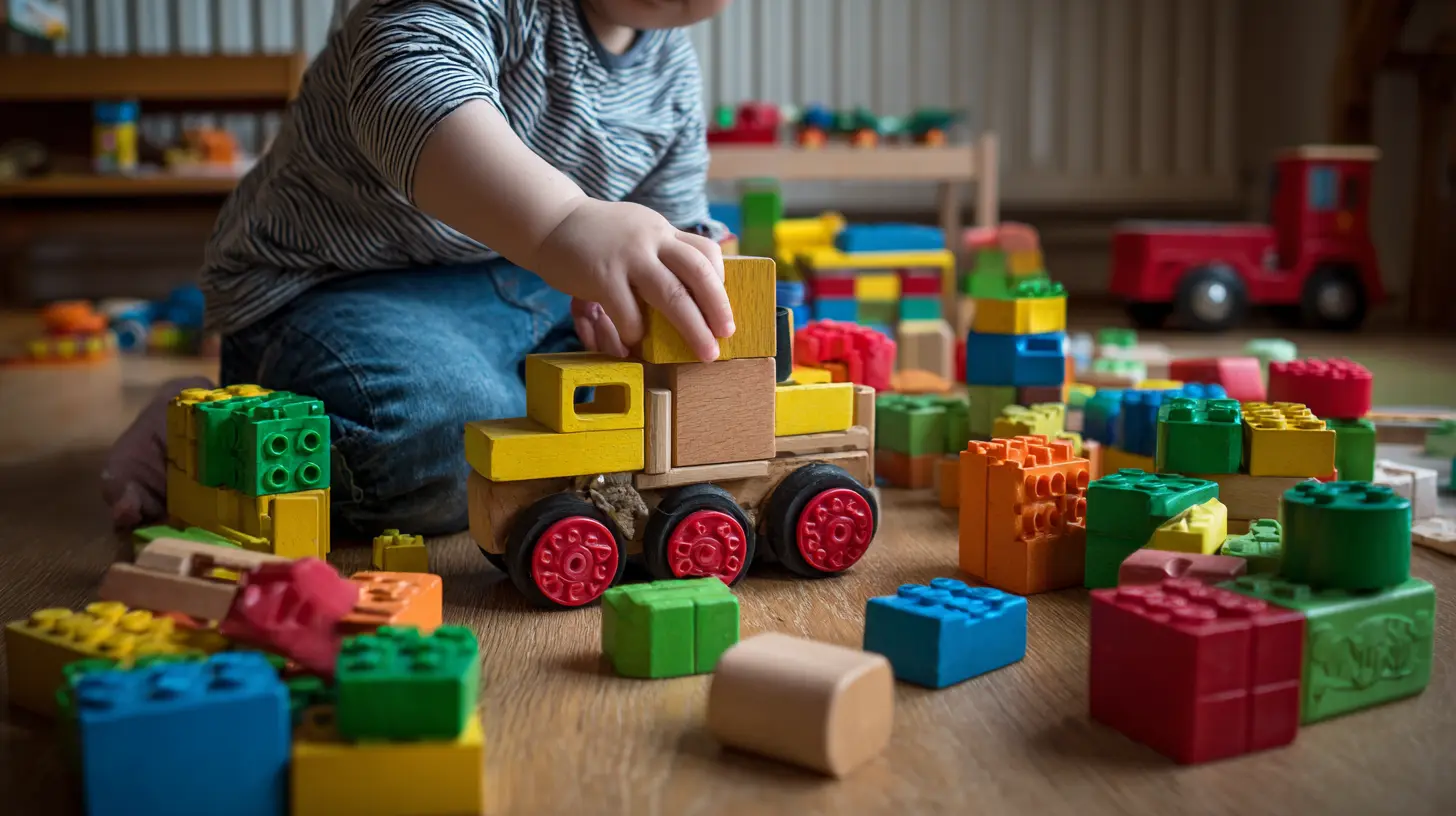
The category is broader than most parents assume. It includes:- Interlocking bricks and plates
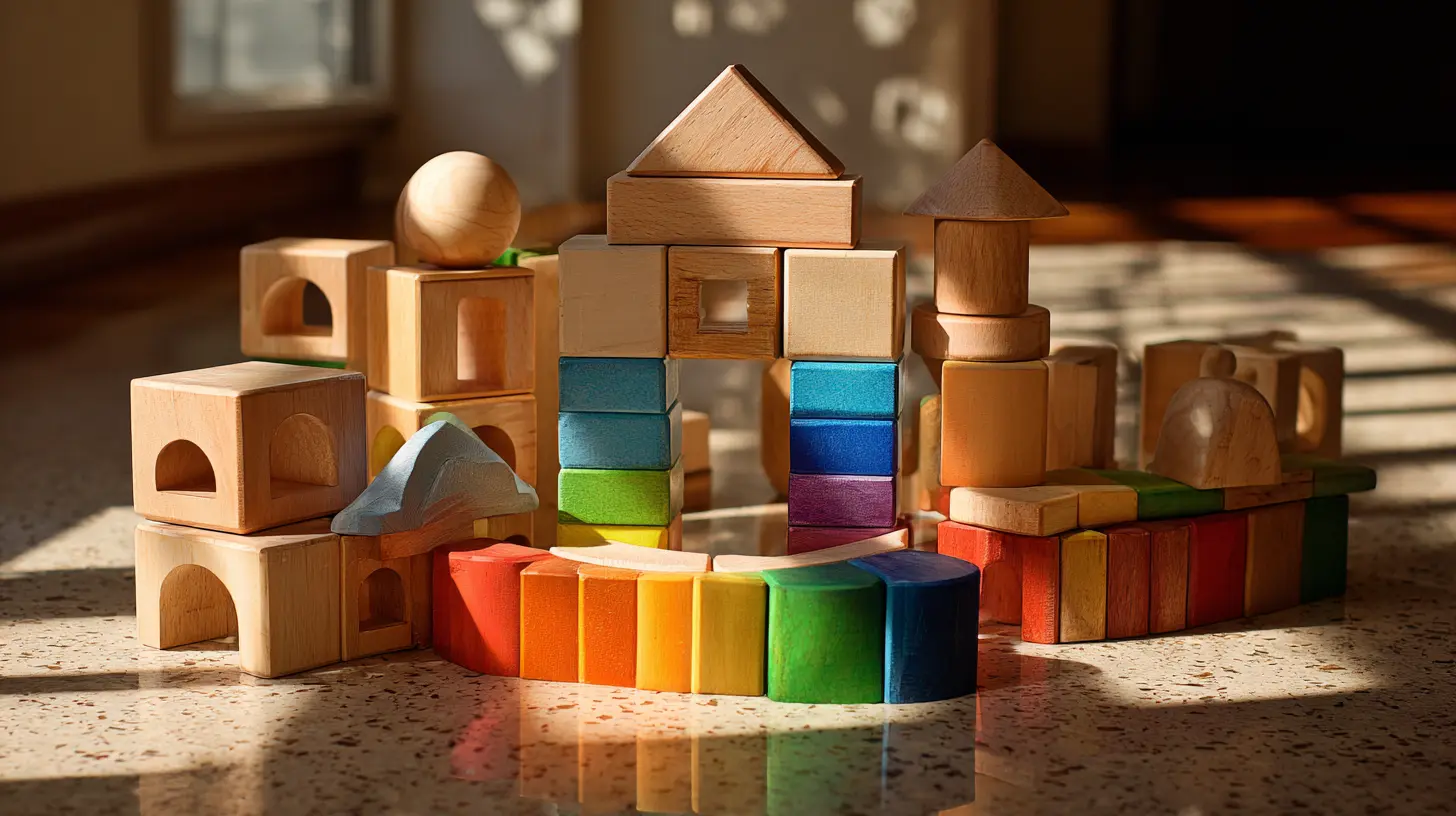
- Wooden unit blocks and plank sets
- Magnetic tiles and rods
- Marble runs and ball tracks
- Gears, pulleys, and simple machine kits
- Model kits with instructions, such as vehicles or buildings
- Open-ended connector sets with hinges, axles, and wheels
- Real tools scaled for children, such as safe saws and hand drills used in woodworking
The unifying feature is that the child assembles something from parts. The output can be a tower, a bridge, a creature, or a machine. What matters is that the child makes decisions about structure, balance, and purpose.
Why Construction Play Builds More Than Towers
Spatial reasoning: the quiet powerhouse
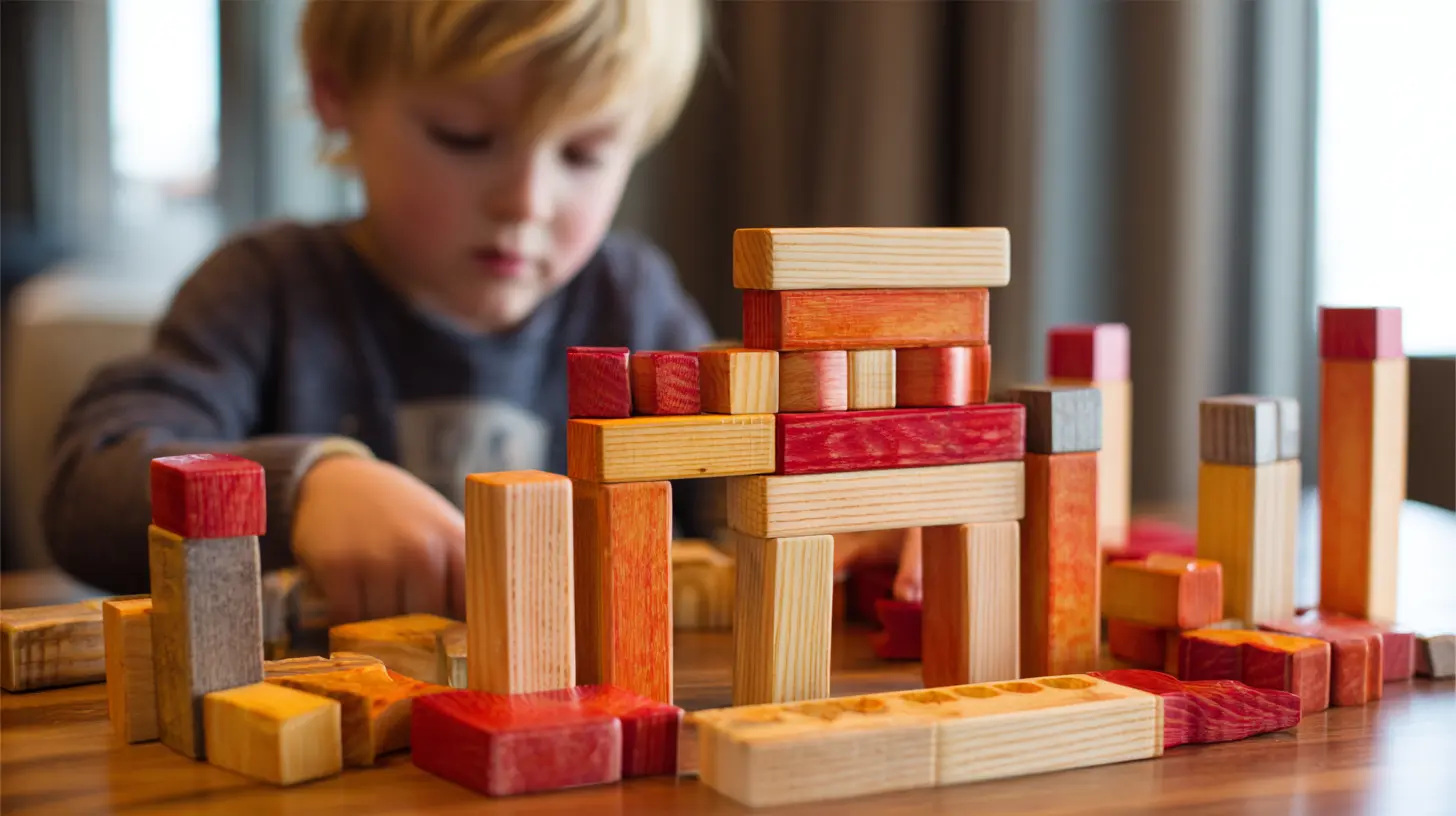
Spatial reasoning is the ability to mentally rotate, combine, and manipulate objects in three dimensions. It predicts success in mathematics, engineering, chemistry, and even surgery. Construction toys train it constantly. A child who wonders whether a long block will fit across two supports is running a mental simulation. A child who flips a piece in her mind before placing it is practicing mental rotation, a core spatial skill.This is not trivial. Many children who struggle with geometry later in school simply had few chances to manipulate objects in space during early childhood. Blocks are one of the cheapest, most effective spatial training tools available.
Fine motor control and hand-eye coordination
Placing a small brick on a stud requires a precise pinch grip. Aligning a magnetic tile edge requires steady hands. Connecting a gear to an axle demands controlled pressure. Each repetition strengthens the small muscles of the hand and the neural pathways that link vision to movement.Occupational therapists frequently use construction toys in sessions with children who have fine motor delays. The reason is practical: the toy provides immediate feedback. If the piece does not connect, the child adjusts. That feedback loop is far more motivating than a worksheet.
Executive function: planning, monitoring, and adjusting
Executive function refers to the mental skills that let us plan, focus, remember instructions, and juggle multiple tasks. Construction play is a natural executive function workout.Consider a child building a tall tower. She must:
1. Decide on a goal, such as making it taller than her chair.
2. Plan a sequence of pieces.
3. Monitor stability as she builds.
4. Adjust when the tower leans or collapses.
5. Resist the urge to rush.
Each of these steps draws on a different executive function. The collapse is not a failure. It is data. Children who build regularly learn that setbacks are part of the process, which builds resilience and frustration tolerance.
Language and storytelling
Construction play is surprisingly verbal. Children narrate their building: "This is the garage, and here is the ramp for the cars." They negotiate with siblings: "You build the walls, I will do the roof." They explain their choices to adults: "I put the big block on the bottom because it is heavier."This kind of talk builds vocabulary, sequencing language, and perspective-taking. It is one reason researchers and educators often describe construction play as a rich context for language development, not just motor skills.
Mathematics and early engineering concepts
Blocks introduce mathematical ideas without worksheets:- Symmetry when a child mirrors a design
- Area and perimeter when covering a base plate
- Fractions when a half-size block fills a gap
- Estimation when guessing how many pieces are needed
- Stability and center of gravity when a tower tips
Older children encounter ratios, gear ratios, leverage, and structural reinforcement. A child who discovers that a triangle is stronger than a square has learned a principle of engineering through her hands, not a textbook.
Social skills and collaboration
When two children build together, they must share materials, divide tasks, resolve disagreements, and combine ideas. This is harder than it sounds. A four-year-old who wants the only red piece must negotiate. A seven-year-old whose bridge keeps collapsing must accept help.Construction play creates natural opportunities for cooperation because the goal is shared and visible. Unlike a board game, there is no single winner. The structure either stands or it does not.
How Construction Toys Differ by Age
Age ranges are approximate. Children develop at different rates, and a toy that frustrates a four-year-old may delight a three-year-old with strong spatial skills.Toddlers (18 months to 3 years)
At this stage, the goal is not building. It is stacking, knocking down, and carrying. Large, lightweight blocks with rounded edges work best. Magnetic tiles are often too strong for small hands and may pinch. Oversized cardboard bricks are a good choice because they are safe and easy to grip.What parents should expect: short attention spans, repeated knocking down, and mouthing of pieces. Choose non-toxic, choke-safe sizes.
Preschoolers (3 to 5 years)
This is the golden age of block play. Children begin to build with intention. They make enclosures, bridges, and simple representations of houses and animals. Interlocking bricks and wooden unit blocks both work well. Magnetic tiles become more manageable around age four.What parents should expect: lots of naming and storytelling, frequent collapses, and requests for help. Resist the urge to build for them. Instead, ask questions: "What would make it stronger?"
Early elementary (6 to 8 years)
Children now follow instructions and build complex models. They can handle small pieces, gears, and moving parts. Model kits with step-by-step instructions appeal to this age, but open-ended sets remain important. This is also when many children start designing their own creations without instructions.What parents should expect: pride in finished models, frustration when pieces are missing, and a growing interest in how things work.
Older children (9 to 12 years)
At this stage, construction toys compete with screens and sports. The key is complexity. Motorized kits, robotics sets, and advanced building systems with programmable elements hold attention. So do real tools and woodworking projects. A ten-year-old who feels "too old for blocks" may still spend hours building a working crane or a model bridge.What parents should expect: a need for challenge and autonomy. Let them choose projects and make mistakes.
Common Mistakes Parents Make
Mistake 1: Buying too many pieces too soon
A giant bin of mixed bricks can overwhelm a young child. Fewer, well-chosen pieces encourage deeper play. Start small and add gradually.Mistake 2: Building for the child
It is tempting to "fix" a wobbly tower or complete a model when a child struggles. But the struggle is where learning happens. Offer hints, not solutions. Ask, "What do you notice about that side?"Mistake 3: Treating instructions as the goal
Instruction booklets are useful for teaching techniques and building confidence. But if every session ends with a perfect model from a manual, the child never practices design thinking. Balance guided builds with free building.Mistake 4: Ignoring storage and organization
A pile of loose bricks discourages play. Sorted bins, labeled by color or shape, make it easy to find pieces and clean up. This also teaches classification, a math skill.Mistake 5: Assuming gender
Construction toys are for everyone. Girls who build develop the same spatial and problem-solving skills as boys. Avoid steering children toward or away from building toys based on gender.Mistake 6: Giving up too early
Some children ignore blocks for months, then suddenly dive in. Keep materials accessible and let interest develop naturally. A child who prefers drawing may still enjoy building if the project connects to her interests, such as a castle for her drawings or a stage for her dolls.Choosing the Right Construction Toy: A Practical Comparison
Wooden unit blocks
Strengths: Open-ended, durable, naturally weighted, excellent for spatial reasoning and balance. No instructions needed. They work for toddlers through elementary age.Weaknesses: Limited connection between pieces, so tall structures are unstable. Not ideal for detailed models.
Best for: Families who want a long-lasting, versatile toy that grows with the child.
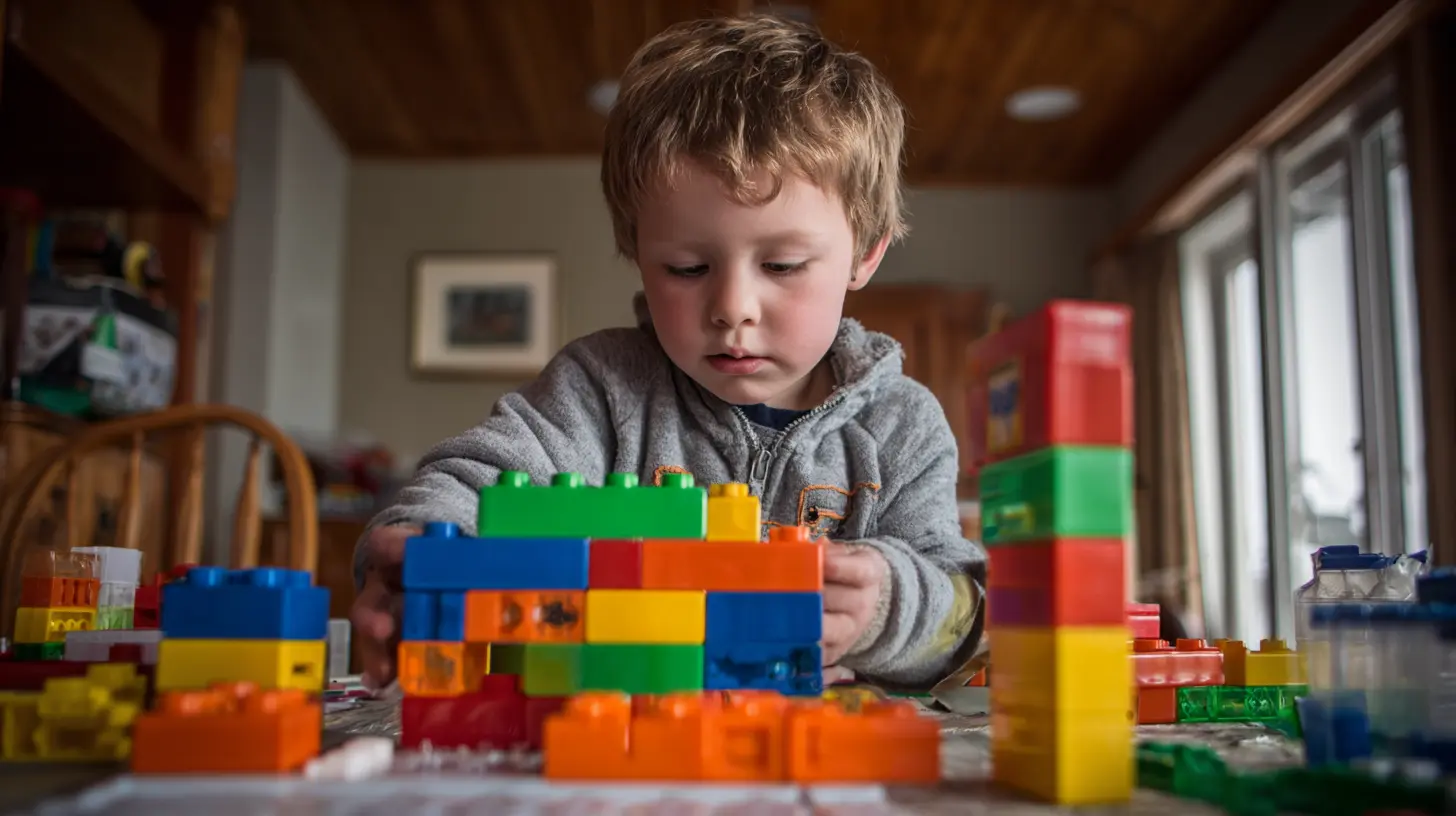
Interlocking plastic bricks
Strengths: Strong connections, endless building possibilities, huge variety of specialized pieces. Excellent for following instructions and for detailed models.Weaknesses: Small pieces can be a choking hazard for children under three. Themed sets often include many single-use pieces. Cost adds up quickly.
Best for: Children who enjoy both guided builds and free creation.
Magnetic tiles
Strengths: Easy for small hands, visually appealing, great for geometry and symmetry. Less frustrating than interlocking bricks because pieces snap together quickly.Weaknesses: Weaker structures collapse easily. Magnets can be dangerous if the plastic casing breaks and a child swallows them. Inspect regularly.
Best for: Preschoolers and early elementary children, especially those who get frustrated with fine motor tasks.
Marble runs and ball tracks
Strengths: Teach cause and effect, gravity, momentum, and sequencing. Highly engaging for children who like movement.Weaknesses: Pieces scatter easily. Frustration when the marble falls off. Requires patience.
Best for: Children aged four and up who enjoy experimentation.
Gears, pulleys, and simple machines
Strengths: Introduce mechanical reasoning. Excellent for children who ask "how does it work?"Weaknesses: More complex, often requires adult help at first. Pieces can be finicky.
Best for: Early elementary children ready for a challenge.
Model kits with instructions
Strengths: Teach following directions, patience, and attention to detail. Finished models build pride.Weaknesses: Limited creativity once the model is complete. Missing pieces can derail the project.
Best for: Children who enjoy structured tasks and want a display piece.
Real tools and woodworking
Strengths: Authentic, highly motivating, teaches measurement and safety. Builds confidence.Weaknesses: Requires supervision, safety gear, and space. Mistakes can be costly.
Best for: Older children and families who can commit to supervision.
How to Get More Learning From Every Build
Ask open-ended questions
Instead of "What are you building?", try "How did you decide to put that piece there?" or "What would happen if you moved this block?" Open questions push children to think about their choices.Encourage revision
When a structure collapses, resist the urge to console. Instead, treat it as an experiment. "The tower fell. What do you think caused it? Want to try again with a wider base?" This normalizes failure as part of learning.Connect builds to real life
Point out bridges, cranes, and buildings during walks. Ask how they might be built. This links play to the real world and builds observational skills.Introduce constraints
Constraints spark creativity. "Can you build a bridge that holds this toy car?" "Can you make a tower using only ten blocks?" Limits force children to plan and innovate.Document and revisit
Take photos of finished creations. Children often enjoy revisiting their designs and improving them later. This builds a habit of iteration.Build alongside them
Children learn by watching. When you build, narrate your thinking: "I need a strong base, so I will use these wide blocks." This models problem solving without taking over.What the Research Suggests
Decades of research in developmental psychology and education point in a consistent direction. Block play in early childhood is associated with later spatial skills, mathematical thinking, and even language development. Studies often find that children who engage in frequent, high-quality block play show advantages in spatial tasks and early math concepts.However, it is important to be careful about causality. Children who build often may also have parents who provide rich learning environments in other ways. Construction toys are not a magic bullet. They are one valuable tool among many. The quality of play, the presence of supportive adults, and the child's own interests all matter.
What the evidence does support is that construction play is worthwhile, especially when it is open-ended, child-led, and repeated over time.
When Construction Toys Are Not the Right Choice
Construction toys are not for every child at every moment. Consider alternatives when:- A child is consistently frustrated and avoids building. Try a different activity and return later.
- A child has fine motor delays that make small pieces painful. Choose larger, easier-to-grasp options.
- A child has a strong preference for movement or social play. Pair building with other activities, such as building a ramp for toy cars or a stage for a puppet show.
- A child is under three and pieces are small. Choking risk is real. Choose age-appropriate options.
Construction toys are a tool, not a requirement. The goal is a rich, varied childhood, not a checklist.
Conclusion
Construction toys earn their reputation. They build spatial reasoning, fine motor skills, executive function, language, math concepts, and social skills. They teach children that failure is information and that persistence pays off. They are versatile, durable, and enjoyable across a wide age range.But they work best when adults step back and let children lead. The most valuable moments are not the perfect finished models. They are the wobbling towers, the collapsed bridges, and the quiet concentration of a child figuring out why something did not work.
From blocks to brilliance is not a straight line. It is a process of trial, error, and discovery. Give a child good materials, time, and space, and the learning takes care of itself.
all images in this post were generated using AI tools
Category:
Play Based LearningAuthor:

Steven McLain
Discussion
rate this article
1 comments
Avianna McGivern
This article really highlights the importance of construction toys in a child's development. Watching my kids build and create has shown me how these simple toys spark their imagination and problem-solving skills. It's amazing how playtime can become such a valuable learning experience... truly a win-win for parents and children.
October 1, 2026 at 2:56 AM