Empowering Kids Through Purposeful Chores
8 August 2026
Most parents have heard the argument that chores build character. But there is a big difference between asking a child to empty the dishwasher because you need help and designing a chore system that actually teaches responsibility, empathy, and self-reliance. Purposeful chores are not about getting a clean house. They are about raising capable humans who understand that their contributions matter.
The problem is that many chore systems fail. They fail because parents treat chores as a transaction, because they assign tasks that are either too easy or too meaningless, or because they give up after two weeks of nagging. This article walks through how to think about chores differently, how to assign them in a way that respects your child's developmental stage, and how to avoid the common pitfalls that turn helping out into a daily battle.

Why Purposeful Chores Matter More Than a Tidy Home
When a child wipes a table, folds a shirt, or feeds the dog, they are not just performing a task. They are participating in the life of the family. That participation sends a powerful message: you are needed, and your actions affect other people. That feeling of being needed is one of the strongest motivators for human beings of any age, but it is especially important for children who spend most of their day being told what to do and how to do it.Chores also provide something that many modern children lack: visible, tangible proof of their own competence. Schoolwork often feels abstract. A math worksheet does not show a concrete result at the end of the day. But a neatly set dinner table or a swept floor is immediately visible. That feedback loop builds self-efficacy, which is the belief that you can handle challenges and produce results. Children who grow up with that belief are more likely to try difficult things, recover from setbacks, and ask for help when they need it.
There is also a social dimension. Children who do chores learn to read the needs of a room. They notice when the trash is full before someone points it out. They understand that a shared space requires shared maintenance. That awareness translates directly into being a better roommate, partner, and coworker later in life. In fact, many employers and college admissions officers look for evidence of this kind of initiative, but the more important benefit is internal. A child who has practiced noticing and acting does not wait for instructions to live a useful life.
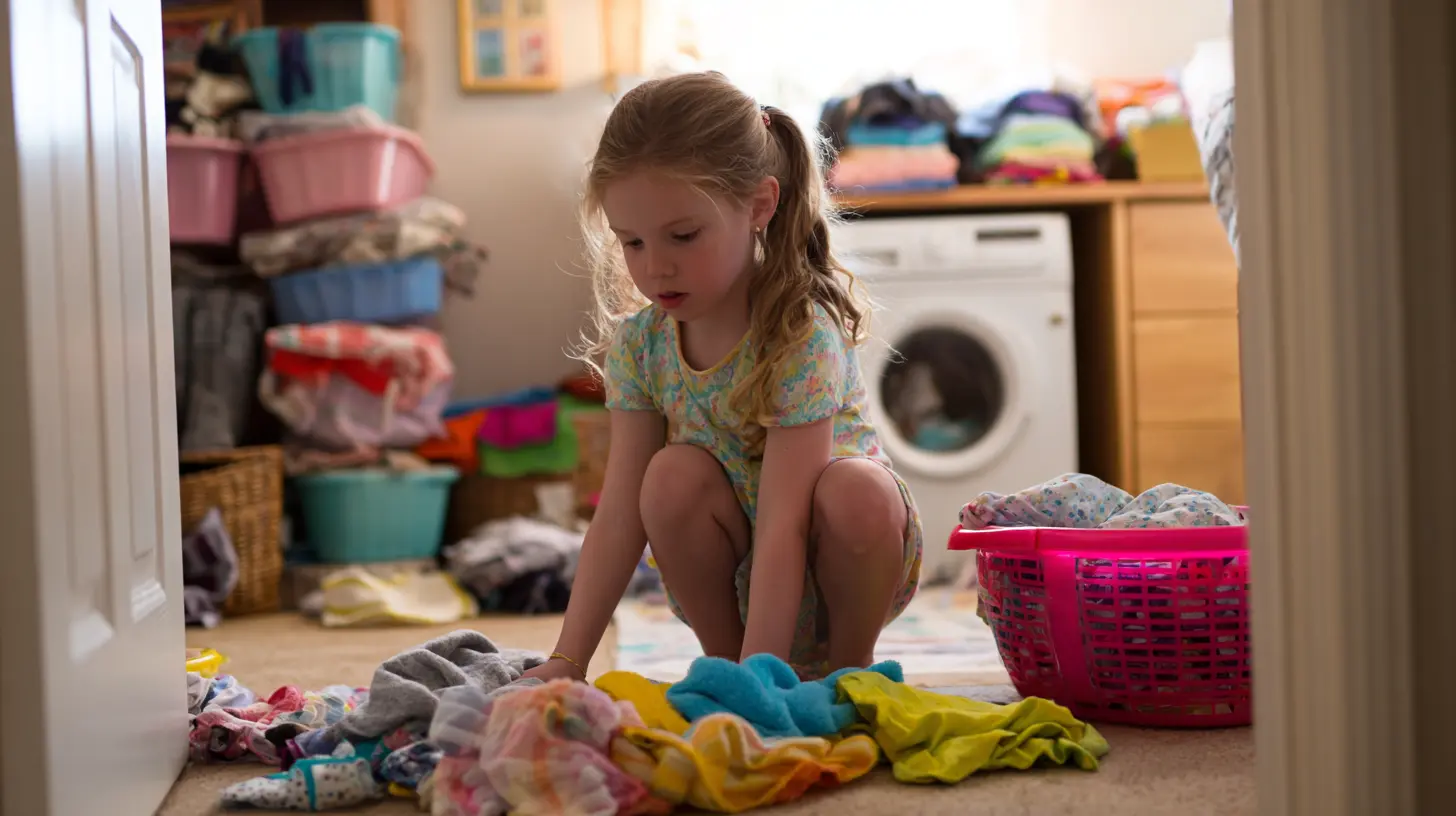
Chores Are Not Payment, and They Are Not Punishment
One of the biggest mistakes parents make is tying chores to allowance as if they were a job. The logic seems clear: if you want a child to value money, make them work for it. But this approach sends a subtle and damaging message. It says that contributing to your own household is something you do for external reward, not because it is your responsibility. It turns a family member into a contractor.That does not mean allowance is bad. It just means that allowance should be separate from chores. Give children a small allowance so they can practice managing money, and give them chores so they can practice being responsible. The two lessons do not need to be connected. If you connect them, you risk teaching your child that unpaid work is not worth doing, which is a poor preparation for adult life where most of the most important work, like raising children or caring for aging parents, is unpaid.
Similarly, using chores as a punishment is counterproductive. If a child has to scrub the toilet because they talked back, they will associate cleaning with shame and anger. The goal is to help them see chores as a normal, neutral part of daily life, like brushing teeth or putting on shoes. When chores are used as a penalty, they become a weapon, and the child will resist them even harder in the future.

Matching Chores to Developmental Stages
A two-year-old cannot fold a fitted sheet, and a twelve-year-old should not be treated like a two-year-old. The most common chore mistake is assigning tasks that are either far too hard or far too easy for the child's age and motor skills. Both extremes cause frustration. If a task is too hard, the child feels like a failure. If it is too easy, they feel patronized and bored.Toddlers and Preschoolers (Ages 2 to 5)
At this age, the goal is not productivity. It is participation. A toddler who "helps" sort laundry is actually slowing you down, but that is fine. The value is in the routine and the feeling of inclusion. Good chores for this age include putting toys in a bin, wiping a low table with a damp cloth, matching socks, and placing napkins on the table. These tasks require gross motor skills and simple categorization, which toddlers can manage with some supervision.The key is to make the task concrete and short. Do not say "clean your room." Say "put the red blocks in this box." One instruction at a time. Praise the effort, not the outcome. If the napkins are crooked, leave them. The point is that they tried.
Early Elementary (Ages 6 to 9)
Children in this age range can handle multi-step tasks and follow simple sequences. They can set the table, clear their own plate, make their bed (imperfectly), feed a pet, water plants, and sort recycling. They can also start to take responsibility for their own belongings, like putting away their school bag and hanging up their coat.This is the age when you want to introduce the idea of a "family contribution." Explain that everyone in the house works together, and that their help makes the whole family's day go smoother. Use specific, positive language. Instead of "good job," say "thank you for setting the table, now we can all sit down together right away." That connects their action to a real outcome.
Tweens (Ages 10 to 12)
Tweens can handle bigger responsibilities, including tasks that involve judgment and care. They can load and unload the dishwasher, do their own laundry (with initial instruction), prepare simple meals, take out the trash, and clean the bathroom. They can also manage time-based chores, like remembering to take the bins out on Wednesday evening.This is the age where you should start letting them experience natural consequences. If they forget to put their clothes in the hamper, they may run out of clean socks. Do not rescue them immediately. Let the minor discomfort of a damp towel or a missing shirt teach the lesson that you have been trying to teach with words.
Teenagers (Ages 13 and Up)
Teenagers are capable of running a household, at least in theory. They can cook a full meal, do laundry, clean the kitchen, and manage their own schedules. The challenge at this age is not capability, it is motivation. You cannot force a teenager to care about a spotless kitchen, but you can set clear expectations about what is required for the family to function.A good approach for teens is to give them a "domain." For example, they are responsible for all meals they eat outside of the family dinner, including planning, cooking, and cleaning up. Or they are responsible for the family car, including keeping it clean and reporting maintenance needs. Having a domain gives them autonomy and a sense of ownership. It also reduces the constant low-level nagging that destroys parent-teen relationships.

The Difference Between a Chore and a Contribution
Many chore charts fail because they treat chores as a list of tasks to be completed, like a to-do list for an employee. But the most effective way to think about household work is as a set of contributions to a shared life. A contribution is tied to a person or a goal. "Sweeping the floor" is a chore. "Sweeping the floor so grandma can visit safely" is a contribution.When you frame chores as contributions, you shift the child's focus from obligation to impact. You also give them a reason to care about the quality of their work. A child who is just sweeping to check a box will miss the crumbs in the corner. A child who knows that grandma has trouble walking will sweep more carefully.
To make this shift, use language that connects the task to a benefit. Instead of "do the dishes," say "if you do the dishes, we can all watch the movie together sooner." Instead of "take out the trash," say "the kitchen smells bad because the trash is full, and we need it empty before I start cooking." This kind of explanation takes a few extra seconds, but it builds the neural pathway between action and consequence.
The Case Against Chore Charts and Sticker Systems
Chore charts with stickers and rewards are popular because they work in the short term. A child wants the sticker, so they do the task. But there are hidden costs. The child learns to do the task only when a sticker is on offer. When the sticker loses its novelty, the behavior disappears. You then need a bigger reward, which leads to a cycle of escalating bribes.Worse, sticker systems can create a sense of entitlement. The child starts to believe that they are doing you a favor by completing a basic task, and that they deserve compensation for it. This is the opposite of the mindset you are trying to build.
That said, a simple chart can be useful as a visual reminder, not a reward system. A chart that lists daily tasks and allows the child to check them off can provide a sense of accomplishment and structure. The key is that the checkmark is the reward, not a ticket to a prize. If you want to celebrate a week of completed chores, do something as a family, like a special dessert or a trip to the park. But keep that celebration occasional and unpredictable, not a guaranteed transaction.
Common Mistakes That Undermine Chore Success
Even well-intentioned parents make the same mistakes over and over. Here are the most common ones, along with ways to avoid them.The "I'll Just Do It Myself" Trap
It is faster to do the task yourself. That is true. But every time you do a task for a child who is capable of doing it, you are sending a message that they are not capable. You are also stealing their opportunity to practice. The long-term cost of a child who cannot cook a simple meal at age eighteen is much higher than the five minutes it takes to teach them to scramble an egg at age ten.If you are short on time, do the task together. Say "let's do this quickly, and then we can both go to the park." That keeps the child involved without making them feel like a burden.
The Perfectionism Problem
If you redo a child's work, they will stop trying. If you complain that the bed is not made well enough, they will conclude that their effort is never good enough and give up. Instead, accept the imperfection and quietly adjust. If the towels are folded unevenly, refold them later when they are not watching. If the dishes are not completely clean, run them through the cycle again. The goal is habit formation, not professional quality.The Inconsistency Trap
Chores need to happen on a schedule. If you are inconsistent, the child learns that chores are optional, and that they only need to do them when you are angry or desperate. Set a regular time for chores, such as before dinner or on Saturday morning. Stick to it for at least a month before making any changes. Consistency is more important than perfection.The Gender Bias Trap
Be careful about assigning chores based on gender. Boys need to learn to cook and clean just as much as girls. Girls need to learn to take out the trash and handle repairs. If you have a son and a daughter, rotate the chores so that everyone learns all the skills. This is not just about fairness. It is about raising adults who can live independently without relying on a partner to do half the domestic work.How to Introduce Chores Without a Meltdown
The best time to introduce chores is when the child is young and eager to imitate you. Around age two or three, children naturally want to sweep, wipe, and "help." That is the golden window. Let them help, even if it makes a mess. If you miss that window, do not panic. You can introduce chores at any age, but you will need to be more deliberate.Start with a family meeting. Explain that everyone in the house has a job to do, and that you are going to make a plan together. Let the child choose between two or three chores they dislike the least. Choice gives a sense of control. Then, do the chore together for the first few times. Show them exactly what "done" looks like. Take a photo of the finished result and post it where they can see it. That photo becomes a reference point.
When they complete the chore, do not over-praise. Just say "thank you" and move on. Over-praising makes the child feel like they did something extraordinary, which implies that the task is normally not expected of them. You want the task to become normal.
The Role of Natural Consequences
Natural consequences are the best teacher, but they require patience. If a child refuses to put their dirty clothes in the hamper, the natural consequence is that their clothes do not get washed. That is a safe, non-negotiable consequence. If they forget their lunch, the natural consequence is hunger at school, which is uncomfortable but not dangerous. Allow these small failures to happen. They are far more effective than lectures.However, you must be careful not to use natural consequences for things that affect the whole family. If a child does not do their part of the dishes, the natural consequence is that the kitchen is messy, which punishes everyone. In that case, you need a different approach. You can say "I will do my part, and I will not do your part. If the dishes are not done by 7 pm, I will put them in a bin and you can finish them tomorrow morning." That creates a consequence for the child without making everyone else suffer.
When Chores Feel Like a Battle
Sometimes no matter what you do, the child resists. This is often because the child is testing whether the expectation is real. The first time you enforce a consequence, there will be tears and anger. That is normal. Do not give in. If you give in, you are teaching the child that resistance works. Next time, they will resist harder and longer.If the resistance is constant, step back and ask what is really going on. Is the child overscheduled? Are they tired? Are they feeling overwhelmed by other parts of life? Sometimes a child who refuses to do chores is actually asking for more connection. In that case, do the chore with them while talking about their day. The closeness may be more important than the task.
The Long Game: What You Are Really Teaching
You are not teaching your child to fold laundry. You are teaching them that they are a capable person. You are teaching them that they have a role in a community, and that their role matters. You are teaching them that work is not something to be avoided, but something that creates order and comfort for themselves and others.When your child leaves home, they will not remember the exact way you asked them to load the dishwasher. They will remember that they knew how to cook a meal, that they could keep a space clean, and that they were trusted to handle responsibility. That is the real gift of purposeful chores. It is not a clean house. It is a confident, self-sufficient adult.
So start small. Pick one chore that your child can do today. Do it together. Say thank you. Repeat tomorrow. The habit will grow, and so will your child.
all images in this post were generated using AI tools
Category:
Empowering KidsAuthor:

Steven McLain
Discussion
rate this article
1 comments
Solstice McClellan
Engaging kids in chores fosters responsibility and independence, but we must balance guidance with freedom.
August 12, 2026 at 3:11 AM
Steven McLain
Absolutely! Striking that balance is key to helping kids learn while still enjoying their freedom.