Designing a Playroom That Encourages Independent Learning
16 September 2026
Most parents build a playroom the same way. They clear a space, buy a shelf, fill the shelf with toys, and then wonder why their child follows them into the kitchen five minutes later asking to be entertained.
The problem is rarely the child. It is the room.
A playroom that genuinely supports independent learning is not a storage unit for plastic. It is a carefully designed environment that answers a specific question before your child even asks it: what can I do right now, by myself, that feels worth doing?
That question is the whole game. When a room answers it well, children stop treating you as their activity director. When it answers it poorly, no amount of toys will compensate. This article walks through how to design that room with intention, from the psychology underneath the layout to the small, unglamorous details that make or break the space.
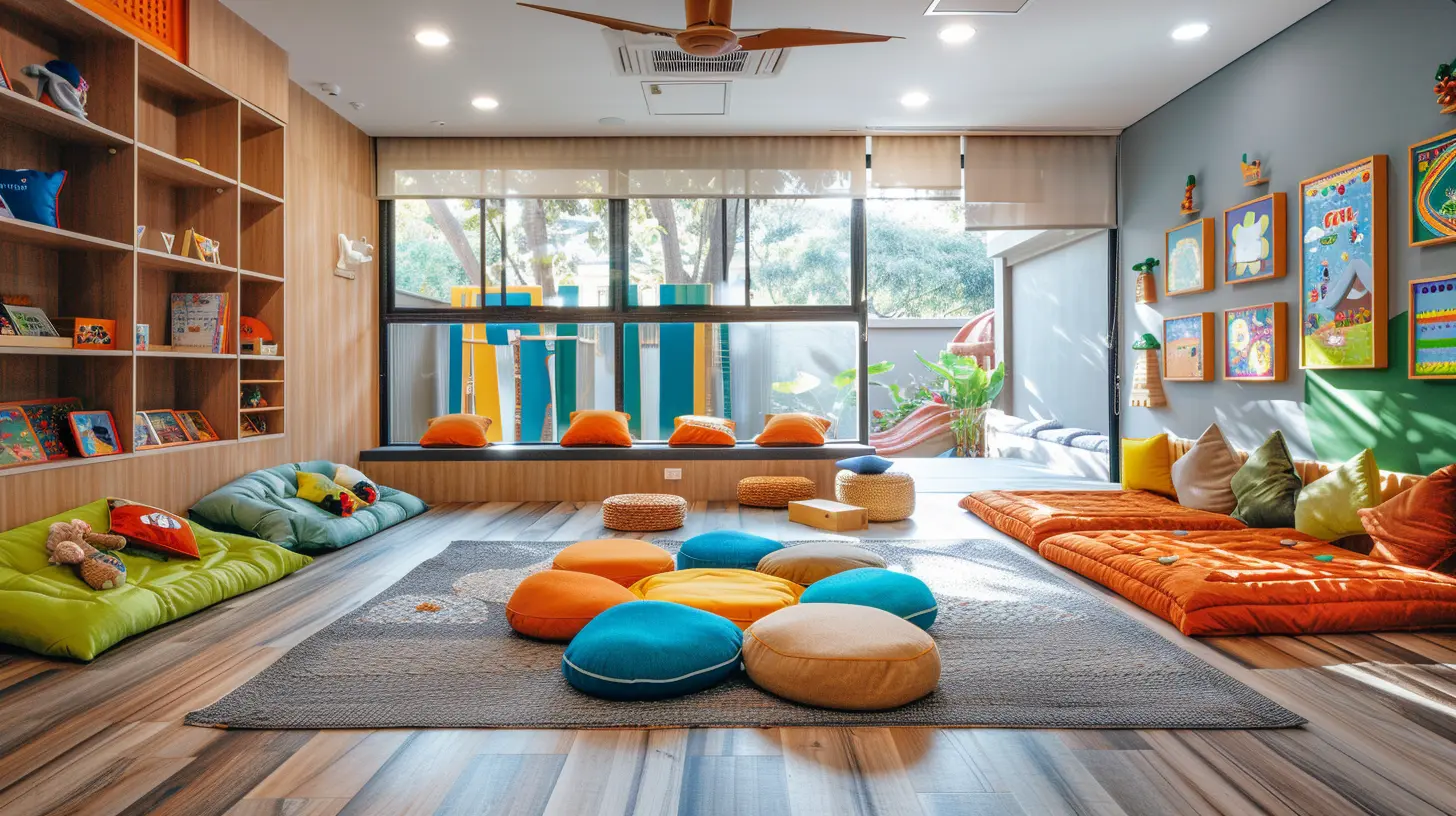
Why Independent Learning Starts With the Room, Not the Child
Independent learning does not mean leaving a child alone. It means a child choosing, starting, sustaining, and finishing an activity without an adult driving each step. That capacity is developmental, but it is also environmental. A four-year-old who cannot self-start in a cluttered, chaotic room may self-start beautifully in a room where materials are visible, reachable, and organized around a clear purpose.Maria Montessori built an entire educational philosophy on this idea, and while you do not need to adopt the full method, the core insight holds: children gravitate toward order, and they become more capable when the environment is scaled to them rather than to adults. A chair they can climb into, a shelf where they can see every option, a bin light enough to carry. These are not luxuries. They are the infrastructure of independence.
There is also a less obvious point. A well-designed playroom reduces the number of decisions you have to make as a parent. Fewer "Mom, I'm bored" interruptions. Fewer negotiations. The room absorbs some of the labor of parenting by doing part of the work itself.
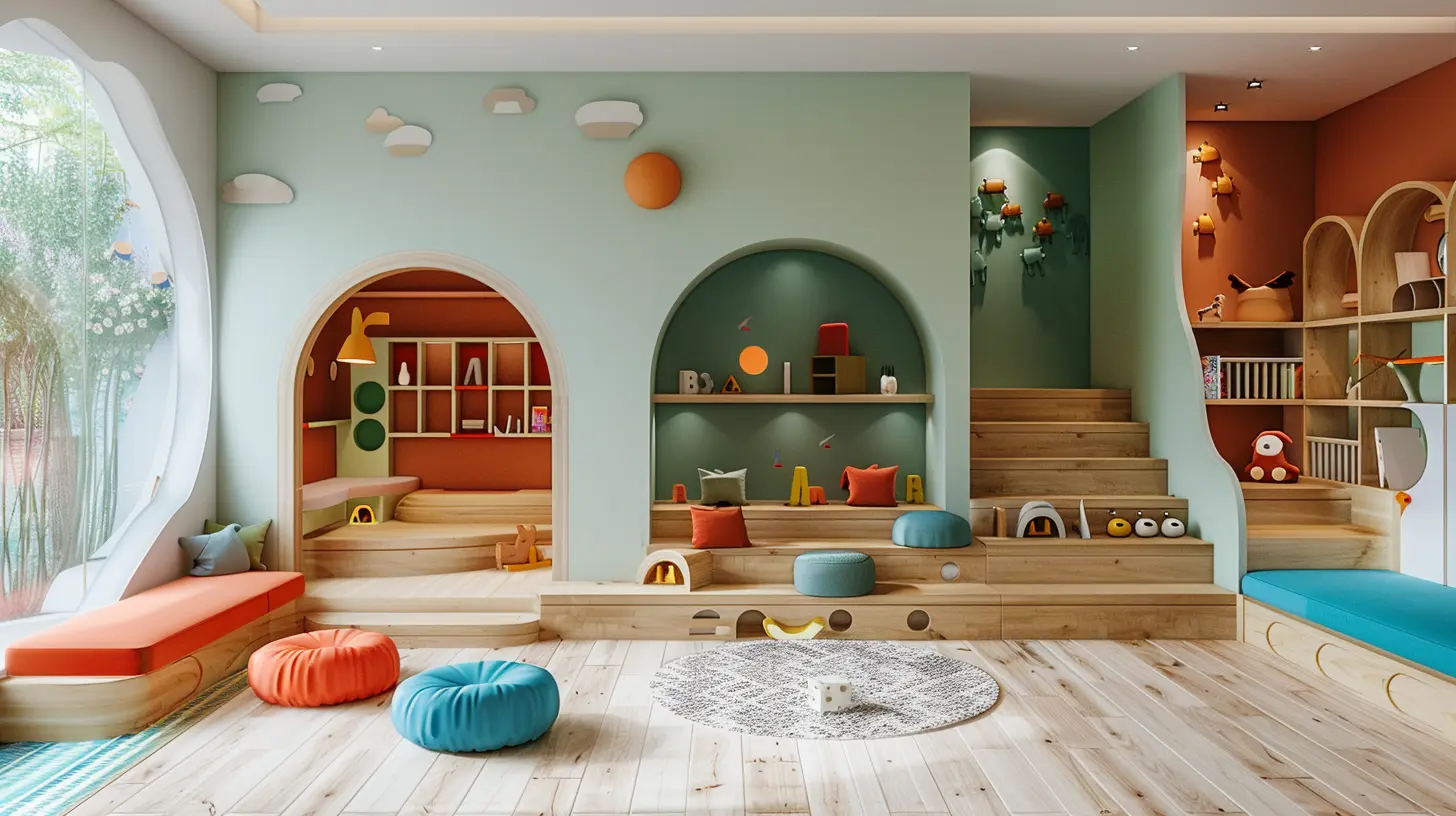
The One Rule That Changes Everything: Everything Must Be Reachable
If you take nothing else from this article, take this. The single most common design failure in playrooms is vertical. Toys get stored on high shelves, in deep bins, or behind cabinet doors. To a child, that means the room has a locked door in the middle of it.Reachability is not just about height. It is about friction. A toy that requires three steps to access is, functionally, a toy that does not exist for a young child. Consider the difference:
- A clear bin on an open shelf at chest height: one motion, fully visible, easy to return.
- A deep fabric cube on a high shelf: two motions, contents invisible, hard to put back correctly.
- A lidded storage chest: three motions, plus a lid that can pinch fingers, plus no visibility.
The first one gets used daily. The second gets dumped out once and never restored. The third becomes a tomb for forgotten toys.
The Visibility Principle
Children, especially under age six, do not remember what they cannot see. Object permanence develops early, but working memory does not. If a puzzle is inside a closed box on a shelf, it does not exist during play. This is why open shelving outperforms closed storage for young children, even though closed storage looks tidier to adults.The trade-off is real. Open shelves collect dust and look busier. If you have a child who is easily overstimulated, full open shelving can backfire. In that case, use a hybrid: open shelves for the current rotation of toys, closed storage for everything else. More on rotation below.
The Two-Hand Rule
A useful test before buying any storage: can your child carry it with two hands from the shelf to the play area? If not, it is adult storage pretending to be child storage. A five-year-old can manage a small bin of blocks. A five-year-old cannot manage a forty-liter tub of mixed toys.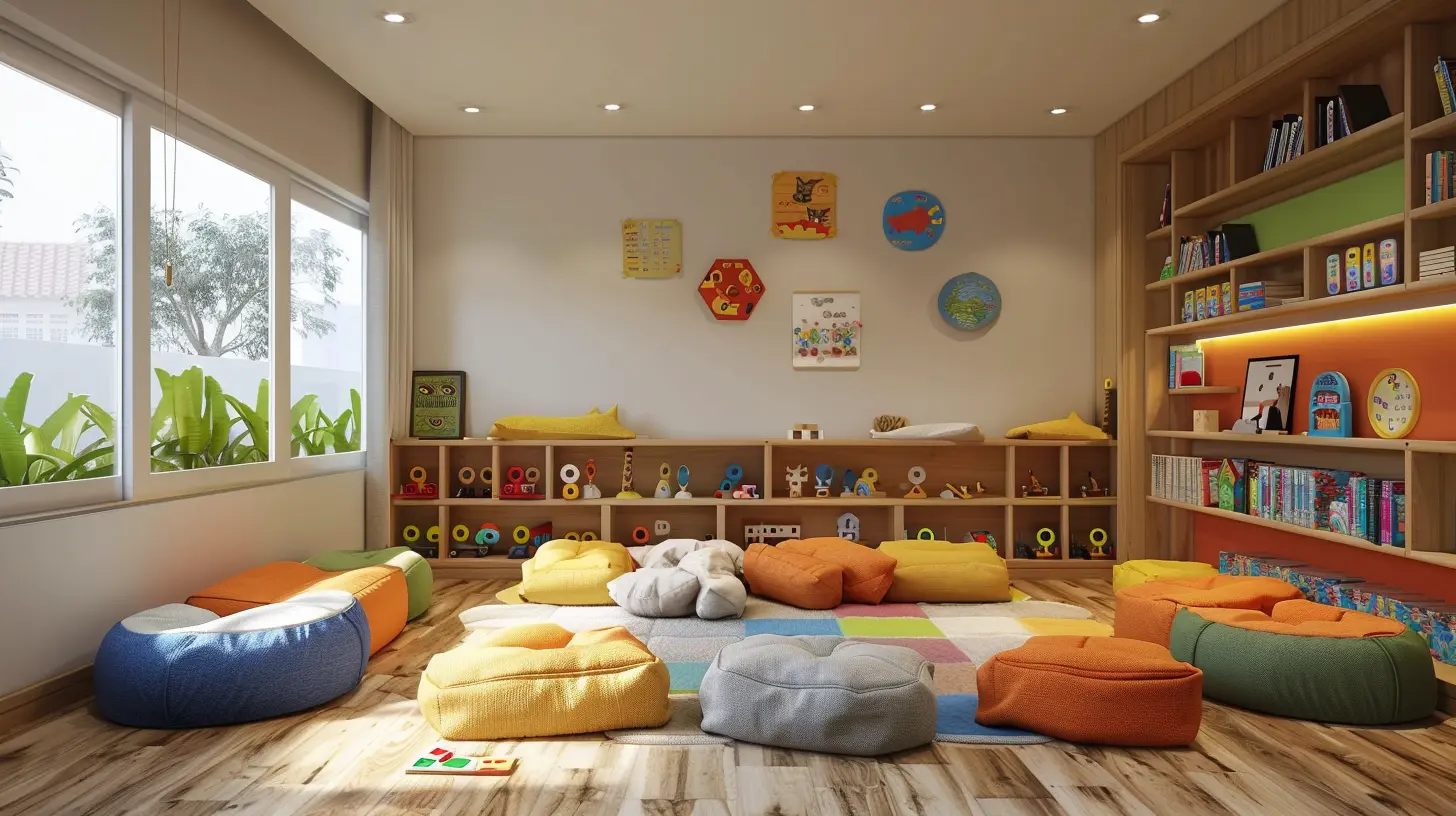
Zoning: Give the Room a Grammar
A playroom with one big open floor and one big pile of toys has no grammar. It has no sentences. Children play in it the way you would cook in a kitchen where flour, knives, and spices are all in the same drawer. Technically possible. Practically exhausting.Zoning means grouping the room into distinct activity areas, each with its own logic. You do not need walls. Rugs, low shelves, and sight lines do the work. Common zones include:
- Construction and building. Blocks, magnetic tiles, train tracks. Needs hard floor or a low-pile rug, plus floor space.
- Pretend play. Kitchen, dolls, dress-up, puppets. Needs a corner, a mirror, and a place to store costumes.
- Art and making. Paper, crayons, clay, scissors. Needs a table, a wipeable surface, and adjacency to a sink or wipes.
- Quiet corner. Books, cushions, a soft light. Needs separation from loud zones.
- Movement. A small climbing piece, a balance beam, a crash mat. Needs clearance and a soft landing.
You will not fit all five in every home. That is fine. Two or three well-executed zones beat five cramped ones. The point is that each zone tells a child what happens there without an adult explaining it.
Why Zoning Works
Zones reduce cognitive load. When a child enters a construction zone, the visual cue of blocks and a hard floor primes building. When they enter the quiet corner, the low light and cushions prime reading or lying down. This is environmental priming, and it is one of the most reliable tools in early childhood design.It also solves a problem parents rarely anticipate: cross-contamination. When art supplies live next to the dress-up trunk, you get glitter on princess dresses. When blocks live next to the reading nook, you get hard plastic thrown near a sibling's head. Zones create natural boundaries that reduce conflict.
When Zoning Fails
Zoning backfires in very small rooms. If you try to fit four zones into ten square meters, each zone becomes so small it cannot function. In that case, use time-based zoning instead of space-based zoning. Rotate what is available. Monday is building day. Tuesday is art day. The room stays one thing at a time.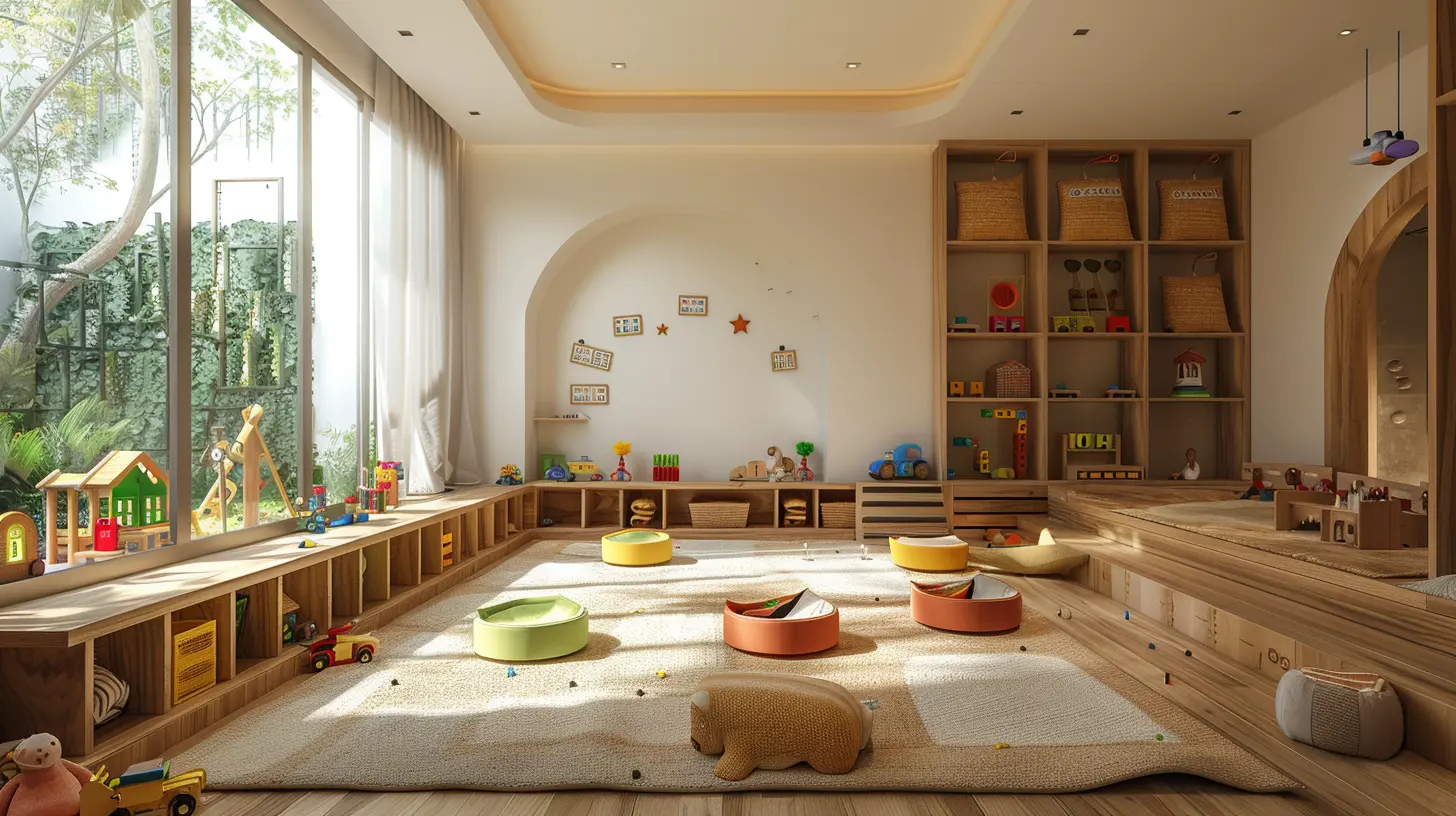
Rotation: The Most Underrated Strategy in Playroom Design
Toy rotation is the practice of keeping only a subset of toys available at any given time and storing the rest out of sight. It sounds like extra work. It usually reduces work, because it reduces mess, and it reliably increases engagement.The reason is not magic. It is novelty and attention. A child with forty toys available has forty options competing for attention, which produces decision fatigue and shallow play. A child with eight toys available plays more deeply with each one. When those eight are swapped for a different eight two weeks later, the "new" toys feel genuinely new, even though they were in the closet the whole time.
How to Rotate Without Losing Your Mind
The practical version looks like this. You have three or four bins in a closet, each holding a themed set. Every one to three weeks, you swap the current bin for a stored one. You do not need to be precise. You do not need a spreadsheet. You need a closet and a willingness to let some toys disappear for a while.A few rules of thumb:
- Keep the all-time favorites out permanently. If a toy is used daily, rotating it out creates grief, not novelty.
- Rotate by category, not randomly. Swap the building bin, not three random toys.
- Rotate less often for toddlers, more often for preschoolers and early elementary kids. Toddlers need repetition. Older children crave novelty.
- Never rotate out a comfort object. That is not a toy. That is a relationship.
The Trade-Off
Rotation requires storage space, and storage space is exactly what many homes lack. If you live in a small apartment, rotation may not be practical. In that case, reduce the total number of toys instead. The principle is the same: fewer options, deeper play. The mechanism is just different.The Power of "Yes" Space
A "yes" space is a room where the default answer to "Can I touch this?" is yes. No fragile vases. No sharp tools within reach. No heirloom rugs. Nothing that requires constant vigilance.This matters more than most parents realize. A room full of "no" creates a child who is either constantly redirected or constantly scolded. Neither state is conducive to independent play. A room full of "yes" creates a child who can move, touch, climb, and experiment without an adult hovering.
You cannot make an entire home a yes space. You can make the playroom one.
What Belongs in a Yes Space
- Washable surfaces and slip-resistant rugs.- Furniture that will not tip if climbed (anchor anything tall).
- Art supplies that are safe for unsupervised use at the child's current age.
- Materials that tolerate being dropped, stacked, spilled, and stepped on.
- A clear boundary, so the child knows where the yes space ends.
What Does Not Belong
- Anything you would be upset to see broken.- Anything requiring a plug, a battery, or adult assembly during play.
- Screens that pull attention away from hands-on activity.
- Toys with small parts, if there is a younger sibling in the house.
The last point is a common blind spot. A playroom shared by a two-year-old and a six-year-old cannot be a full yes space for both at the same time. The practical solution is a locked or high cabinet for small parts, plus a rule that those come out only when the younger child is elsewhere. This is not a design flaw. It is a design constraint, and it needs to be planned for, not discovered.
Materials and Aesthetics: Why "Beige" Is Not the Goal
There is a trend in modern playroom design toward muted, neutral, minimalist spaces. They photograph beautifully. They are also frequently boring to children, and a boring playroom is a playroom that fails its one job.Children are drawn to color, texture, and variety. That does not mean you need a rainbow explosion. It means the room should have visual interest that invites touch. A woven basket. A wooden block. A bright cushion. A textured rug. These are not decorative extras. They are part of the invitation to play.
The Real Function of Aesthetics
Aesthetics serve two purposes in a playroom. First, they signal what the room is for. A room with soft light, low furniture, and open shelves signals "this is yours, and you can use it." A room with fluorescent light, high shelves, and a locked cabinet signals "this is storage, and you are a guest."Second, they reduce visual noise. A room with forty mismatched plastic toys in primary colors is visually noisy in a way that makes it hard to focus. A room with a smaller number of coordinated materials is calmer, and calm rooms support longer play.
The sweet spot is somewhere between sterile and chaotic. You want enough variety to invite exploration, and enough coherence that the eye can rest.
A Note on Natural Materials
Wood, wool, cotton, and metal tend to age better, feel better in the hand, and hold up to years of use better than thin plastic. They also tend to be more expensive. If budget is a constraint, prioritize natural materials for the items your child touches most: blocks, a play kitchen, a reading chair. Plastic is fine for the rest.Furniture That Does Double Duty
Playrooms in real homes are usually small. Furniture that serves two functions earns its footprint.- A low table with a lip can be a drawing surface, a puzzle surface, and a snack surface.
- A bench with storage underneath can be seating and toy storage.
- A bookshelf with a flat top can hold books and double as a display for finished art.
- A rug can define a zone and provide a soft landing for tumbles.
The trap to avoid is furniture that looks multifunctional but is not. A "play table" with a built-in train track is a train table, not a general table. A "storage ottoman" that is too heavy for a child to open is just an ottoman. Test the function before you commit.
Common Mistakes and How to Avoid Them
Mistake 1: Buying the Room All at Once
The urge to fill a new playroom in a single weekend is strong. It is also a mistake. You do not yet know how your child will use the space. Buy the bones (shelving, a rug, a table, seating) first. Add materials gradually over the first two months, watching what gets used and what gets ignored. The ignored items tell you more than the used ones.Mistake 2: Organizing by Toy Category Instead of Activity
A bin labeled "vehicles" is a category. A bin labeled "things that go on the road" is an activity prompt. Children think in activities, not taxonomies. Organize accordingly.Mistake 3: Making the Room Too Quiet
Some parents, worried about overstimulation, strip the room down to almost nothing. The result is a room that is calm but also inert. Children need something to push against. A little productive chaos is a feature, not a bug.Mistake 4: Forgetting the Adult
You will spend time in this room. Make sure there is a place for you to sit that is not a child-sized chair. A comfortable adult seat changes the room from a place you supervise to a place you can be present in without discomfort.Mistake 5: Ignoring the Child's Input
Once your child is old enough to express preferences, ask them. Not "what color do you want" but "where do you want the blocks to live" and "what should go in the quiet corner." Children who help design a space take more ownership of it. Ownership is a quiet engine of independent play.Age Matters More Than You Think
A playroom designed for a two-year-old will frustrate a seven-year-old, and vice versa. The room needs to grow.Toddlers (1-3). Prioritize safety, reachability, and durability. Fewer options, larger materials, no small parts. A yes space is most important here. Rotation is less important because toddlers thrive on repetition.
Preschoolers (3-5). This is the golden age of pretend play. Invest in dress-up, a play kitchen, puppets, and open-ended building materials. Zones become truly useful here. Rotation starts to pay off.
Early elementary (6-9). Play shifts toward projects, games, and more complex construction. Add a work surface, better lighting, and storage for works in progress. The room starts to resemble a studio.
Older children (10+). The playroom often becomes a hangout, a hobby room, or a homework space. Design decisions shift toward privacy, tech access, and personalization. Do not cling to the toddler version of the room. Let it evolve.
Lighting, Sound, and the Senses
Lighting is the most overlooked element in playroom design. Overhead fluorescent light is harsh and casts no shadows, which flattens the room visually. A mix of ambient light (a floor lamp), task light (a small desk lamp for art), and daylight (if available) creates a room that feels alive.Sound matters too. Hard floors and bare walls amplify noise, which makes the room stressful for everyone. A rug, curtains, and soft furnishings absorb sound. If your child is sensitive to noise, this is not a nice-to-have. It is essential.
A Practical Setup, Start to Finish
Here is a concrete sequence for a typical small playroom, roughly three by four meters.1. Clear the room completely. Empty it. See the space.
2. Choose two or three zones. For a preschooler, construction, pretend, and quiet corner are a solid start.
3. Place the quiet corner first. It is the hardest to fit and the most valuable.
4. Add shelving at child height. Open shelves, low, anchored to the wall.
5. Add a rug to define the construction zone. Low pile, easy to clean.
6. Add a low table and two chairs. Near the art storage.
7. Add an adult seat. Somewhere with a view of the room.
8. Stock the shelves with a small, curated set. Six to ten options, not sixty.
9. Store the rest out of sight. Closet, garage, top shelf.
10. Live in it for two weeks before buying anything else. Let the room tell you what it needs.
The Long Game
A playroom is not a finished project. It is a living system that changes as your child changes. The parents who get the most out of their playroom are not the ones who spent the most money. They are the ones who paid attention: to what their child actually plays with, to where the friction is, to what gets ignored.Design the room so your child can do more without you. Then step back and let them. The room will do the rest.
all images in this post were generated using AI tools
Category:
Play Based LearningAuthor:

Steven McLain